 Print
Print
 Close
Close

Panama finds first case of microcephaly tied to Zika
Published March 21, 2016
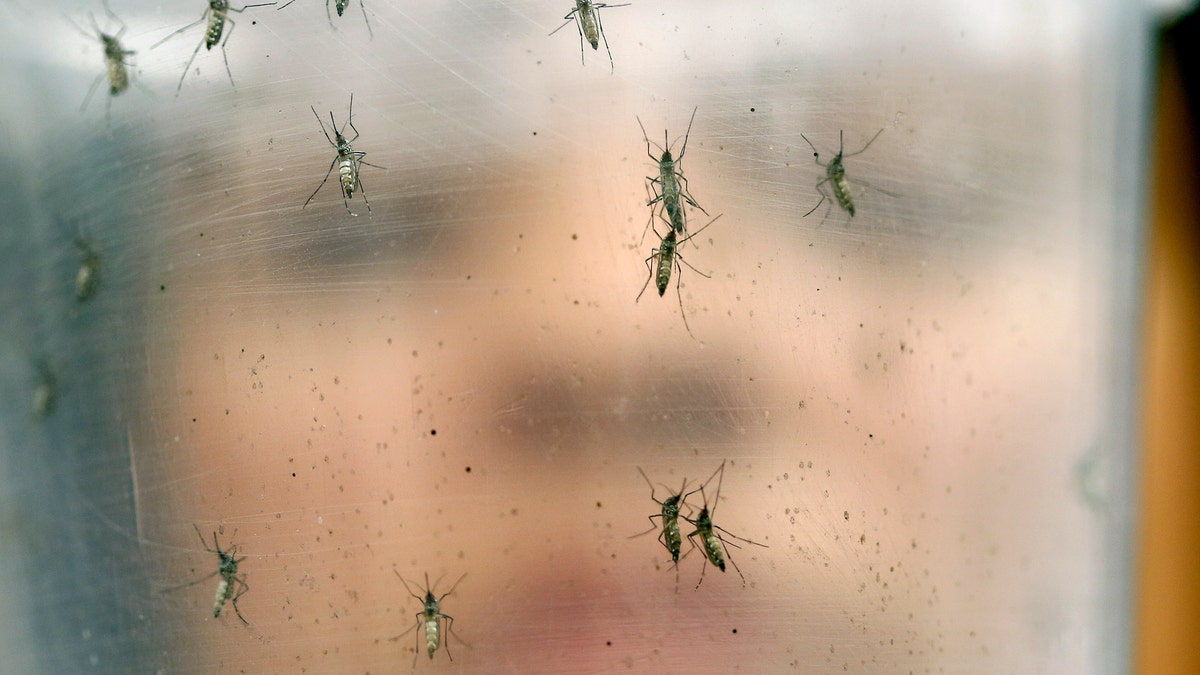
Jan. 18, 2016: In this photo, a researcher holds a container with female Aedes aegypti mosquitoes at the Biomedical Sciences Institute in the Sao Paulo's University in Sau Paulo, Brazil. (AP)
Doctors in Panama have identified a baby born with a rare brain disorder thought to be linked to Zika, the first such case outside Brazil.
The Gorgas Memorial Institute said they found traces of the virus in the baby's umbilical cord. The baby was born Thursday with a shrunken head, a condition known as microcephaly, and another cranial deformation called encephalocele. It died four hours later.
Like the vast majority of people infected with Zika, the child's mother never reported symptoms during pregnancy.
A spike in microcephaly in Brazil has led doctors to investigate links between the birth defects and Zika. But despite the mosquito-borne virus' fast spread throughout Latin America until now there have been no cases outside Brazil of infants born with microcephaly who've tested positive for Zika.
https://www.foxnews.com/health/panama-finds-first-case-of-microcephaly-tied-to-zika