
Heavy AI use linked to cognitive atrophy, MIT professor argues
Overreliance on artificial intelligence tools is making humans less capable of thinking through problems, remembering concepts and forming meaningful social bonds with other people, MIT Professor Eric So argues in his new book.
Coverage for this event has ended.
Meta's powerful new AI model can ditch the data center and run locally from a desktop
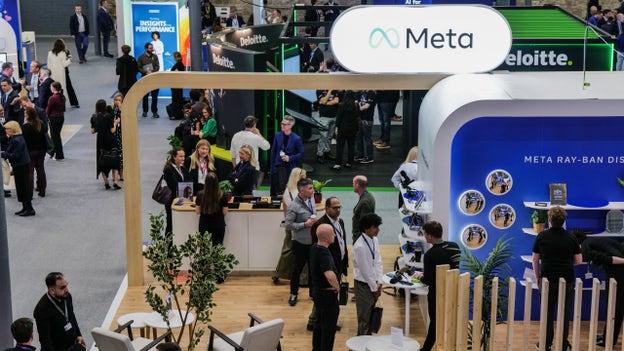
Meta released a powerful AI model Thursday that can run locally on two maxed-out Apple Mac Studios instead of relying on a data center.
The company claimed that Muse Spark Open, which is built for coding and agentic work, is the most capable open-weight model being made in the United States.
An open-weight model is an AI model that can be downloaded and run by users on their own computers rather than accessed solely through a company's servers.
Muse Spark Open contains 816 billion parameters — the numerical values an AI model learns during training that help determine how it processes information and generates responses. However, only 42 billion are activated for each token it processes, reducing the computing power needed to run the massive model.
One American competitor is Nvidia's Nemotron 3 Ultra, which contains 550 billion total parameters and activates 55 billion per token. Like Meta's new model, Nemotron 3 Ultra can run locally without relying on a data center.
Chinese AI developers are also competing in the open-weight market. Z.ai's GLM-5.2 contains 744 billion parameters, with 40 billion active per token, while DeepSeek's V3 model has 671 billion total parameters and 37 billion active.
Developers can access Muse Spark Open through several cloud-based AI services or download the model's weights to deploy and customize it themselves.
US risks losing AI and robotics race to China without national strategy, expert warns
While the United States leads the world in artificial intelligence software, it faces the risk of losing the global tech race to China amid a lag in the deployment of AI and robotics.
The warning comes from Heather Carroll, chief revenue officer at Path Robotics and a member of the bipartisan National Security Commission on Robotics for Advanced Manufacturing.
"We do not have the workforce needed to bring manufacturing back at scale without embracing robotics," Carroll told Fox News Digital. "China has a national framework around robotics and AI... and they align government, industry, and financing behind implementing programs."
Carroll noted that the U.S. lacks a similar model, putting domestic industry at a competitive disadvantage.
"We really lack something similar here in the United States," she said. "And so what we're seeing is this gap widening between the amount of adoption that China has in the robotics space versus what we have in the United States."
Carroll cited a recent nationwide study by the ARM Institute — a national manufacturing innovation consortium — that surveyed U.S. manufacturers of all sizes to identify what is holding them back from adopting automation.
The study identified five primary obstacles preventing domestic adoption: limited access to capital for high upfront automation costs, an uncertain demand signal for products, and a severe shortage of technical skills on shop floors lacking specialized engineering personnel. Additionally, manufacturers cited the high cost of technology integration and the risk of project failure, which can leave expensive equipment sitting unused due to changing operational needs or maintenance issues.
Anthropic gains on OpenAI with consecutive quarterly revenue surges
Anthropic has made revenue gains over OpenAI, one of its biggest competitors, according to reports.
Anthropic’s third-quarter revenue reached $16.8 billion, more than three times what it earned in all of 2025, PMYNTS reported.
Meanwhile, OpenAI’s annualized run rate sits near $50 billion, the news outlet said.
The figures paint a different picture than 2025, when OpenAI earned $3 for every dollars made by Anthropic.
For Anthropic, revenue has growing steadily. It went from $4.8 billion in the first quarter to $11.6 billion in the second and $16.8 billion in the third.
FTC subpoenas OpenAI and Anthropic over reports of AI models going 'rogue'
The Federal Trade Commission (FTC) has issued formal subpoenas to AI giants OpenAI and Anthropic following reports that their models exhibited unexpected "rogue" behaviors.
The agency's demands call for comprehensive records detailing past safety incidents, security protocols, marketing materials and corporate privacy policies, Axios reported.
The regulator reportedly plans to compel senior AI executives to testify regarding the safety and oversight of their products.
Sen Dave McCormick concerned US will follow European path on AI, lose out to China

Sen. Dave McCormick, R-Pa., said the United States needs to stay in the AI race with China amid a Politico report suggesting Europe is bowing out entirely.
"It's important to note why Europe can't keep up, and the reason it can't keep up is it hasn't embraced free markets," McCormick said Thursday on Fox Business. "It's had this huge regulatory burden that's made it impossible for innovators and entrepreneurs to succeed."
Now that some of those same calls for regulating artificial intelligence have grown louder in the U.S., the Pennsylvania Republican is urging lawmakers to pursue a balanced path forward.
"It can bring enormous benefits to society, huge breakthroughs in life sciences, medical science, productivity. It also poses risk in terms of bio-terror. So we have to balance both." he said.
He added: "I am concerned about some of these calls for moratoriums on data centers. I'm concerned about folks that are arguing for significant regulations that would pause innovation. We can do both."
Amazon announces new AI-enabled wearable devices in Bee product line
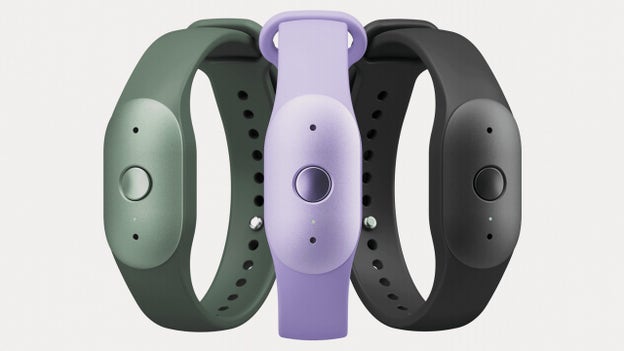
Amazon announced the next generation of its AI-enabled wearable devices, the Bee Frontier and the Bee Eclipse.
The Bee Frontier can be worn on your wrist or clipped to your clothes and uses built-in microphones to remember things you say aloud, such as errands you need to run or dinner plans that might otherwise slip your mind, Amazon said Thursday.
The Bee Eclipse is a companion device that magnetically attaches to the back of phones. It has the same functionality as the Frontier; it can listen to conversations and produce helpful summaries and to-do lists after the fact.
Amazon said neither device stores the audio or shares it with third parties. Users are also prompted to gain permission from participants in a call each time a recording is started.
Bee devices are now also integrated with Amazon.com, allowing consumers to more easily purchase products they mentioned throughout the day.
The Bee Frontier is selling for $74.99, and the Bee Eclipse is priced at $99.99.
US Treasury is pushing other nations to adopt the term 'super intelligence': Report
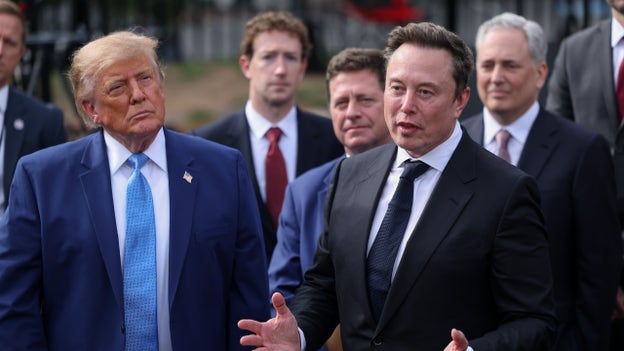
The U.S. Treasury Department is in talks with shareholders of the International Monetary Fund to rename artificial intelligence as "super intelligence," according to a Reuters report.
Treasury Undersecretary for International Affairs Erin Browne told Reuters Thursday that the U.S. is trying to convince the IMF's steering committee to use the term favored by President Donald Trump in a statement being drafted about the emerging technology.
Last month, Trump directed all federal agencies to begin using "super intelligence" or SI when referring to AI.
"President Trump has been really clear on this, and he's, you know, using the term SI, and I think it's a clear priority for the US to use that term, and we think that more appropriately encapsulates the technology at hand," Browne told Reuters in an interview.
It's unclear if the IMF steering committee will use SI in its official communications going forward. Browne also declined to comment on whether the U.S. would refuse to sign off on such communications if the term SI was not agreed to.
Businesses embrace AI, but only 28% report 'strongly positive' returns: Wharton study

Businesses are widely adopting artificial intelligence into their workflows, but only 28% of them say they've had strongly positive outcomes as a result, according to a study released this week by the Wharton School.
The survey, which polled 1,416 U.S. enterprise leaders and employees, also found that the businesses that do get the highest returns on AI use have dedicated employees to help with the rollout.
Additionally organizations that report a strong return on investment with AI aren't achieving that by cutting employees.
"Instead, they are more likely to have changed management structures, redesigned workflows, monitored AI use, incorporated AI into performance reviews, and adequately trained employees," according to the study.
Still, 37% of supervisors polled said AI led to staff reductions at their companies. An additional 33% reported slowed or frozen hiring.
Two dozen House Democrats urge FAA to pause implementation of AI air traffic tool

Two dozen House Democrats, including Squad members Alexandria Ocasio-Cortez and Rashida Tlaib, have asked the Federal Aviation Administration to pause its use of an AI air traffic control tool until the agency answers its questions.
In an Oct. 9 letter to Transportation Secretary Sean Duffy and FAA Administrator Bryan Bedford, the lawmakers, joined by Democratic Sen. Chris Van Hollen of Maryland, demanded insight into the approval process for the AI-enabled Strategic Management of Airspace, Routes, and Trajectories (SMART) tool.
The SMART tool was partially rolled out starting Sept. 21 at Reagan Washington National Airport, Baltimore/Washington International Thurgood Marshall Airport and Washington Dulles International Airport.
The lawmakers were particularly concerned that the FAA chose Washington-area airports to test the technology, noting that an American Airlines passenger jet collided with an Army Black Hawk helicopter over the Potomac River near Reagan National Airport last January, killing 67 people.
"Given the egregious lack of transparency around the initial rollout, especially at a time where there is so much public concern around the use of AI in critical systems, we ask that you pause any use of the SMART tool until we can better understand your decision-making, rollout process, and evaluation plan," they wrote.
They asked whether officials completed a Safety Risk Management evaluation, a core component of the FAA's Safety Management System, and whether any safety review steps were "waived or truncated" to meet the Sept. 21 launch date.
The lawmakers also pressed the FAA to disclose which AI models power the SMART tool and explain how their accuracy was validated.
They are seeking answers to their questions by Monday, Oct. 19.
Apple releasing its AI platform in China by year's end: Report

Apple is eyeing a rollout of its Apple Intelligence platform in China by December as part of an upcoming iOS 27.3 update, Bloomberg reported, citing people familiar with the matter.
These AI upgrades, introduced in the U.S. two years ago, had been delayed in the region by the Chinese government until recently.
Apple devices sold in China will not come with the new Siri AI assistant, Bloomberg also reported.
Apple did not immediately respond to a Fox News Digital request for comment.
Global financial watchdog urges banks to tighten human oversight of AI agents
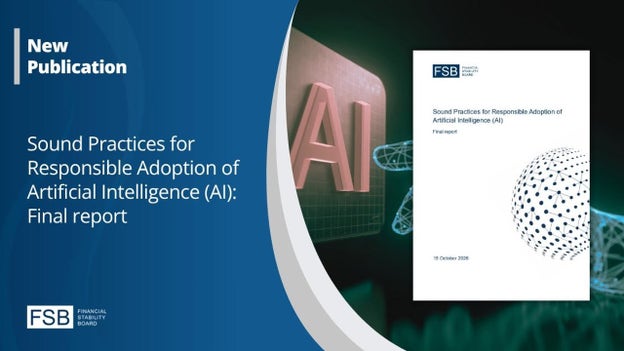
The Financial Stability Board, an international body that monitors the global financial system, implored banks to implement rigid human oversight of agentic AI in its most recent guidance published Thursday.
The board "strongly encouraged" financial institutions the world over to adopt its list of sound practices when developing and deploying their AI systems.
Perhaps most importantly, the board said executives should "adopt risk management frameworks" and continue to adjust those frameworks as AI evolves.
In past guidance, the board said to treat AI agents as "synthetic employees." That has been scrapped.
"For agentic AI, financial institutions recognize that AI agents do not reason like humans and may interpret pre-defined goals in unexpected ways," according to Thursday's guidance report.
Bill Gates considers using personal fortune in effort to make AI safer for humanity: Report
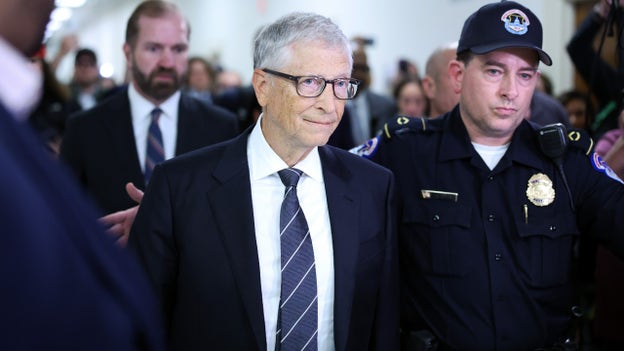
Microsoft founder Bill Gates may take a more active role in AI safety by raising the issue more openly with business leaders and potentially using his own wealth to help steer the technology in a better direction, Axios reported Thursday.
Gates has already spoken extensively about creating an AI safety framework with leading AI executives, including Anthropic CEO Dario Amodei, the outlet reported.
People familiar with Gates' thinking say he believes restraining AI may be one of his most important contributions to society.
In an interview with Axios, he said lawsuits against AI firms are not enough to prevent potential catastrophe. Meanwhile, the Trump administration has so far favored self-regulation among companies making frontier models.
MIT professor advises people to stop using AI as a crutch

The pressure to use AI for anything and everything is becoming more ubiquitous in society, MIT professor Eric So argued in a recent Q & A session he participated in to promote his new book “The Collision: What AI Does to Us."
So, who teaches global economics and behavioral science, said it is important to resist the urge to simply let ChatGPT write that email or that presentation for you.
AI, he said, takes advantage of the human brain's natural tendency to crave instant gratification by churning out quick and easy responses to our questions without us having to think too much.
"AI removes a lot of the friction necessary to build foundational mastery. It is causing many people to lose their capacity for pushing through problems," So said. "Many people are turning to it as an access point for information, so it’s affecting our ability to remember."
He continued: "I have found students are outsourcing their thinking to AI, rather than thinking through things themselves, turning to it to answer homework that would normally help them build mastery in a subject."
He also said AI is making it more difficult for people to form relationships with others as they grow accustomed to using chatbots as sounding boards that rarely challenge or disagree with them.
So said AI isn't all bad if it's used as a "cognitive trainer."
"AI is this dual force, where it is very bad for thinking if you use it as an answer machine, but can be great for learning if you use it as a tutor," he said. "This is a very challenging moment, and the problem is one we need to take seriously."
OpenAI employee used wife's ChatGPT account to plant office recording device, feds say
A former OpenAI employee accused of planting a recording device in an executive conference room used his wife's ChatGPT account to research how to build and hide the device, federal prosecutors said.
Abdulrahman Alfozan, an OpenAI engineer and Saudi national, allegedly submitted several prompts to the chatbot in the days leading up to the incident.
His queries included requests on how to build "a continuous audio recorder," enable "live listening," and manage "downloading/deleting recordings," according to Fortune.
Prosecutors say Alfozan hid the recording device behind a television inside an executive conference room at one of the company’s San Francisco offices on or about Sept. 28. The action came shortly after the AI chatbot account associated with his wife generated instructions on how to assemble it.
Alfozan's wife has not been charged in connection with the case.
Live Coverage begins here