
World leaders and mourners of the Catholic faith gather in Vatican City for Pope Francis' funeral
Pope Francis died on April 21, 2025. Many world leaders are expected to attend his funeral in Vatican City, including President Donald Trump, Prince William, and President Volodymyr Zelensky.
Coverage for this event has ended.
Pope Francis funeral: Late pontiff laid to rest at Santa Maria Maggiore
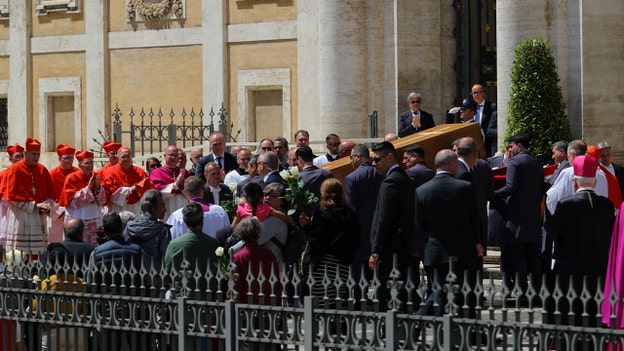
Pope Francis has arrived at Santa Maria Maggiore, also known as Saint Mary Major, which will be his final resting place. The late pontiff would visit the basilica whenever he left from and returned to the Vatican.
The pope is breaking with tradition and is the first pope in more than a century to not be buried beneath St Peter’s Basilica. As per his instructions, the inscription on his tomb reads "Franciscus."
The early life of Pope Francis
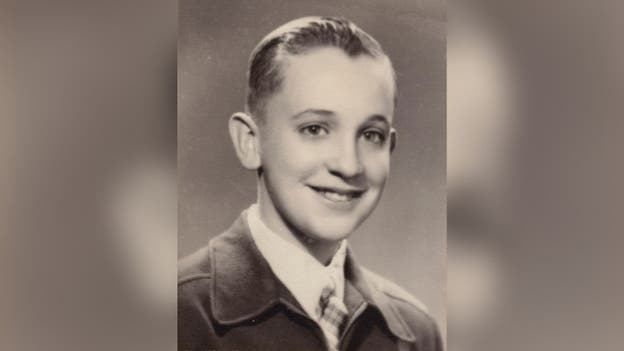
Pope Francis was born “Jorge Mario Bergoglio” in Buenos Aires, Argentina on Dec. 17, 1936.
The eldest of five children, his parents were Italian immigrants with his father working as a bookkeeper for the Buenos Aires branch of the Italian State Railways while his mother was a homemaker.
In Pope Francis’ book, "The Name of God is Mercy,” he emphasized that he comes from a simple family, with parents who taught him the values of hard work, humility and faith.
He spoke lovingly about his grandmother Rosa, who had a strong influence on his faith and wrote about how he enjoyed playing soccer, dancing the tango and hanging out with friends.
A turning point in his life came at aged 17 when he randomly went to confession at the Basilica of San José de Flores.
He said he felt profoundly touched by God's mercy, an experience he later described as "God was waiting for me there."
That encounter shaped his calling to the priesthood and became the foundation of his belief that faith must begin with mercy before judgment.
Pope Francis graduated as a chemical technician and then a few years later he became seriously ill and had part of one lung removed. He said the experience deepened his spirituality and taught him compassion, patience and a sense of human fragility.
He entered the Society of Jesus (the Jesuits) in 1958 and studied humanities in Chile before returning to Argentina in 1963 to complete a graduate degree in philosophy.
He then taught literature and psychology for three years before going on to earn a degree in theology.
On Dec. 13, 1969, he was ordained a priest by Archbishop Ramón José Castellano.
By Michael Dorgan
Trump, world leaders react to the death of Pope Francis
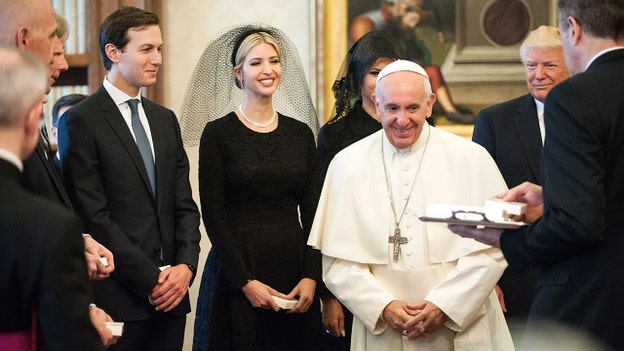
U.S. President Donald Trump and various other world leaders issued comments responding to the news that Pope Francis passed away on Monday.
"Rest in Peace Pope Francis! May God Bless him and all who loved him!" Trump declared in a post on Truth Social.
Vice President JD Vance, who had just met with the pontiff on Easter Sunday, noted that he was happy to see the pope, who was clearly quite ill.
"I just learned of the passing of Pope Francis. My heart goes out to the millions of Christians all over the world who loved him. I was happy to see him yesterday, though he was obviously very ill. But I’ll always remember him for the below homily he gave in the very early days of COVID," Vance said in a post on X, along with a link to the homily. "It was really quite beautiful. May God rest his soul."
The White House X account issued a post that read, "Rest in Peace, Pope Francis."
This is an excerpt from an article written by Fox News' Alex Nitzberg.
Who is survived by Pope Francis?
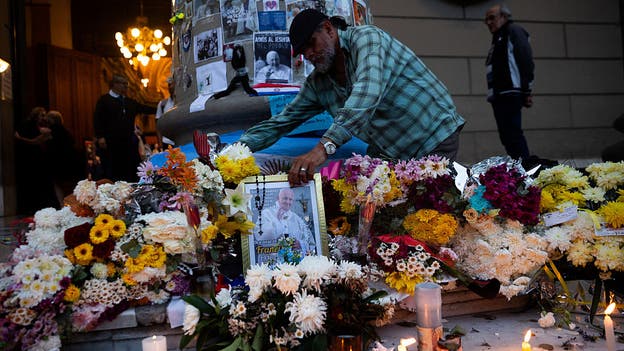
Pope Francis, who passed away on April 21 at the age of 88, was one of five children born to Italian immigrants who fled the Mussolini regime in 1929 and immigrated to Buenos Aires, Argentina.
The pope was the oldest of his siblings and is survived by only one sister still alive, María Elena, 76, who was the youngest daughter and who still lives in Argentina.
A report by HOLA said the pair remained close even after her brother, who’s birth name was Jorge Mario Bergoglio, became pope in 2013 and he regularly called her from Rome.
It is unclear if Pope Francis’ sister had any children.
Though reports suggested Francis also had at least two “nephews” that are children of his cousins who he was also close with.
It remains unclear how many cousins the pope had and how many are still alive.
Vance was one of Pope Francis' last visitors
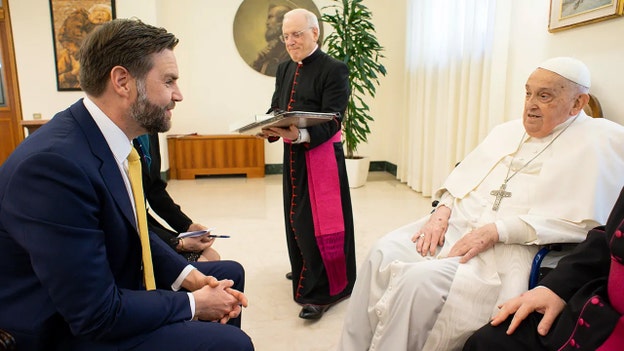
Vice President JD Vance was one of the last visitors of Pope Francis before the first Jesuit to lead the Catholic Church died at age 88.
Vance met with Francis briefly on Sunday to exchange Easter greetings in one of the reception rooms of the Vatican hotel where he'd been living since being released from Rome's Gemmlli Hospital on March 23.
The pope had been hospitalized for five weeks after surviving a severe case of pneumonia.
The 88-year-old pope on Sunday offered the Catholic vice president three big chocolate Easter eggs for Vance’s three young children, who did not attend, as well as a Vatican tie and rosaries.
"I know you have not been feeling great, but it’s good to see you in better health," Vance told the pope. "Thank you for seeing me."
This is an excerpt from an article written by Fox News' Danielle Wallace.
Who are the cardinals Pope Francis appointed in his 12 years as pontiff?
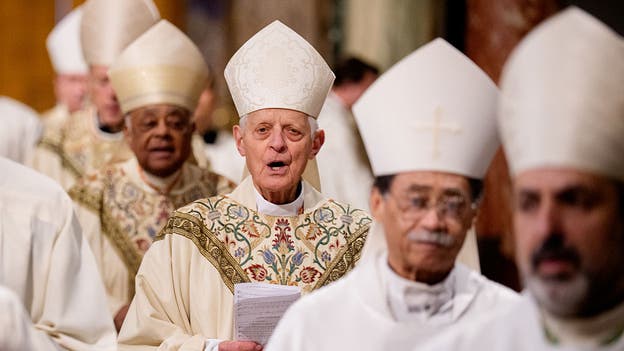
One of the hallmarks of Pope Francis’ papacy was his emphasis on elevating clerics from the “peripheries” of the church and world to the highest ranks of leadership. Over his twelve years as pope, Francis appointed 163 cardinals from 76 countries, 25 of which had never had a cardinal before. Though Francis was generally considered one of the more liberal popes, his cardinal appointments emphasized geographic diversity above ideology.
Francis appointed six cardinals in the United States, most of whom were more liberal in their bent. The U.S. cardinals appointed by Francis were Blase Cupich of Chicago, Kevin Farrell who leads the Vatican’s Dicastery for the Laity, Family and Life, Joseph Tobin of Newark, Wilton Gregory who recently retired after leading the Archdiocese of Washington, Robert McElroy of Washington and Robert Prevost who leads the Pontifical Commission for Latin America.
The result of Francis’ appointments is that the upcoming conclave to elect the new pope will be the most diverse papal election in the history of the Catholic Church. For the first time, a majority of cardinal electors will come from outside of Europe. According to a breakdown by the Catholic news outlet “The Pillar,” 18% of the voting cardinals in the upcoming conclave will come from Latin America, 16% from Asia and the Pacific, 14% from Africa, and 9% from North America.
Delving into Pope Francis' relationship with President Donald Trump
Pope Francis and President Donald Trump shared a relationship marked by both public disagreements and diplomatic engagement over the last decade.
Most recently, the pontiff chastised Trump's mass deportation plan as a "disgrace" on Italian television before congratulating him on his historic electoral victory.
"Inspired by your nation's ideals of being a land of opportunity and welcome for all, it is my hope that under your leadership, the American people will prosper and always strive to build a more just society, where there is no room for hatred, discrimination or exclusion," Pope Francis wrote in a message to Trump.
President Trump will attend the Pontiff's funeral.
Pope Francis memorable moments
Pope Francis memorable moments Pope Franics made history in 2013 when he became the first pope from Latin America and the first Jesuit pope.
He chose the name "Francis" to honor St. Francis of Assisi, reflecting his dedication to the poor and to peace.
That year he made severable notable appearances.
In July, he famously signaled a more welcoming stance toward LGBT community when it comes to the sexual orientation of priests.
“We shouldn’t marginalize people for this. They must be integrated into society,” the pontiff said in an exchange with reporters.
“If someone is gay and he searches for the Lord and has good will, who am I to judge?” the pope asked.
He also denounced what he described as the “globalization of indifference” when it came to migrants and went to tiny Sicilian island of Lampedusa to welcome newly arrived African migrants.
Throughout his papacy, the pope urged countries to welcome migrants and integrate them into society.
He also decried the world financial system that excludes the poor.
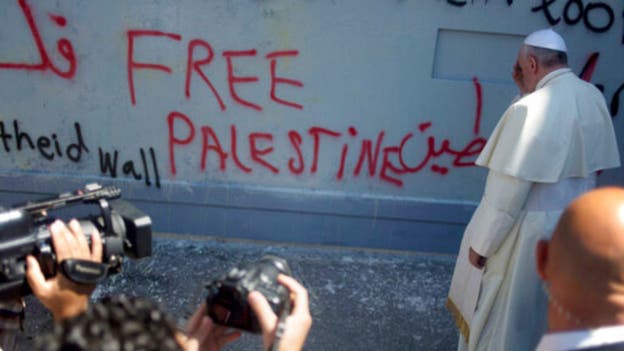
In May 2014 he prayed at wall separating Israel from the West Bank town of Bethlehem, in a show of support for the Palestinian cause. The following month he hosted Israeli and Palestinian presidents for peace prayers in the Vatican gardens.
In 2015 the pope released his encyclical “Laudato Si” calling on the world to take urgent action against climate change, urging care for “our common home.”
He also made it easier for divorced Catholics to remarry by overhauling the annulment process.
In 2016 he said that then presidential candidate Donald Trump was “not a Christian” for wanting to build a border wall.
Pope Francis repeatedly washed the feet of inmates, Muslims, women, and people of other faiths on Holy Thursday — breaking tradition and emphasizing humility and service.
He also visited conflict zones throughout his papacy and in 2020 he expressed support for same-sex civil unions, saying LGBTQ people "have a right to a family.”
About Pope Francis' efforts regarding climate change, the Amazon
Pope Francis made environmental advocacy a central focus of his papacy, particularly climate change and the protection of the Amazon rainforest. In his 2015 encyclical Laudato Si', Francis called for an “ecological conversion,” urging world leaders to address the "global environmental deterioration," as a moral and spiritual obligation.
"Some strategies for lowering pollutant gas emissions call for the internationalization of environmental costs, which would risk imposing on countries with fewer resources burdensome commitments to reducing emissions comparable to those of the more industrialized countries," Pope Francis wrote in his 180-page encyclical. "Imposing such measures penalizes those countries most in need of development. A further injustice is perpetrated under the guise of protecting the environment. Here also, the poor end up paying the price."
He added, "Furthermore, since the effects of climate change will be felt for a long time to come, even if stringent measures are taken now, some countries with scarce resources will require assistance in adapting to the effects already being produced, which affect their economies."
In 2019, Francis convened the Synod for the Amazon, bringing together bishops, scientists, and Indigenous leaders to discuss the region's ecological concerns.
In an updated document in October 2023, Pope Francis wrote, "The world in which we live is collapsing and may be nearing the breaking point," the pope wrote in the 12-page "Laudate Deum," which means "Praise God" in Latin.
"If we consider that emissions per individual in the United States are about two times greater than those of individuals living in China, and about seven times greater than the average of the poorest countries, we can state that a broad change in the irresponsible lifestyle connected with the Western model would have a significant long-term impact," he wrote.
Fox News Digital's Danielle Wallace contributed.
How Pope Francis' papacy was unique from Pope Benedict's
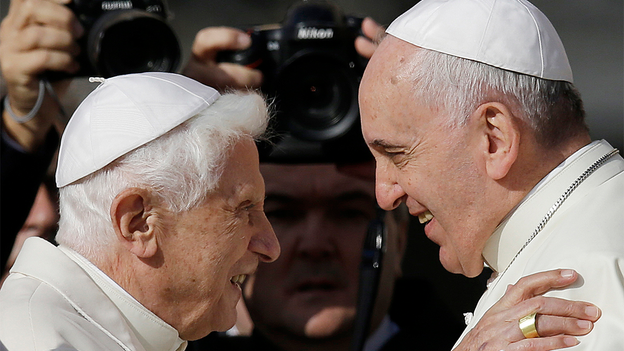
Though Pope Francis and his predecessor Pope Benedict XVI, shared a unique friendship, the two differed significantly in the areas they chose to emphasize as pope.
In general, many Catholics came to see the papacies of the last three popes, John Paul II, Benedict and Francis as characterized by the charisms of theologian, philosopher and pastor, respectively. While Benedict tended to place a heavy emphasis on strengthening the Catholic Church’s teachings in response to growing global secularization, Francis tended towards placing a heavy emphasis on God’s loving nature, while reaching out to the marginalized and caring for the environment.
It should be noted that neither men changed any of the fundamental tenets of the church’s teachings but rather chose to focus their attention and leadership on different aspects of the church’s age-old message.
Bishop Barron reacts to death of Pope Francis, praises papacy marked by 'mercy and evangelization'
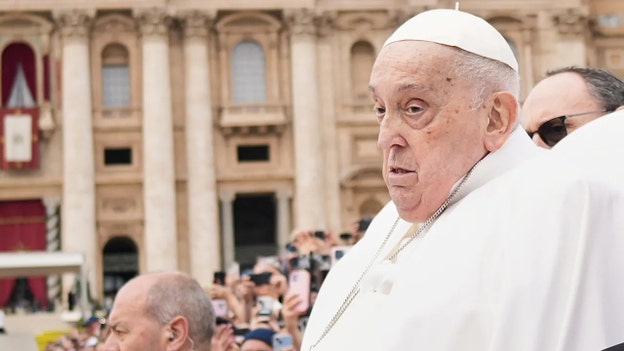
Bishop Robert Barron, a widely read Catholic commentator and author, paid tribute to Pope Francis for a papacy marked by "mercy and evangelization" after the news of his death on Monday.
Barron, who leads the Diocese of Winona-Rochester in Minnesota and is the founder of the popular Catholic ministerial organization Word on Fire, praised Francis for recognizing the "destructiveness of sin."
"Our Holy Father, Pope Francis, born Jorge Mario Bergoglio on December 17, 1936, has reached the end of his earthly pilgrimage," Bishop Barron wrote in a statement shared with Fox News Digital. "Pope Francis was a great pastor who spoke from the heart and with tender affection."
"I had the pleasure of meeting with Pope Francis several times during his papacy," Bishop Barron continued. "On the occasions when he and I spoke, his comments would burn their way into my heart and mind. During a meeting with my fellow bishops, he reminded us that ‘the first task of a bishop is to pray.’"
This is an excerpt from an article written by Fox News' Jeffrey Clark.
Vatican announces the entombment of Pope Francis' coffin
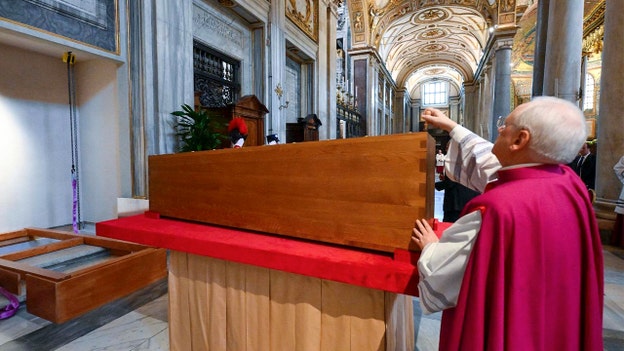
The Vatican said the entombment of Pope Francis' coffin began around 1:00 p.m. Rome time (7:00 a.m. EST) at Santa Maria Maggiore (Saint Mary Major). They said the rite was carried out according to the prescriptions of the Ordo Exsequiarum Romani Pontificis and was presided over by the Cardinal Camerlengo.
Faith leaders reflect on Pope Francis' death, papacy and lasting legacy
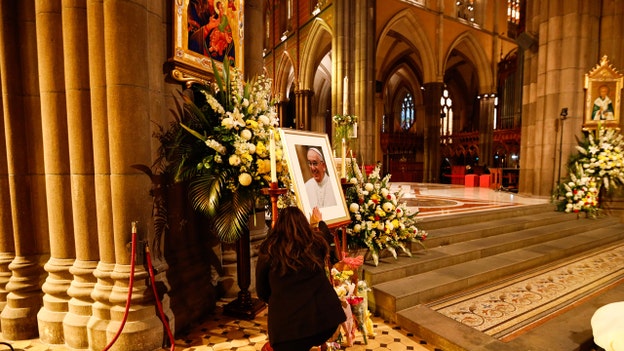
FIRST ON FOX: Faith leaders from across the country are sharing reaction and insight with Fox News Digital as the world mourns the loss of Pope Francis, who died at age 88 on Monday, April 21.
Francis served for 12 years as pontiff. He was the first Jesuit to serve as pope of the Roman Catholic Church.
Dr. Alex McFarland, youth, religion and culture expert, is the author of more than 20 books. He told Fox News Digital on Monday morning, "Christians everywhere, regardless of affiliation, should extend loving condolences and prayers for Catholic believers who are mourning the loss of Pope Francis. Belief in the Triune God and in Christ, the Son, unites us (I John 5:1), along with so many other core truths of the Christian faith. Let us unite in prayer for the Catholic Church to be clearly led at this time by God’s Holy Spirit and His Word."
McFarland is director of worldview for Charis Bible College in Woodland Park, Colorado, and co-hosts the "Truth and Liberty" TV broadcast. He is heard live daily on 200-plus stations of the American Family Radio Network.
Here are thoughts from other faith leaders as well.
This is an excerpt from an article written by Fox News' Maureen Mackey and Ashley Papa.
Pope Francis' funeral draws 250,000 mourners, Vatican says
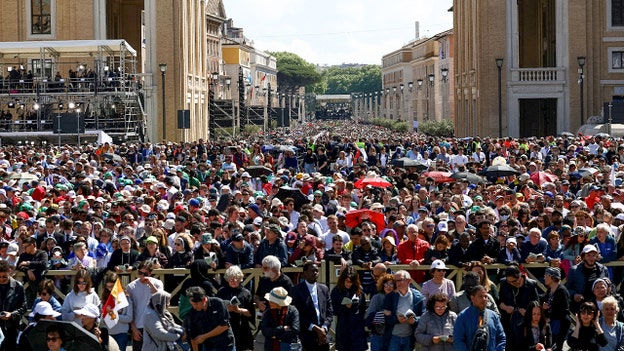
The Vatican said that 250,000 people attended Pope Francis' funeral ceremony at St. Peter's Basilica, including leaders from across the globe.
In the funeral homily, Cardinal Giovanni Battista Re, the dean of the College of Cardinals, described the late pontiff as "a pope among the people," making the number of attendees at his funeral symbolic of his impact on others.
Pope Francis revealed burial wishes just days after becoming pope in 2013
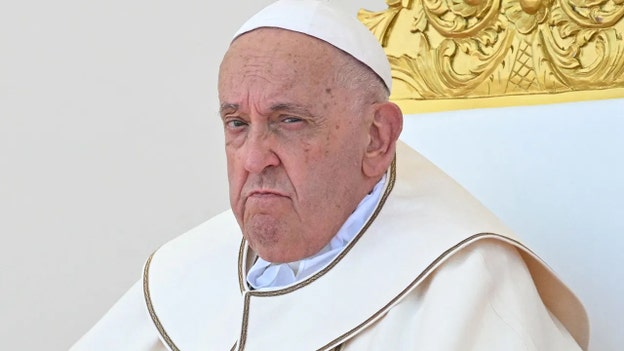
Just a few days after becoming pope, Pope Francis revealed his burial wishes upon his death.
In March 2013, Pope Francis was elected during a conclave by the Cardinals of the Catholic Church following Pope Benedict XVI’s decision to step down amid health concerns.
"It was his belief that he may not live very long," Neomi DeAnda, a trained constructive theologian, told Fox News Digital. "He was already in his 70s when he was elected pope, and he wanted to be prepared when God called him home."
DeAnda holds a Ph.D. in theology from Loyola University in Chicago, a master's in theology from the Oblate School of Theology and a master's in theology from St. Mary's University in Texas. She is an expert in Latin American studies and on Mary in Latin America.
"He did not know how much longer he would live, and since he was chosen pope at an older age, he definitely did not expect to have such a long papacy," DeAnda said. "He wanted to have his wishes available in case God called him home."
Pope Francis selected the Basilica of Santa Maria Maggiore as his final resting place.
This is an excerpt from an article written by Fox News' Gabriele Regalbuto.
How Pope Francis reshaped the Catholic Church
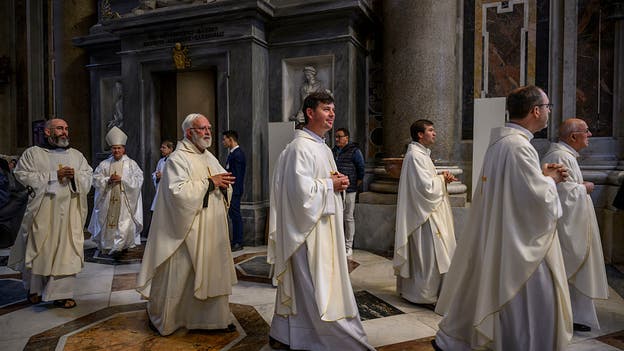
While Pope Francis did not change any of the fundamental aspects of the Catholic Church, he did in many ways reshape the face of the church, placing a heavier emphasis on reaching out to the peripheries and to the poor and marginalized.
Pope Francis was known and beloved for his humble demeanor as well as his constant message of hope and mercy.
He often broke with tradition, such as his decision to live at the Domus Sanctae Marthae apartment building in the Vatican rather than the Apostolic Palace, where popes have typically resided.
Throughout his papacy, Francis insisted that priests be shepherds to their flocks above all else, urging them to “smell of sheep.” Francis was also known as an advocate for migrants and refugees and for good “stewardship” of the environment. He was not afraid of also making controversial moves such as welcoming a group of transgenders to the Vatican and calling for the inclusion of gay individuals in the church, while still maintaining the church’s teaching that practicing homosexuality is a contrary God’s design.
Francis also placed great emphasis on the importance and fundamental value of children and families amid a society increasingly viewing children and marriage as a burden.
Organization representing families of Israeli hostages expresses condolences
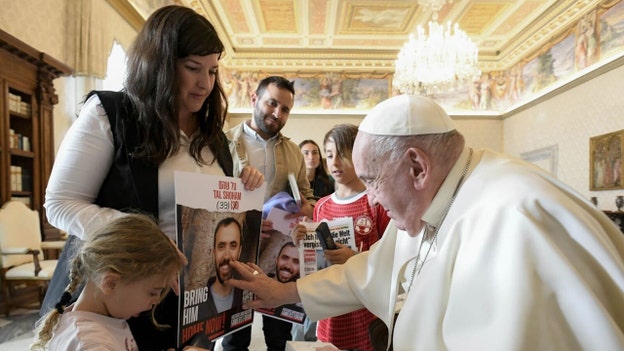
The Hostages and Missing Families Forum, an organization that represents families of hostages being held by Hamas, sent condolences to the "millions around the world who mourn the passing of His Holiness Pope Francis."
"His strong commitment to everything human was also clearly demonstrated in his solidarity with those innocent people who were kidnapped by Hamas terrorists on [Oct. 7, 2023] and have been held in captivity ever since. We will always cherish his openness and moral support during our ordeal," the organization wrote in a press release.
The organization also expressed gratitude for Catholic communities who have supported them since their loved ones were taken hostage. Additionally, the organization said that it hopes the Catholic Church will "continue to openly and vigorously support the international effort to bring them home as soon as possible."
What American Catholics thought about Pope Francis
Pope Francis, who changed the face of the papacy, was broadly popular with the more than 60 million U.S. Catholics, according to recent public opinion polling.
Seventy-eight percent of American Catholics expressed a favorable opinion of the pope in a Pew Poll conducted in early February, shortly before Francis' lengthy hospitalization for a case of double pneumonia. The 88-year-old pope died on Monday
Francis' popularity among American Catholics was constant throughout his dozen-year tenure as pope, with his favorability peaking at 90% in a February 2015 poll by Pew.
"Pope Francis enjoyed broad support among American Catholics – certainly exceeding the popularity of any elected officials in the U.S.," veteran political scientist Wayne Lesperance, the president of New England College, told Fox News.
U.S. Catholics also generally viewed Francis more positively than his immediate predecessor in the Vatican, Pope Benedict XVI.
This is an excerpt from an article written by Fox News' Paul Steinhauser.
Pope Francis' funeral Mass concludes, pontiff taken to final resting place
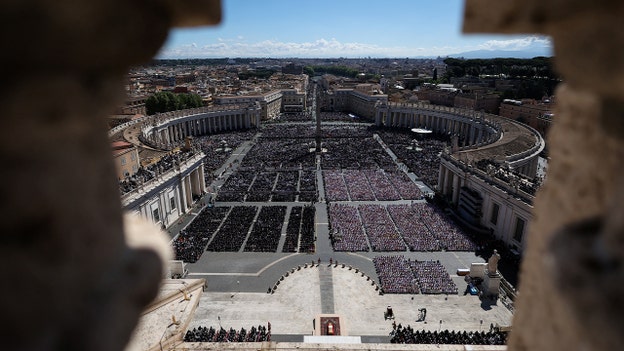
Pope Francis' funeral Mass has ended, and the pontiff will be laid to rest at Santa Maria Maggiore. He requested to be buried there in his final will and testament.
"I have always entrusted my life and the priestly and episcopal ministry to the Mother of Our Lord, Mary Most Holy. Therefore, I ask that my mortal remains rest waiting for the day of the resurrection in the Papal Basilica of Santa Maria Maggiore," the pope wrote.
Pope Francis will be the first pope in more than a century to not be buried beneath St Peter’s Basilica. He requested his tomb be "simple, without particular decorum and with the only inscription: Franciscus."
Why did Pope Francis restrict the ancient Latin Mass?
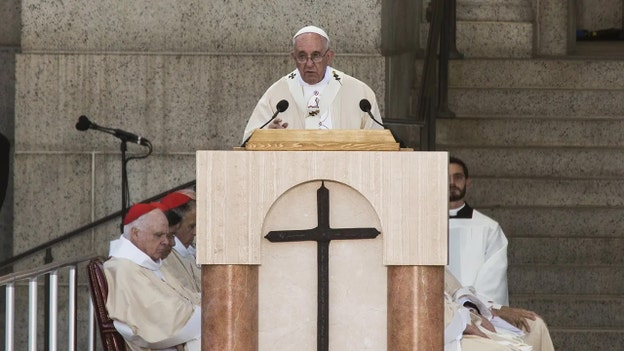
One of the most controversial aspects of Pope Francis’ legacy as the leader of the Catholic Church is his decision to restrict an older form of the Catholic liturgy known as the Traditional Latin Mass.
Francis explained that he decided to restrict the Latin Mass because he was concerned its use was leading to division in the Church. Francis said he felt the more ancient mass was "being used in an ideological way" in reaction to modernity, including the more modern Vatican II mass.
The mass consists of the "Liturgy of the Word" and "Liturgy of the Eucharist," the latter of which is considered the most sacred and highest form of worship by Catholics.
The Latin Mass, which was formalized by Pope St. Pius V in 1570 and continues to be practiced by some Catholics today, has several key differences from the more common Vatican II mass, which was instituted in 1969. These differences include the entirety of the mass being said in Latin and the priest facing "ad orientem" ("to the east") rather than facing the congregation.
During his 12-year pontificate, Francis took several actions to limit the use of the Latin Mass throughout the world. The result was that the Latin Mass was relegated to a very limited number of churches, with it often only being offered by priests belonging to specific orders expressly devoted to it.
This is an excerpt from an article written by Fox News' Peter Pinedo.