 Print
Print
 Close
Close

America strikes Iran again — has Washington planned for what comes next?
By Robert Maginnis
Published February 28, 2026
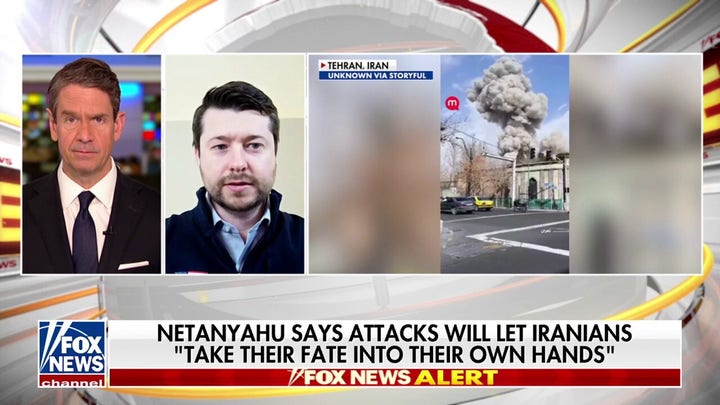
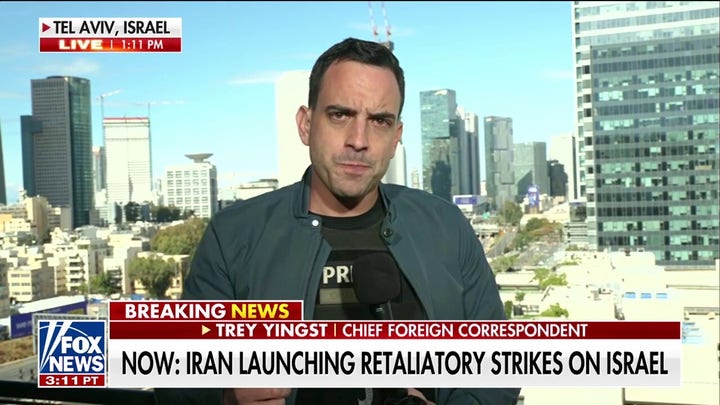
The second round has begun. The United States and Israel have launched coordinated military strikes inside Iran, citing an existential threat tied to Tehran’s nuclear and missile programs. Explosions have been reported in Tehran and other cities. Iranian airspace was penetrated. Iran’s Supreme Leader has reportedly been moved to a secure location. Tehran has already launched counter-missiles and is vowing further retaliation, including potential strikes against U.S. bases if attacks continue.
The strikes are called "Operation Epic Fury." It is the most significant U.S.-Israeli strike on Iran since last year’s Operation Midnight Hammer.
The military question was never whether we could strike.
WHERE IRAN’S BALLISTIC MISSILES CAN REACH — AND HOW CLOSE THEY ARE TO THE US
It was always what happens next.
We’ve Been Here Before
Last June, Operation Midnight Hammer sent seven B-2 stealth bombers and a guided-missile submarine against Fordow, Natanz and Isfahan. Fourteen 30,000-pound bunker-busters and more than two dozen Tomahawk cruise missiles struck in under half an hour. President Donald Trump called it "complete and total obliteration."

It was not. Damage was severe. But subsequent intelligence assessments concluded the program was set back by months, not years. Iran had reportedly moved portions of its enriched uranium stockpile before the strikes. By late 2025, the International Atomic Energy Agency acknowledged it could no longer fully verify Iran’s nuclear inventory after inspectors were restricted or expelled.
Military force destroyed facilities. It did not erase knowledge. It did not dissolve intent.
Tehran absorbed that lesson.
Now Washington must show it has absorbed lessons of its own.
The Retaliation Ladder
Iran has already begun responding. The likely pattern is familiar: calibrated escalation.
Expect proxy attacks, cyber operations, missile signaling and maritime pressure. The Strait of Hormuz remains Tehran’s most powerful economic lever. Roughly one-fifth of global petroleum flows through that corridor. After the first strike, Iran’s parliament voted to close it, then backed down. A second confrontation, with succession dynamics now in play, may not follow the same script.
If Iran directly targets U.S. forces in large numbers, escalation could move quickly beyond limited strike-for-strike exchanges. The difference between a punitive raid and a sustained campaign is often one missile too many.
The Regime is Damaged — Not Gone
Those expecting collapse should be cautious. On December 28, 2025, protests erupted in Tehran’s Grand Bazaar and spread nationwide. Thousands were killed or detained. The regime shook — but did not fall.
Security forces did not fracture. Senior defections did not materialize. Supreme Leader Ali Khamenei is eighty-six. Succession is looming. Karim Sadjadpour has described the moment as the "Autumn of the Ayatollahs," a system under strain but still intact. The Council on Foreign Relations outlines three plausible post-Khamenei outcomes: continuity, IRGC dominance, or fragmentation. None guarantees moderation.

If clerical rule weakens further, the Islamic Revolutionary Guard Corps remains the most organized institution in the country.
External strikes can fracture regimes. They can also consolidate hardliners.
The Revolutionary Guard may emerge stronger, not weaker.
The Opposition Question
Some outside Iran look to Crown Prince Reza Pahlavi. He has name recognition and diaspora support. But symbolic leadership and governing capacity are not interchangeable. He does not command a structured internal apparatus capable of immediately administering a 92 million-person state.
AYATOLLAH'S ARSENAL VS. AMERICAN FIREPOWER: IRAN'S TOP 4 THREATS AND HOW WE FIGHT BACK
Others point to the MEK (Mujahedin-e Khalq) and the NCRI. They maintain an organized external network and cite congressional resolutions such as H.Res. 100 and H.Res. 1148 supporting a democratic, secular, non-nuclear Iran. Reports have described MEK-linked fighters mounting coordinated operations against regime compounds, signaling operational reach.
But operational reach does not equal governing legitimacy. The MEK’s wartime alignment with Saddam Hussein continues to shadow its domestic credibility. An armed opposition group can destabilize a regime. Governing the aftermath requires broader national consent.
At present, there is no clear post-regime blueprint.
That matters more today than it did yesterday.
China and Russia Will Not Sit Idle
Beijing and Moscow condemned earlier strikes but avoided direct confrontation. That restraint does not mean passivity. China remains Iran’s largest oil customer. Russia has conducted joint exercises with Iranian naval forces. Neither needs to send troops to complicate Washington’s objectives. Arms transfers, intelligence cooperation, cyber support and diplomatic shielding at the United Nations are sufficient to shape outcomes.
The conflict may remain regionally contained. But great-power friction always lurks at the margins.
The Real Test Begins Now
The second strike has happened.
The military demonstration is complete.
Now comes the harder phase.
Has Washington accounted for escalation in Hormuz? Has it gamed out IRGC consolidation? Has it prepared for succession turbulence? Has it defined clear objectives beyond "degrade and deter"? Has it established exit criteria?
CLICK HERE FOR MORE FOX NEWS OPINION
Iran learned from the first round. It dispersed material. It tightened security. It survived shock.
America must demonstrate it has learned, too.
Military strength can crater runways, collapse tunnels and silence radars.
Strategy determines whether that force reshapes the regime’s behavior — or merely resets the clock.
CLICK HERE TO DOWNLOAD THE FOX NEWS APP
The world is watching the explosions.
History will judge what follows the morning after.
CLICK HERE TO READ MORE FROM ROBERT MAGINNES
https://www.foxnews.com/opinion/america-strikes-iran-again-has-washington-planned-what-comes-next