 Print
Print
 Close
Close

Biden's Supreme Court pledge is not Reagan's nor Trump's—it's unfair
By Jonathan Turley
Published January 27, 2022
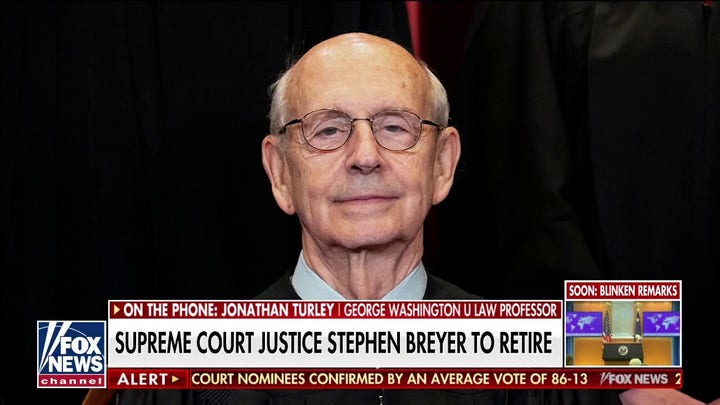
With the retirement of Supreme Court Justice Stephen Breyer, President Joe Biden was immediately challenged by Democrats to make good on his pledge during the 2020 presidential campaign to only consider black females for his first vacancy on the Court.
When he made that pledge, some of us raised concerns that he was adopting a threshold racial and gender qualification for the Court. That claims were immediately challenged by liberal commentators and their authority was somewhat surprising: Ronald Reagan.
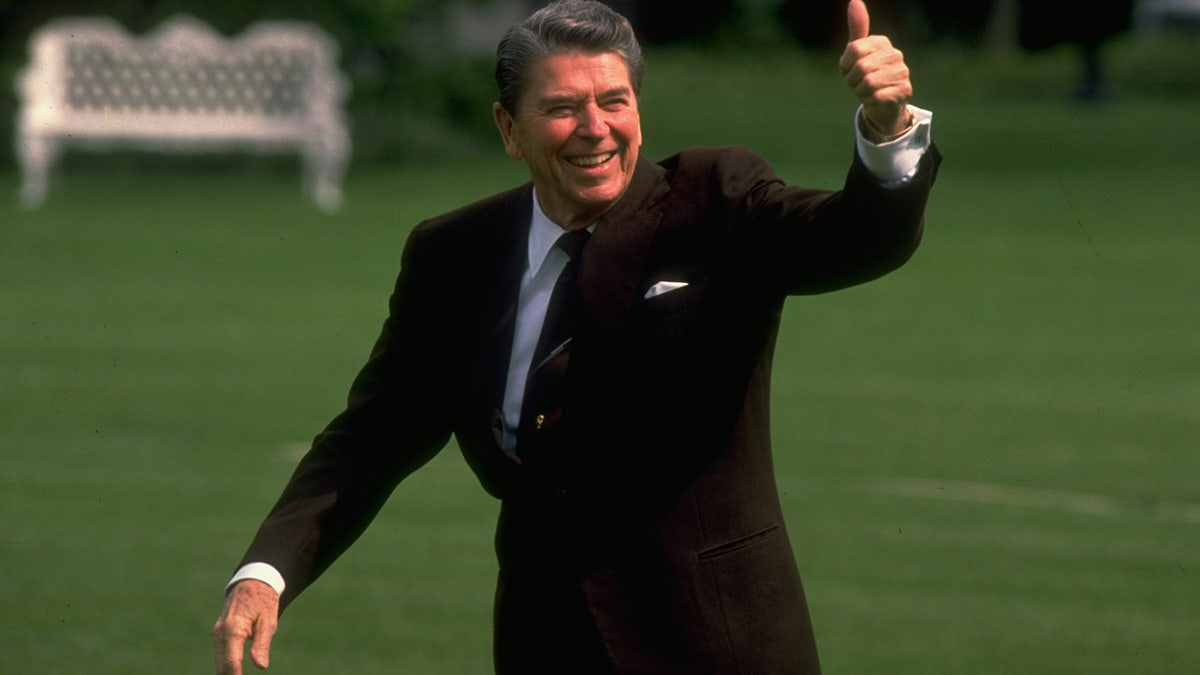
President Ronald Reagan gives a thumbs up after returning to the White House. (Cynthia Johnson/Getty Images/File)
They insisted that Ronald Reagan made the same pledge to only consider a woman for his first vacancy. The claim is false and indeed the Reagan example shows why Biden's pledge was both unprecedented and unnecessary.
In his campaign, Biden made two pledges to voters and asked his opponent to do the same to nominate only a black woman for the next open Supreme Court seat and to choose a woman as his vice president.
As previously discussed, the Supreme Court has repeatedly rejected such threshold exclusions on the basis of race or gender as raw discrimination. In 1977, the Court ruled in Regents of the University of California v. Bakke, that affirmative action in medical school admissions was unconstitutional. The justices declared that preferring "members of any one group for no reason other than race or ethnic origin is discrimination for its own sake" while adding that "this the Constitution forbids."
Biden's controversial use of racial and gender criteria will only grow in the coming months as the Supreme Court considers two new cases involving racial preferences in college admissions. Those cases may now be heard before a Court with one member who was expressly selected initially on the basis of not of a racial preference but a racial exclusionary rule.
Various commentators insisted that Biden did exactly what Reagan did in 1980 when he pledged to appoint a woman to the Court. The comparison, however, shows the opposite. Reagan did not exclude anyone other than women in being considered while making clear that he wanted to give one of his vacancies to a female candidate.
On Oct. 15, 1980, Reagan declared that "I am announcing today that one of the first Supreme Court vacancies in my administration will be filled by the most qualified woman I can possibly find. … It is time for a woman to sit among the highest jurists."
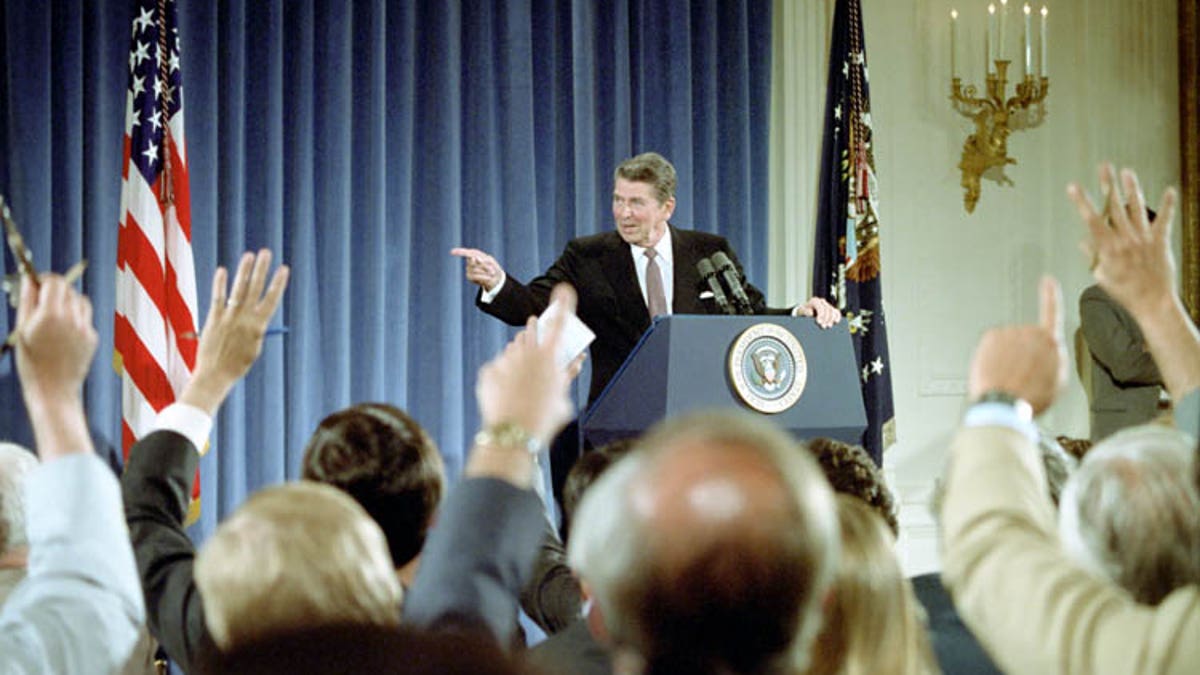
President Reagan at his 18th press conference on June 28, 1983, at the White House. (Reagan Presidential Library)
Notably, it was Jimmy Carter who pounced on that pledge as creating a threshold gender criteria. Others noted at the time that Reagan was simply pledging that he would select a woman in "one of the first Supreme Court vacancies" rather than the first vacancy. Indeed, when a vacancy did arise, aides told the media that there was "no guarantee" that he would select a woman.
Reagan never pledged to only consider women and in fact considered non-female candidates. One of the leading contenders was considered Judge Lawrence Pierce, an African American trial court judge. Newsweek and other media sites listed an array of males being actively considered including Robert Bork, Dallin H. Oaks, Malcolm R. Wilkey, Philip B. Kurland, and Edwin Meese III.
Nevertheless, Reagan clearly wanted a female candidate and reportedly told White House Deputy Chief of Staff Michael Deaver to "find a woman who was qualified and come back and discuss it if that wasn’t possible." That person was Sandra Day O'Connor.
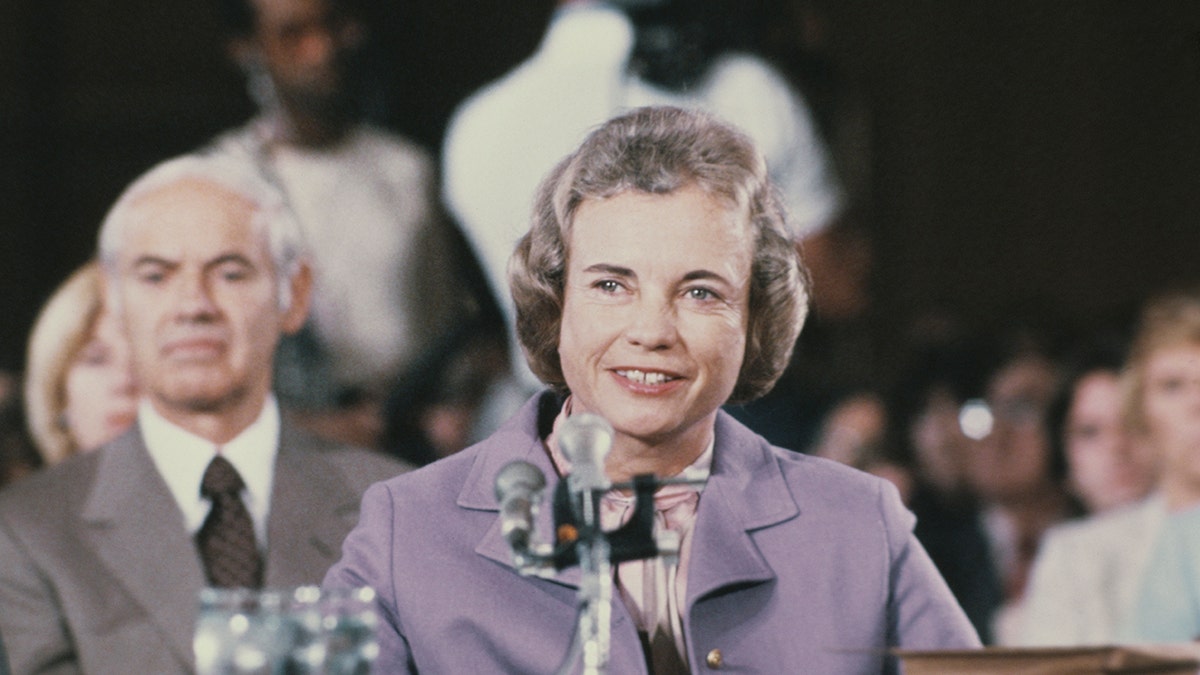
Arizona Judge Sandra Day O'Connor testifies at her confirmation hearing in September 1981. (Keystone/Hulton Archive/Getty Images)
Reagan did what many universities do in seeking to add diversity in admissions while not excluding other applicants. The Supreme Court has allowed universities to use race or gender as a factor in seeking to create a diverse "critical mass" on campuses.
Commentators have also claimed that Donald Trump made the same pledge. After Ruth Bader Ginsburg died, Trump announced that "I will be putting forth a nominee next week. It will be a woman." However, he had already publicly released three lists of possible nominees of different races and genders. His staff had been working on vetting those on the list. However, the final short list included not just Barrett (who received the nomination) but a majority of male jurists.
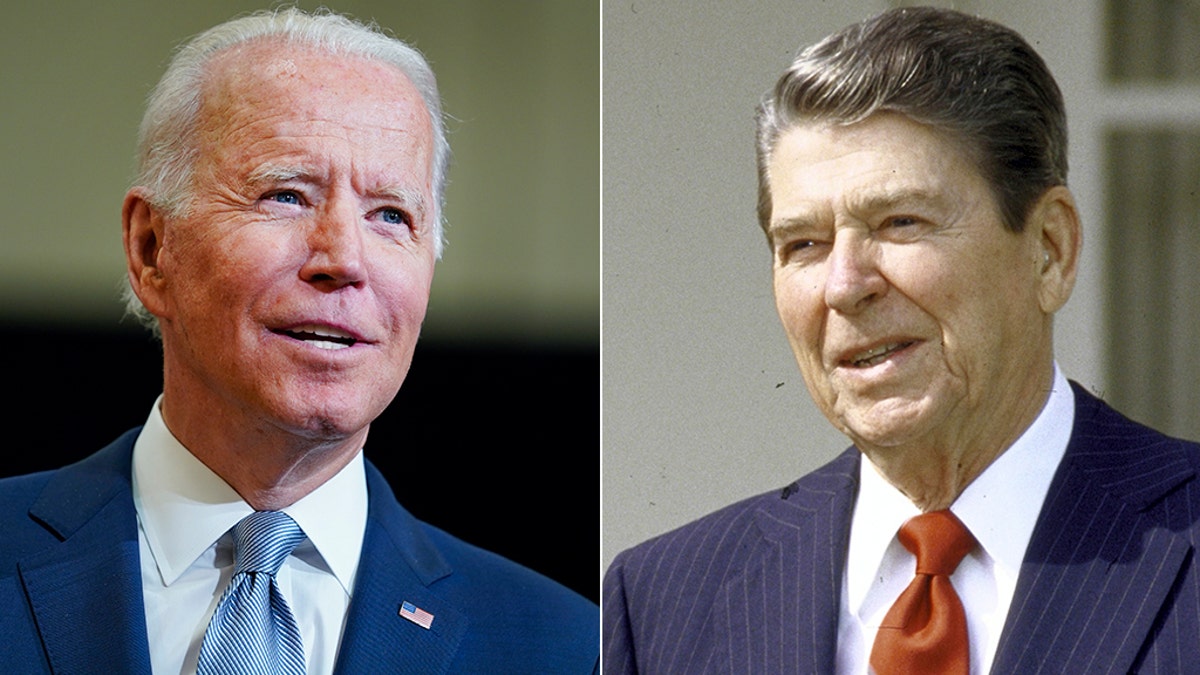
(AP/Getty Images)
What is most striking about the Reagan-Biden comparison is how unnecessary it was for Biden to categorically rule out non-female and non-black applicants. He could have simply made clear that he wanted to add a black female to the Court and would make that a priority without promising that the first vacancy would be barred to other genders or races.
It was popular for many voters to say that "whites or males need not apply," but it also meant that Biden would reject a Louis Brandeis or even a Thurgood Marshall because they are the wrong gender or race. It also meant that minority groups (including Native Americans or Asians) that have never had a justice would be also barred.
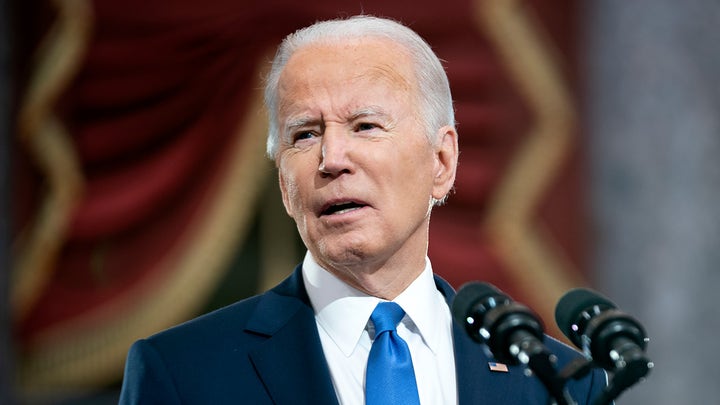
Biden's record on racial discrimination as president has not been good. It is the same type of threshold use of race that resulted in federal programs in the Biden Administration being struck down as raw racial discrimination, including prioritizing black farmers for pandemic relief.
CLICK HERE TO GET THE OPINION NEWSLETTER
There is also a current controversy in the Biden Administration's use of race in distributing scarce COVID treatments. It was also entirely unnecessary. The CDC has described the obvious conditions are cancer, diabetes, obesity, heart conditions and other medical ailments. However, the CDC also discussed race as a factor due to "long-standing systemic health and social inequities." There is no reason to make race itself a factor as opposed to the medical conditions. Indeed, given the higher rate of these conditions (and the lower rate of vaccinations) in minority communities, there would still be a higher priority given to many minority patients.
CLICK HERE TO GET THE FOX NEWS APP
Biden's decision to impose a racial and gender exclusionary rule will now unnecessarily add a controversy to this nomination. The short list of judges include some who would be natural candidates on any vacancy. President Biden has saddled the eventual choice with an asterisk nomination that is unfair to both the nominee and the Court.
CLICK HERE TO READ MORE FROM JONATHAN TURLEY
https://www.foxnews.com/opinion/biden-supreme-court-reagan-trump-jonathan-turley