














Why the best defense against AI scams is old-fashioned skepticism
From voice cloning to fake arrests, cyber expert Morgan Wright breaks down how scammers use high-tech tools to exploit basic human fears.
You've already lost money to a scam. You're frustrated and probably wondering whether you'll ever see that money again. Then, while scrolling through Facebook, an advertisement appears promising to recover your stolen funds. Suddenly, there's a little hope. Maybe someone out there can actually help. Unfortunately, that moment of hope is exactly what scammers are trying to exploit.
One of our loyal CyberGuy followers, Patrick K, recently tipped us off to suspicious fraud recovery advertisements and profiles appearing on Facebook. He shared screenshots of what he was seeing and urged us to warn others.
His tip caught our attention, so we decided to dig deeper and contacted Meta about the suspicious accounts and advertisements. After reviewing the examples we provided, Meta confirmed to CyberGuy that it removed the flagged accounts and ads for violating its impersonation policies. The screenshots Patrick shared are especially concerning. One promotes stolen-asset recovery services. Another uses FBI-related imagery and claims to help people navigate the Internet Crime Complaint Center, better known as IC3. Together, they show how convincing these offers can appear.
Missed CyberGuy LIVE? Watch the replay and discover 5 ways to travel smarter and save money.
Our free CyberGuy LIVE class, 5 Ways to Travel Smarter and Save Money, has ended, but you can still watch the full replay. Kurt "CyberGuy" Knutsson walks you through five practical ways to protect your phone and personal information, avoid common travel scams, find better deals, save money on bookings and use technology to make your travels easier and less stressful. No technical experience is needed.
Watch the free replay + downloadable checklist now at CyberGuyLive.com.
WHY IDENTITY THEFT COMES BACK FOR THE SAME PEOPLE
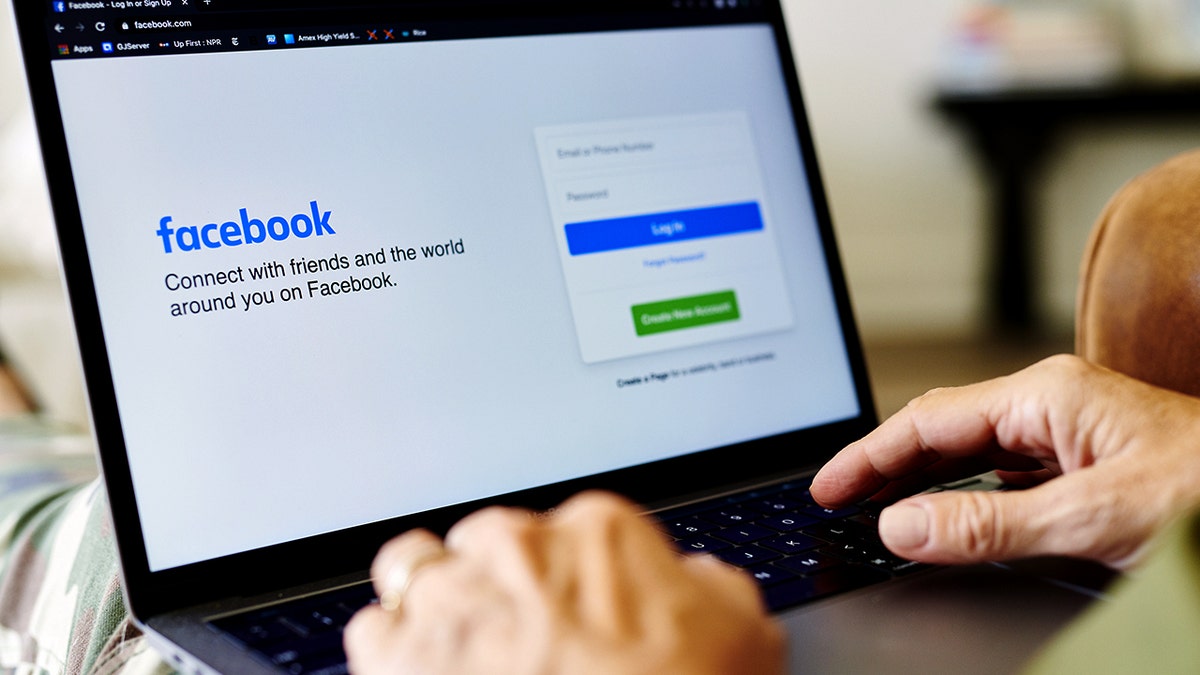
Scammers are using Facebook pages and advertisements as fronts to exploit previous scam victims. (Gabby Jones/Bloomberg via Getty Images)
Facebook recovery ads promise to get your money back
The first screenshot Patrick shared shows a Facebook advertisement displayed under the name Adam Molina. The promotional image features a smiling man in a business suit against a purple background. The graphic bears the name "DARKTRACER" and asks whether you've lost assets or funds to scammers. Below that message, the ad promotes services like recovering stolen assets and retrieving hacked cryptocurrency wallets. At the bottom, there's a Facebook Messenger button inviting people to send a message.
That's what concerns me. Someone who just lost thousands of dollars could see this advertisement and believe they've finally found a solution. After all, it looks like a company offering specialized assistance. And because it appears as a paid Facebook advertisement, some people may assume the advertiser has been thoroughly vetted.
Fake FBI investigator profiles create another trap
The second screenshot Patrick sent us is even more troubling. It shows a Facebook page displaying the title "Director of Fraud Investigations" and the name Grace K. The cover image features the White House, the FBI's J. Edgar Hoover Building and cryptocurrency graphics. It also displays references to IC3 and the U.S. Department of Justice. The page description claims to help fraud victims navigate the IC3 reporting process. It even suggests that people who lost more than $4,000 may qualify for federal review. That claim appears on the page, but we found no support for such a dollar threshold in the FBI's published guidance.
It's a convincing presentation for someone desperately searching for help. The American flags and official-looking graphics create the impression that a federal agency may be involved. But here's what you need to know. The FBI says IC3 has no official social media presence. It never investigates crimes or recovers stolen money through Facebook Messenger or Telegram. That means any Facebook page claiming to represent IC3 should immediately raise suspicion, regardless of how official it looks. Meta's subsequent removal of the flagged accounts and advertisements reinforces those concerns.
Meta removes Facebook recovery scam accounts after CyberGuy inquiry
After CyberGuy shared Patrick's screenshots with Meta, the company investigated and confirmed that it removed the flagged accounts and advertisements for violating its impersonation policies. Meta also provided broader details about its efforts to combat these schemes. According to the company, it removed more than 179 million accounts, Pages and Groups for misrepresenting identity during the first half of 2026. Most were removed before anyone reported them. Since 2025, Meta says it has also removed more than 17.3 million Facebook and Instagram accounts linked to criminal scam centers.
This problem isn't new to Meta. The company previously worked with cybersecurity researchers at Graphika to identify fraudulent websites impersonating the FBI's IC3 complaint center. The scammers promised to help victims recover stolen money, including cryptocurrency. Meta says it blocked the fraudulent websites and removed accounts connected to those operations. However, the examples Patrick discovered show how these impersonation schemes continue to reach Facebook users.
FBI warns about fake IC3 recovery investigators
On July 20, 2026, the FBI issued an updated public warning about scammers impersonating IC3 investigators. According to the agency, criminals create fraudulent social media profiles that appear connected to the FBI. They then approach people who have already reported losing money to online scams. In one documented scheme, a victim realizes they've been defrauded and threatens to report the crime to the FBI. Later, someone pretending to be an FBI agent contacts the victim through Facebook Messenger. The conversation may move to Telegram, where the impersonator provides a link supposedly connected to the victim's IC3 complaint. That link may contain malicious code or collect additional financial information. Either way, the victim faces another potential loss.
The FBI also warns about AI-generated videos impersonating federal officials. Some of these videos direct victims to fraudulent websites designed to resemble the real IC3 complaint center. Once there, visitors may be asked to submit personal information under the impression they're dealing with federal investigators. And this type of impersonation extends well beyond Facebook. In a separate September 17, 2026, warning, the FBI reported nearly 61,000 complaints involving law enforcement or government impersonation scams between January 2025 and July 2026. Reported losses exceeded $1.6 billion. Those figures cover a broad range of government impersonation schemes, not Facebook recovery scams specifically. However, they show how costly impersonating official authorities has become.
SCAMMERS ARE COMING FOR YOUR MONEY. HERE’S THE ONE THING YOU MUST NEVER DO

Scammers increasingly target previous fraud victims with online offers promising to recover stolen money. (Kurt "CyberGuy" Knutsson)
Why scammers target people who already lost money
There's a particularly cruel element to recovery fraud. The criminals approach people who may already be dealing with serious financial hardship. Some have lost retirement savings, while others have been tricked into sending cryptocurrency to someone they trusted. When an offer arrives promising to recover those funds, it's understandable why someone might want to believe it.
In August 2026, the Federal Trade Commission warned that recovery scammers sometimes purchase lists of people who previously lost money to fraud. They use those details to make their offers appear credible. For example, someone may contact you claiming they've located your stolen funds. They might even know approximately how much you lost. That information can make the person sound legitimate, especially when they claim to represent a government agency or law firm.
Eventually, the supposed recovery agent introduces a fee. They might call it a processing charge or claim the payment will release your recovered funds. But after you pay, the promised refund never arrives. In some cases, the scammer also collects enough personal information to attempt identity theft. We've previously covered the scripts criminals use in cryptocurrency scams, including fake recovery services that demand additional cryptocurrency payments.
How to spot Facebook recovery scams before losing more money
A convincing advertisement or official-looking Facebook profile can fool someone who's searching for answers. Fortunately, there are warning signs you can look for before responding. Here's how to protect yourself.
1. Be suspicious of guaranteed recovery promises
Anyone claiming they can definitely retrieve stolen cryptocurrency or recover all your lost money deserves close scrutiny. Recovery depends on the circumstances, and no legitimate service can guarantee success. Be especially cautious when someone promises fast results.
2. Never pay an unexpected upfront recovery fee
The FTC warns that scammers often demand processing fees before supposedly releasing recovered funds. These payments may be described as taxes or administrative charges. However, the FBI says IC3 never charges victims to recover stolen money.
3. Check claims of government involvement
If someone on Facebook claims to work for IC3, don't engage. The FBI says IC3 has no official social media presence. Instead, type IC3.gov directly into your browser to verify information or submit a complaint.
4. Watch for conversations moving to other apps
Scammers may begin contacting you through Facebook Messenger before asking to continue on Telegram. The FBI specifically identified this behavior in IC3 impersonation cases. Be cautious when an unexpected contact pressures you to switch platforms.
5. Protect your financial information
Never share banking passwords or cryptocurrency wallet recovery phrases with someone advertising recovery services. Also, don't install remote-access software at the request of an unexpected contact. Doing so could give scammers access to your accounts or device.
6. Research recovery companies independently
Search for the company's name alongside terms such as "scam" or "complaint." Look for independently verifiable business information and a legitimate track record. Keep in mind that scammers can create fake testimonials and misleading websites to appear trustworthy.
THE BEST DEFENSE AGAINST HIGH-TECH AI SCAMS IS LOW-TECH SKEPTICISM, EXPERT WARNS

Scammer Facebook pages used FBI branding to promote fraud assistance before Meta removed the flagged accounts and advertisements. (Photo by Kevin Carter/Getty Images)
7. Use strong antivirus software
Strong antivirus software can help detect malicious websites, phishing links and harmful downloads associated with recovery scams. Choose protection with real-time threat detection and web security features. Keep it updated to help defend against emerging threats. However, antivirus software cannot prevent every scam, especially if you're tricked into sending money yourself. Get my picks for the best 2026 antivirus protection winners for your Windows, Mac, Android & iOS devices at Cyberguy.com
8. Consider a personal data removal service
Scammers may use information from data broker websites to identify potential targets and make fraudulent recovery offers more convincing. A reputable data removal service can help remove your personal information from covered broker sites. This reduces some of the information criminals can easily find about you, although it cannot eliminate every exposure. Check out my top picks for data removal services and get a free scan to find out if your personal information is already out on the web by visiting Cyberguy.com
9. Report suspicious Facebook advertisements
Select the three-dot menu in the upper-right corner of the advertisement and choose Report ad. Then follow the prompts. For suspicious profiles or pages, use Facebook's reporting options to flag possible impersonation or fraud.
10. Invest in identity theft protection
If scammers obtain your personal information, they may attempt to use it for additional fraud. An identity theft protection service can monitor for certain signs of suspicious activity and alert you to potential misuse. Depending on the plan, it may also provide identity restoration assistance if your information gets compromised. See my tips and best picks on Best Identity Theft Protection at Cyberguy.com
11. Save evidence before blocking the account
Take screenshots of the advertisement or suspicious profile before blocking it. Also, preserve the page URL and any messages you received. These details may help Facebook and law enforcement investigate the activity.
What to do if you already contacted a recovery scammer
If you've exchanged messages with someone offering to recover stolen money, stop communicating until you've independently verified who you're dealing with. And if you've already sent money, act quickly. Here's what to do next.
- Stop communicating with the suspected scammer. Don't send additional payments or share more personal information. Save your messages and screenshots before blocking the account.
- Contact your bank or payment provider immediately. Explain what happened and ask whether the transaction can be stopped or reversed. The sooner you report the payment, the better your chances of recovering some or all of your money.
- Report cryptocurrency transactions. If you sent cryptocurrency, notify the exchange or wallet provider you used. These transfers are generally difficult to reverse, but reporting them may help investigators trace the funds.
- File an official fraud complaint. Report the incident to the FBI's Internet Crime Complaint Center at ic3.gov/ and the FTC at ReportFraud.ftc.gov. You can also notify local law enforcement.
- Scan your devices for malware. If you clicked a suspicious link or downloaded software, run a full scan using strong antivirus protection. Remove any detected threats and uninstall unfamiliar applications. If you granted someone remote access, disconnect the device from the internet and seek trusted technical assistance.
- Secure your accounts. If you shared passwords, change them immediately from a trusted device and enable multifactor authentication. If you provided banking details, contact your financial institution to discuss additional protections.
- Protect yourself from identity theft. If you exposed your Social Security number or other sensitive information, visit IdentityTheft.gov for recovery steps. Consider identity theft monitoring and restoration services for additional support. You can also place free credit freezes with the three major credit bureaus.
- Explore legitimate recovery options. The FTC provides guidance on recovering payments sent to scammers, including steps based on how you paid. Recovery isn't guaranteed, but official channels offer your best starting point.
Remember, legitimate recovery options may exist through financial institutions or law enforcement investigations. Always contact these organizations directly using their official websites or verified phone numbers rather than information provided by someone who approached you online.
Kurt's key takeaways
I have to give Patrick credit for bringing these suspicious Facebook ads to our attention. After we followed up with Meta, the company investigated and removed the accounts and ads we flagged. That's a positive outcome, and I appreciate Meta taking action. Still, the bigger problem remains. Scammers continue targeting people who have already lost money, often using convincing government branding to gain their trust. Meanwhile, if you've lost money, don't let anyone pressure you into paying more to recover it. Contact your bank or law enforcement directly, and report suspicious ads whenever you see them.
CLICK HERE TO DOWNLOAD THE FOX NEWS APP
Have you encountered a suspicious recovery ad on Social media? Let us know by writing to us at Cyberguy.com
Sign up for my FREE CyberGuy Newsletter
- Get my best tech tips, urgent security alerts and exclusive deals delivered straight to your inbox.
- For simple, real-world ways to spot scams early and stay protected, visit CyberGuy.com - trusted by millions who watch CyberGuy on TV daily.
- Plus, you'll get instant access to my Ultimate Scam Survival Guide free when you join.
Copyright 2026 CyberGuy.com. All rights reserved.
