






























'Raymond's Rules for Air Travel': No more bunny slippers in the TSA line
Fox News contributor Raymond Arroyo discusses TSA's unique way of ensuring security on 'The Ingraham Angle.'
From long drives to delayed flights and crowded commutes, more Americans are now reaching for headphones over hardcovers, and it has sparked debate over whether their audiobooks really count as reading.
Since 2016, the percentage of Americans who listen to audiobooks daily has risen from 3% to 8% — a 167% increase — according to Edison Research. And 51% of adults say they have listened to an audiobook at least once, according to the Audio Publishers Association’s 2025 consumer survey.
But traditionalists insist that reading requires eyes on a page. More than 40% of Americans believe listening to an audiobook is less rigorous and doesn’t truly count as reading, a 2025 NPR-Ipsos poll found.
PASSENGERS REFUSING TO WEAR HEADPHONES ON FLIGHTS COULD BE KICKED OFF AIRCRAFT: 'IT'S ABOUT TIME'
Others, however, argue the suggestion that audiobooks "don’t count" feels dismissive.

More Americans are turning to audiobooks, sparking debate over whether listening counts as reading. (iStock)
"Surely 'reading' is about enjoying the art of storytelling, and audiobooks allow that," said Ali Smith, a Maryland-based dog trainer and avid audiobook listener.
While she wishes she had time to sit and read an actual book, audiobooks better suit her busy life.
"Telling me that's not reading as I listen to stories about dragons, fairies, knights and gnolls is just not true," Smith told Fox News Digital.
RISKY 'AIRPORT THEORY' HAS TRAVELERS CUTTING ARRIVAL TIME FOR FLIGHTS 'WAY TOO CLOSE,' SAYS EXPERT
Some experts agree, while others argue that the distinction is not so simple.

Experts say both print reading and audiobook listening activate key language comprehension areas of the brain. (iStock)
"The brain area we call the 'letter box,' which processes print, is not as engaged when you listen," cognitive neuroscientist Nadine Gaab of Harvard Graduate School of Education in Massachusetts recently told The Harvard Gazette.
"But it has been shown that when some people listen to words, they visualize them, so the letter box gets activated."
Both listening and reading can activate the brain’s main language comprehension systems, agreed Emily Levy, a literacy expert and founder of EBL Coaching, which serves New York and New Jersey.
WASHING UNDERWEAR IN HOTEL COFFEE MAKER SLAMMED AS 'DISGUSTING' AS INFLUENCER FACES BACKLASH
"When someone listens to an audiobook or reads print, the comprehension parts of the brain show similar activation," Levy told Fox News Digital.
Yet she cautions that calling the two experiences identical would be an oversimplification.

Experts say audiobooks can support comprehension, but print reading is needed to build decoding and fluency skills. (Patrick T. Fallon/Bloomberg via Getty Images)
Reading print also engages visual networks, including areas involved in decoding letters and recognizing word patterns, skills that are especially important for children learning to read. Audiobooks, on the other hand, rely on auditory processing systems.
LISTENING TO MUSIC AFTER 70 MAY CUT DEMENTIA RISK BY NEARLY 40%, NEW STUDY SUGGESTS
"If a child needs to build their decoding or reading fluency skills, listening to audiobooks won’t do the trick," Levy said.
That nuance is often lost in online debates, where opinions can be strong and deeply personal.
Zack Barnes, an associate professor of literacy at Austin Peay State University in Tennessee, considers audiobooks a legitimate form of reading.
CLICK HERE TO SIGN UP FOR OUR LIFESTYLE NEWSLETTER
"When we are listening to an audiobook, you are still trying to extract meaning from the text that is being read aloud to you," Barnes said. "You are still doing a complex cognitive task by listening to audiobooks."
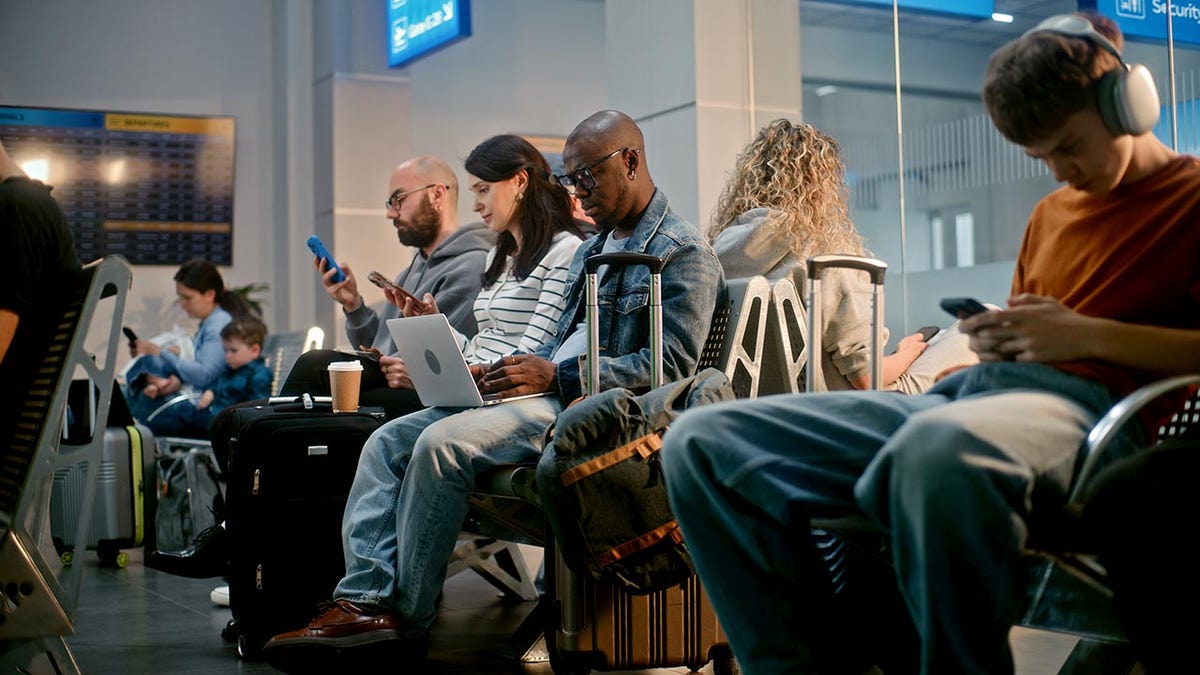
Audiobooks are becoming an increasingly popular way to pass the time on the go. (iStock)
Barnes added that audiobooks can serve as a gateway, motivating some listeners to pick up a physical book and build actual reading stamina.
Others argue that the context matters. Listening while driving or multitasking can divide attention, potentially affecting retention of fine details.
CLICK HERE FOR MORE LIFESTYLE STORIES
Traveling can be especially distracting, said Bob Hutchins, CEO of Human Voice Media and a Ph.D. researcher focused on how technology shapes psychology. But he argues that debates over audiobooks tend to miss the bigger picture.

Listening while driving or flying may divide attention, some experts caution. (iStock)
"Instead, we should be examining how each type of media impacts cognition during the process of absorbing information," Hutchins, based in Nashville, told Fox News Digital.
He notes that reading print allows a person to control pace, reread passages and even remember where information appeared on a page.
TEST YOURSELF WITH OUR LATEST LIFESTYLE QUIZ
"Audios connect us to our past traditions of hearing a voice tell a story," Hutchins said. "Printed materials anchor our minds in analytical thinking."
Research suggests audiobooks may also work well for storytelling and basic information, while print can offer advantages when grappling with more complex material, Psychology Today reported.

Research suggests audiobooks may be better suited for storytelling than complex information. (iStock)
Experts agree that the debate should therefore shift away from whether audiobooks "count" as reading and toward what listeners want to gain from the experience.
CLICK HERE TO DOWNLOAD THE FOX NEWS APP
For those on the move like Smith, who says audiobooks help her keep her "sanity" as she paces her house at 2 a.m. trying to get her baby to sleep, pressing play remains the practical choice and one she is not embarrassed about.
"I’m proud of my audiobook listens," she said.
