







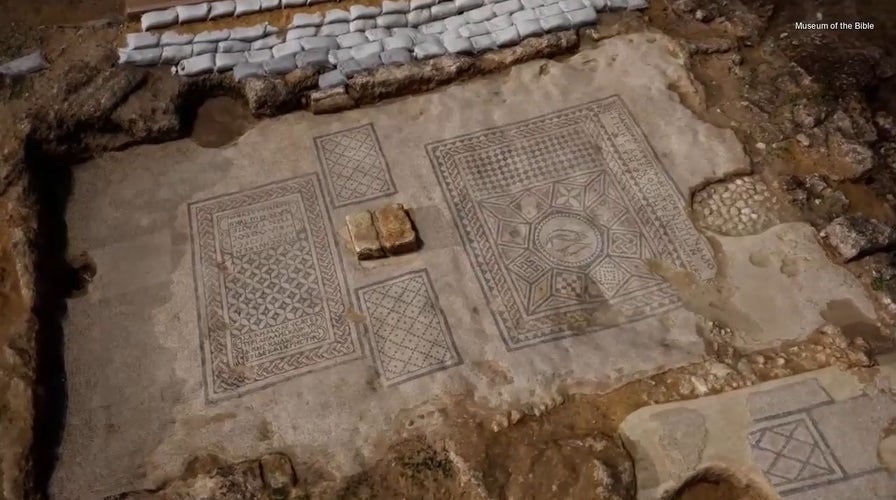
Museum of the Bible reveals footage of rare mosaic, illustrating early symbols of Christianity
Officials with the Museum of the Bible in Washington, D.C, created an animated video showcasing the ancient site where the Megiddo Mosaic would have been found in Israel. The mosaic is on display for first time since being found.
Excavators recently uncovered an ornate Roman mosaic at an archaeological site in Turkey, near where the Apostle Paul helped spread Christianity beyond the Levant.
The mosaic was found at Aspendos, an ancient city about 25 miles east of Antalya in southern Turkey, the country's Ministry of Culture and Tourism announced in June.
It was discovered on Theater Street in Aspendos, which connects the city's acropolis — or citadel — with its theater.
ARCHAEOLOGISTS UNEARTH ANCIENT TREASURE CACHE AT BIBLICAL CITY CONNECTED TO GENESIS
Aspendos lies just miles from Perga, the biblical city mentioned in Acts 13:13 and 14:25 where the Apostle Paul traveled during his first missionary journey.
Pictures of the mosaic show a depiction of the youthful river god Eurymedon, framed by geometric patterns and aquatic imagery.
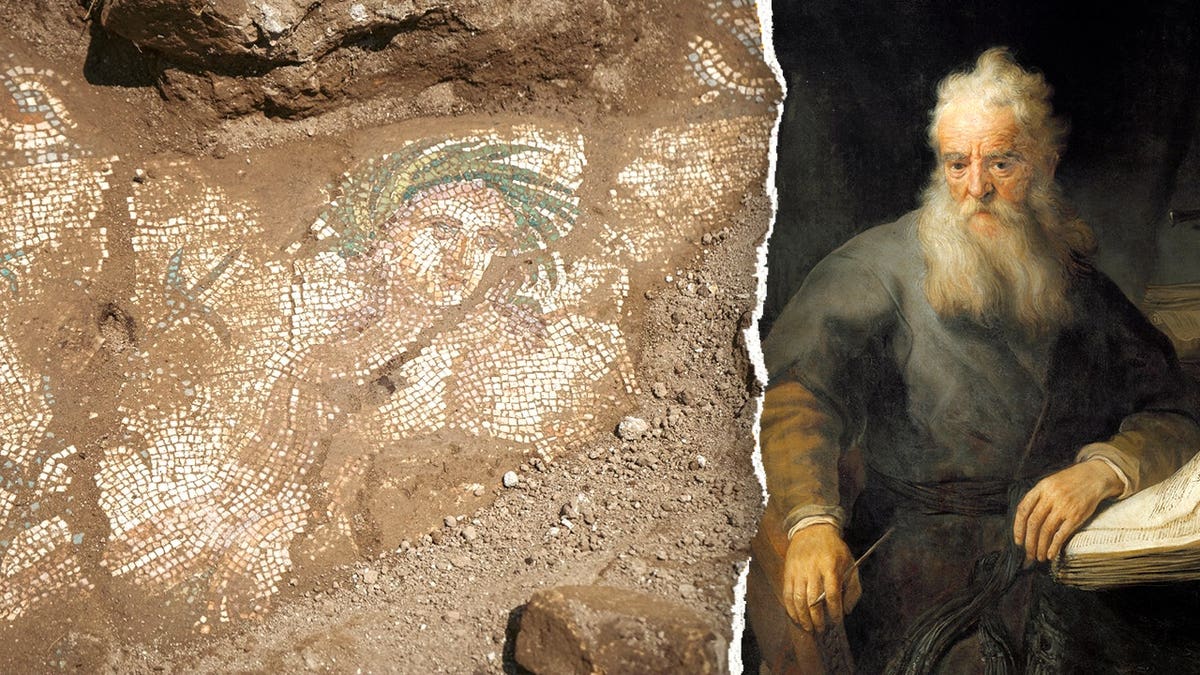
The Roman mosaic was discovered at Aspendos, just miles from the biblical city of Perga, where the Apostle Paul traveled during his first missionary journey. (Turkish Ministry of Culture and Tourism/Anadolu via Getty Images; Leemage/Corbis via Getty Images)
Officials said the god is "depicted holding and wearing reed leaves."
1,740-YEAR-OLD ROMAN COIN BEARING EMPEROR'S NAME FOUND AS ENGLAND RAIL DIG REVEALS CLUES
"He leans against an amphora from which water flows, symbolizing nature's abundance and the life-giving power of water," the translated statement said.
Archaeologists believe the pagan mosaic once formed the floor of a pool built in the early 3rd century A.D.
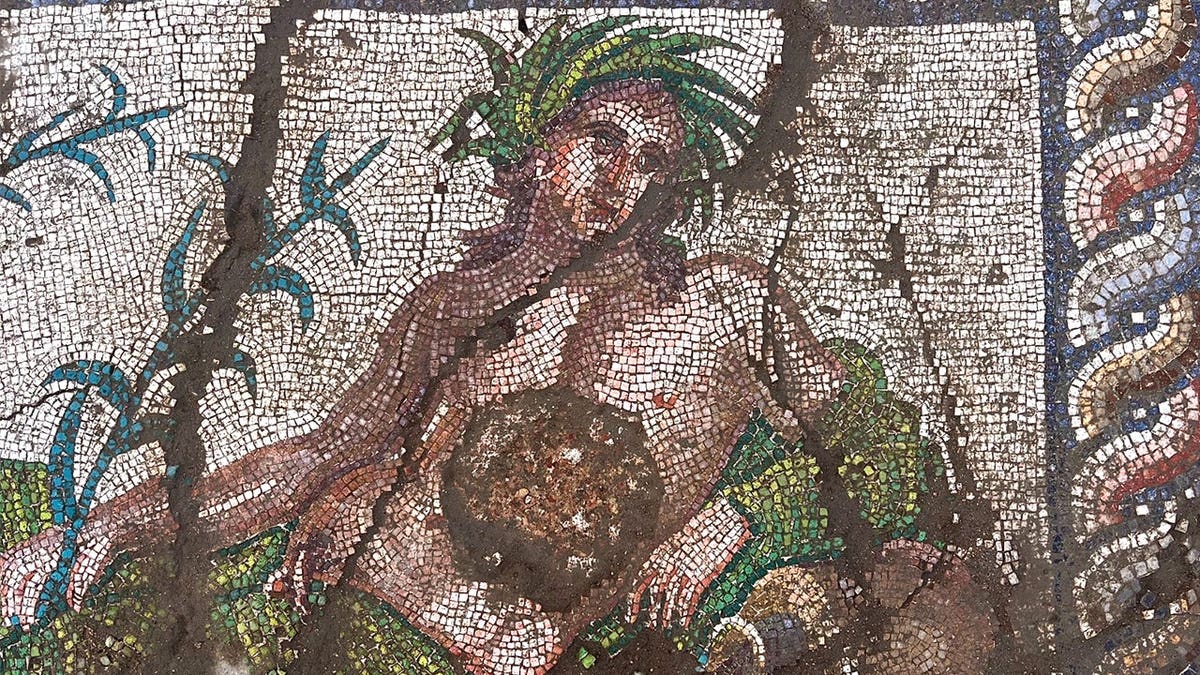
The newly discovered Roman mosaic features a rare depiction of the river god Eurymedon and dates to the early 3rd century A.D. (Turkish Ministry of Culture and Tourism/Anadolu via Getty Images)
The mosaic floor covers roughly 20 by 25 feet and "is believed to continue into areas that have not yet been excavated," officials said.
"Researchers believe the structure was subdivided into separate rooms following the 262 A.D. earthquake."
ANCIENT ESTATE TIED TO GROUP IN THE BIBLE UNEARTHED WITH 'FASCINATING' TREASURES IN ISRAEL
Depictions of the river god Eurymedon are exceptionally unusual in ancient mosaics, according to Turkish officials.
"It is also especially significant because depictions of river gods are extremely rare in mosaic art."
The god is "represented by only a limited number of known examples," said the statement.
TEST YOURSELF WITH OUR LATEST LIFESTYLE QUIZ
Mehmet Nuri Ersoy, the Turkish minister of culture and tourism, noted that the mosaic was of "great scientific importance."
CLICK HERE TO SIGN UP FOR OUR LIFESTYLE NEWSLETTER
"It is also especially significant because depictions of river gods are extremely rare in mosaic art," Ersoy said in the release.
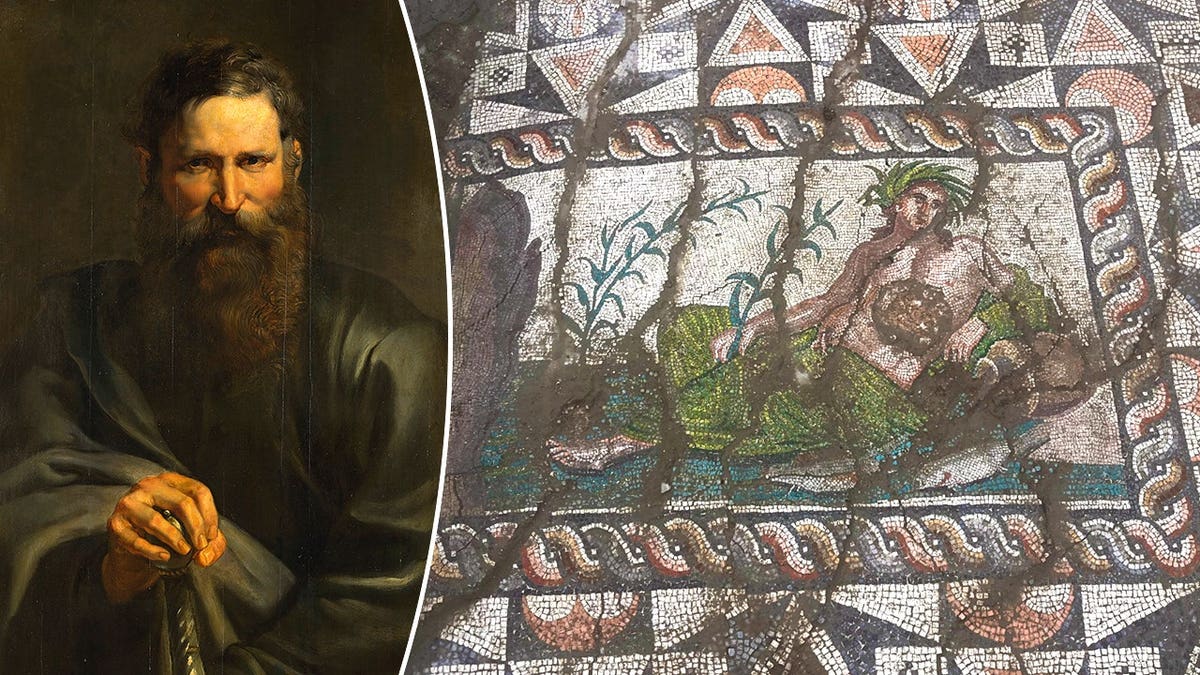
Aspendos is located near the biblical city of Perga, where the Apostle Paul traveled during his first missionary journey. (Fine Art Images/Heritage Images/Getty Images; Turkish Ministry of Culture and Tourism/Anadolu via Getty Images)
"This discovery not only reveals the artistic richness of Aspendos, but also provides important scientific data on Roman-period Anatolian mosaic art."
CLICK HERE FOR MORE LIFESTYLE NEWS
The discovery is one of many archaeological finds in Turkey, which has become a hotbed for discoveries tied to the ancient Roman and early Christian worlds.
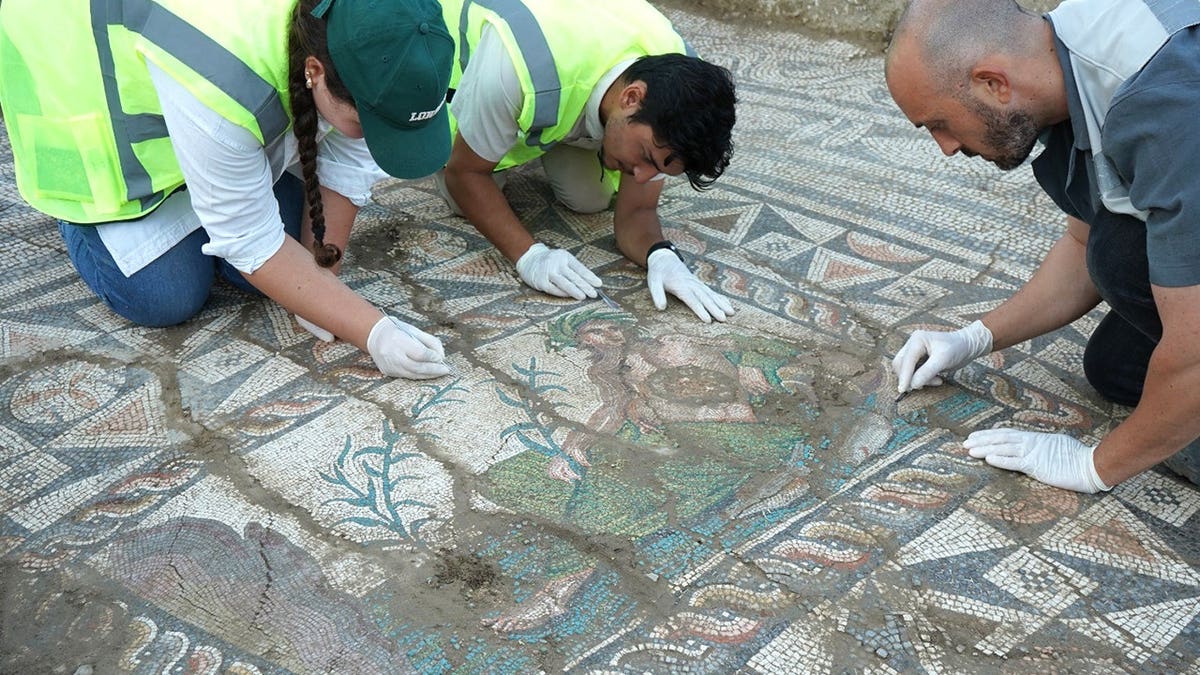
"Researchers believe the structure was subdivided into separate rooms following the 262 A.D. earthquake," said officials. (Turkish Ministry of Culture and Tourism/Anadolu via Getty Images)
This summer, archaeologists unveiled a rare 1,700-year-old Aramaic inscription at a temple in Turkey, offering new evidence of Christianity's rise over the mysterious cult Mithraism.
CLICK HERE TO DOWNLOAD THE FOX NEWS APP
Last fall, excavators uncovered a Roman military hospital that was later converted into a Christian sanctuary in the ancient Turkish city of Kaunos.
