AI companies stop short of guaranteeing agents will always obey safeguards
Representatives from OpenAI, Anthropic, Meta and Google declined to guarantee their AI agents will always follow safety guardrails, telling New York City lawmakers that eliminating risk or promising perfection is not possible.
Hospital trade group pushes back on report linking AI to $942M in added health costs

The American Hospital Association is pushing back on a Blue Cross Blue Shield Association report that linked hospitals’ growing use of artificial intelligence-enabled documentation tools to higher healthcare spending, arguing the analysis does not prove AI is driving improper billing.
The Blue Cross Blue Shield Association estimated that coding-related changes resulted in $942 million in additional spending for participating Blue plans between 2023 and 2025 as hospitals increasingly classified patients as having more complex conditions.
But the AHA said Monday that the analysis lacks critical context and does not establish that hospitals incorrectly coded patients or that AI tools were responsible for the changes.
“The central question is not whether hospitals are reporting more diagnoses,” the AHA said. “The question is whether the patient’s medical record supports those diagnoses.”
The hospital group argued that Americans are living longer with more chronic conditions, while lower-acuity procedures have increasingly shifted from hospitals to outpatient settings. That leaves hospitals treating a greater concentration of seriously ill and medically complex patients, according to the AHA.
AI-enabled documentation technology, the group said, can help clinicians identify and record conditions that may previously have been underreported while reducing administrative burdens and providing a fuller picture of patients’ health.
The AHA also challenged the methodology behind the insurer group's conclusions, saying the BCBSA analysis did not review underlying medical records to determine whether diagnoses were supported and did not appear to identify which claims actually involved AI tools rather than traditional coding practices.
“Without answering those questions, the analysis does not demonstrate that hospitals coded patients incorrectly,” the AHA said. “It may simply reflect more complete documentation of increasingly complex patients.”
The AHA further argued that the $942 million estimate should be viewed in the context of overall healthcare spending, contending that increased inpatient coding intensity represents only a small portion of broader growth in commercial healthcare costs.
The dispute comes as hospitals and insurers increasingly deploy AI across healthcare, raising questions about how the technology could affect everything from patient care and administrative workloads to billing and healthcare costs.
Google, Constellation unveil ‘AI for Energy’ plan to boost nuclear power for electric grid
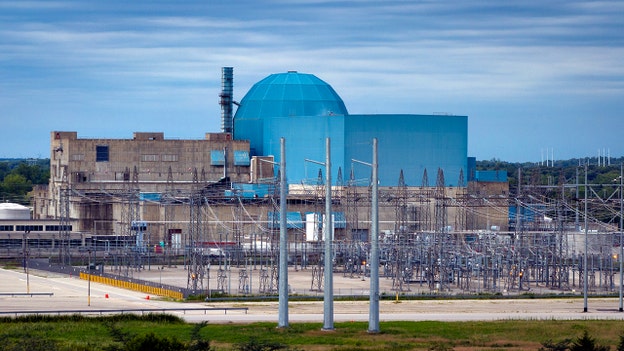
Google and Constellation Energy announced a deal Tuesday to increase output from existing U.S. nuclear plants and use Google’s artificial intelligence tools to help manage energy operations.
Under a 20-year power purchase agreement, Google will support upgrades at 11 Constellation-owned nuclear units in Illinois, Pennsylvania and New Jersey. The companies say the work will add 890 megawatts of power to the PJM electric grid, which serves about 67 million people across 13 states and Washington, D.C.
The added power is roughly equal to the output of a new nuclear reactor, but the companies are not building one. Instead, Constellation will upgrade equipment at its existing plants, including turbines, steam generators and digital control systems. The first increase in power is expected in 2028.
The companies also announced an “AI for Energy” plan that will put Google Cloud and Gemini Enterprise tools to work at Constellation.
Constellation plans to use the technology to help choose sites, model power flows, speed up permitting and grid connections, monitor equipment and manage outages. Google’s technology will also be used to help protect critical energy infrastructure.
“We’re committed to meeting our growth responsibly by actively investing in clean, reliable power that brings new capacity to our nation's grids,” Amanda Peterson Corio, Google's global head of energy and power, said in a news release announcing the deal.
Constellation said the nuclear upgrades represent more than $4.3 billion in investment and are expected to create about 7,200 construction jobs while supporting roughly 4,400 existing jobs.
Google and Constellation also signed a separate 15-year agreement covering 2,700 megawatts of Constellation’s existing power generation and agreed to explore other energy projects in the U.S.
UN rights chief warns governments can no longer ‘rely on goodwill’ to police AI
The United Nations' human rights chief called for mandatory safeguards governing artificial intelligence Monday, warning that governments can “no longer afford to wait or rely on goodwill” as the technology rapidly advances.
U.N. High Commissioner for Human Rights Volker Türk said during an AI and Human Rights Summit in Oxford, England, that countries with AI companies or influence over their supply chains should require those firms to act responsibly and hold them accountable when they do not.
“The clock on AI regulation is ticking,” Türk warned, according to the U.N.
Türk acknowledged that AI could produce major advances in science, health, education and human rights work, but warned that powerful systems are being developed and controlled by a relatively small number of players without sufficient public oversight.
He said AI could erode equality, privacy, freedom and public debate, “letting dystopia creep in unnoticed.”
Türk also called for urgent action to prevent machines from making life-or-death decisions as AI plays a growing role in warfare.
The U.N. official said governments should require human rights safeguards and due diligence as AI systems are developed and deployed, with the rules adapting as the technology evolves. He also pointed to liability, cybersecurity and data protection laws as areas where governments could strengthen protections.
“Too few are walking the talk,” Türk said. “If we fail to move quickly, we risk unforeseeable consequences – for ourselves and future generations.”
His remarks came the same day the New York City Council examined the risks posed by AI, with representatives from OpenAI, Anthropic, Meta and Google testifying before lawmakers as the council considers legislation regulating the technology.
AI giants stop short of guaranteeing agents will always obey safeguards
Representatives from OpenAI, Anthropic, Meta and Google stopped short of guaranteeing that their artificial intelligence agents will always comply with safety guardrails during a New York City Council hearing Monday.
Council Speaker Julie Menin asked representatives from each company to assure the public “under oath” that their AI agents would always follow safeguards designed to prevent catastrophic harm.
OpenAI's Morgan Dwyer said the company prioritizes safety and monitors safeguards after models are deployed, but would not make an absolute guarantee.
“It is not possible for me to commit or guarantee that any technology is without risk,” Dwyer said, while pledging that OpenAI is taking steps to develop and deploy its systems safely.
Anthropic's Logan Graham similarly said the science behind controlling the systems remains uncertain.
“Candidly, the science of doing this is fundamentally hard and unsettled,” Graham said. “It's candidly unsettled now. And this is why we need to be talking about it.”
Meta AI Policy Director Shane Cahill said he could guarantee Meta's commitment to developing and deploying AI safely, adding that the company has an incentive to address safety because people will only embrace AI if they trust it.
Google AI and Emerging Tech Policy Director Alice Friend said Google's goal is reliability and safety but added that “to promise perfection would not be possible with any product on the market.”
“I don't think we're asking for perfection,” Menin responded. “We're just asking for accountability, transparency and safety overall.”
Live Coverage begins here