US deploys more forces to Middle East as peace talks kick off in Pakistan
The 31st Marine Expeditionary Unit deployed to the Middle East this weekend, giving President Donald Trump further options for the war against Iran. Meanwhile, Trump officials are engaging in peace talks in Pakistan on Sunday.
Coverage for this event has ended.
Iran says it's fighting 'major world war,' warns enemies won't escape without a lesson
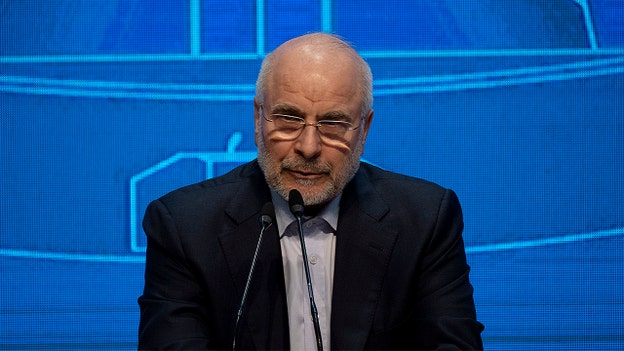
Iran is fighting what its parliament speaker calls a “major world war,” as accusations against the U.S. intensified Sunday.
Mohammad-Bagher Ghalibaf, quoted by Iranian state media, suggested Washington is publicly signaling wanting to negotiate but is privately preparing for a possible ground attack.
“Our enemy speaks publicly of negotiations while secretly planning a ground attack, without realizing our forces are waiting for the Americans to enter,” Ghalibaf said.
“We are in a major world war and must prepare ourselves for a long, difficult, and complex path,” Ghalibaf said.
Ynet reported that he emphasized Iran’s military posture and declared that its missile operations would not end.
“Our launches continue, our missiles will not stop, and our determination has only grown stronger,” he warned.
Ghalibaf, a 64-year-old hardliner, is reportedly among a small group of leaders consolidating power in the new regime.
He pointed to Iran-backed groups across the region as important parts of Iran's campaign.
Hezbollah in Lebanon, he said, has become “an important and effective part of the resistance,” while allied forces in Iraq are “fighting bravely.”
He also claimed that the Houthis in Yemen have “breathed new life” into the campaign.
Ghalibaf also said Iran would not exit the war without asserting its strength.
“We will not allow our enemies to leave without demonstrating our power and turning this war into a lesson for any aggressor,” he said.
Iranian lawmaker suggests Tehran leave nuclear nonproliferation treaty due to US-Israeli attacks
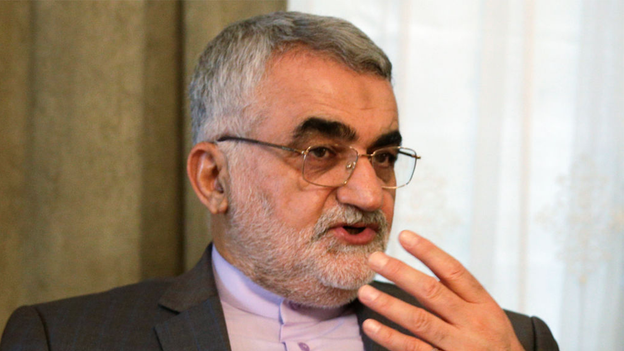
Iranian lawmaker Alaeddin Boroujerdi suggested that Tehran should leave the Nuclear Nonproliferation Treaty since the country is being bombed by the U.S. and Israel despite maintaining that it is not attempting to build a nuclear weapon.
"Why should we accept the restrictions?" Boroujerdi, a member of the Iranian Parliament, said to state TV.
"We are not seeking a nuclear weapon anyway. But it’s not like that we are supposed to observe the rules of the game, and they bomb us," he continued.
The Nuclear Nonproliferation Treaty is an international accord that aims to stop the spread of nuclear weapons. Countries that signed the treaty agreed not to build or obtain nuclear weapons and permit the International Atomic Energy Agency to conduct inspections to verify they correctly declared their programs.
The Associated Press contributed to this report.
Pope says God rejects prayers of world leaders who wage war: 'Hands full of blood'
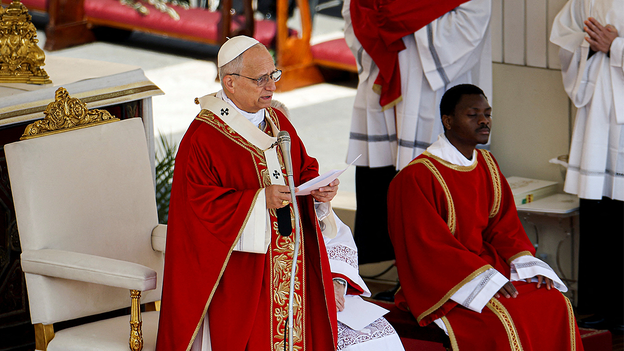
Pope Leo XIV on Sunday said God rejects the prayers of world leaders who start wars and have "hands full of blood," as the pontiff continues to speak out against the U.S.-Israeli war on Iran.
Leo made the forceful remarks in front of tens of thousands of Catholic faithful in St. Peter's Square on Palm Sunday. The pontiff described the conflict as "atrocious" and affirmed that Jesus cannot be used to justify any wars.
"This is our God: Jesus, King of Peace, who rejects war, whom no one can use to justify war," Leo said.
"[Jesus] does not listen to the prayers of those who wage war, but rejects them, saying: 'Even though you make many prayers, I will not listen: your hands are full of blood'," the pope added, citing a Bible passage.
While Leo did not call out any world leaders by name, some U.S. officials have used scripture to justify the military campaign against Iran, including Pentagon chief Pete Hegseth.
"Let every round find its mark against the enemies of righteousness and our great nation. Give them wisdom in every decision, endurance for the trial ahead, unbreakable unity, and overwhelming violence of action against those who deserve no mercy," Hegseth said as he led a recent prayer at the Pentagon.
Leo, in his remarks on Sunday, referenced a Bible passage in which Jesus, about to be arrested ahead of his crucifixion, rebuked one of his followers for striking the person arresting him with a sword.
Jesus "did not arm himself, or defend himself, or fight any war," Leo said. "He revealed the gentle face of God, who always rejects violence. Rather than saving himself, he allowed himself to be nailed to the cross."
Reuters contributed to this report.
Australia to halve tax on fuel for 3 months to cut costs, prime minister says
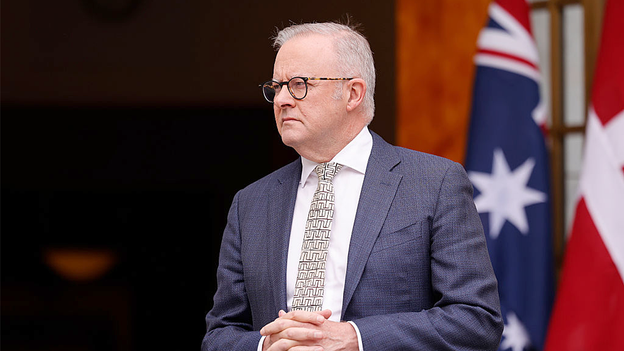
Australian Prime Minister Anthony Albanese said on Monday that his government would cut taxes on fuel in half and remove the heavy road user charge for three months to help offset rising energy costs driven by the U.S.-Israeli war on Iran.
Halving the tax would trim the cost of fuel by 26.3 Australian cents, or 18 U.S. cents, per liter, Albanese said.
The total cost to the government would be about A$2.55 billion, or $1.75 billion, Treasurer Jim Chalmers said at a press conference.
Roughly 20% of the global oil supply was transported through the Strait of Hormuz before the war disrupted shipping and production. The price of Brent crude has surged 59% in March, the largest monthly gain in history, and was at $115.66 per barrel when the market opened on Monday.
"We understand the cost pressures for people are very real as the impact of the war on the other side of the world plays out right here," Albanese said at the press conference.
Reuters contributed to this report.
Trump says many 'long-sought-after targets' in Iran destroyed by US military
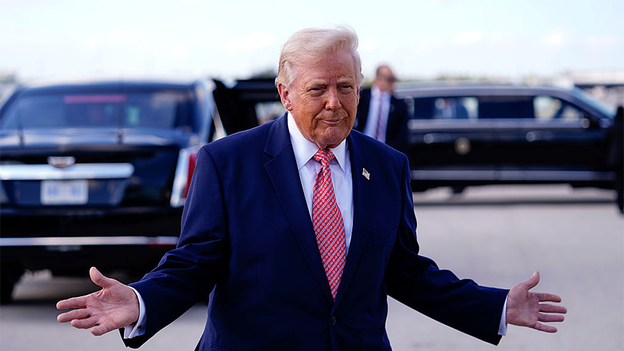
President Donald Trump on Sunday announced that U.S. forces destroyed many targets in Iran amid the ongoing war in the Middle East.
"Big day in Iran," the president wrote on Truth Social.
"Many long-sought-after targets have been taken out and destroyed by our GREAT MILITARY, the finest and most lethal in the World. God bless you all!" he continued.
Trump says Iran talks advancing, signals deal could come soon

President Donald Trump on Sunday said there had been progress in negotiations with Iran to end the war in the Middle East, adding that an agreement could be reached in the near future.
"We have had very good negotiations with Iran — things they should’ve given us a long time ago. Moving along very nicely," he told reporters on Air Force One. "We are negotiating both directly and indirectly — through emissaries, but also dealing with them directly."
"We’re doing extremely well in that negotiation, but you never know with Iran," the president continued. "I think we will make a deal with them pretty shortly, but it’s possible we won’t."
Trump added: "I do see a deal with Iran soon."
Addressing the timeline for negotiating an end to the conflict, Trump said talks are weeks ahead of schedule.
"We’re ahead of schedule with Iran, weeks ahead," he said.
Trump open to seizing 1,000 pounds of uranium from Iran by force if negotiations fail: report
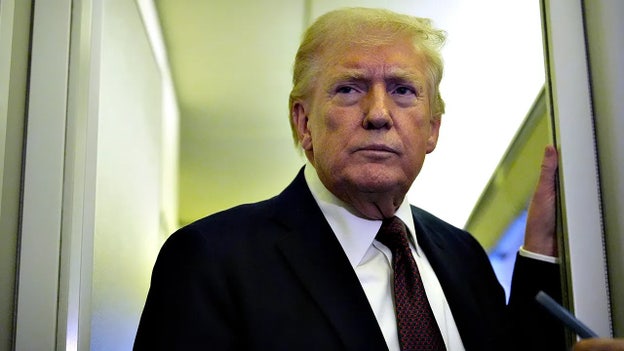
President Donald Trump is considering a high-risk military operation to remove nearly 1,000 pounds of uranium from Iran, according to reports.
The Wall Street Journal said the mission could involve U.S. forces entering the country for an extended period.
U.S. officials told the outlet that Trump has not made a final decision and is weighing the potential danger to American troops, but remains open to the plan as a way to stop Iran from developing a nuclear weapon.
The officials also said Trump has urged advisers to push Iran to relinquish the material through negotiations as a condition for ending the war.
Indian worker killed in Iranian strike on Kuwait power, water desalination plant, ministry says
An Indian worker was killed Sunday when a power and water desalination plant in Kuwait was attacked by Iran, according to Kuwait’s Ministry of Electricity, Water and Renewable Energy.
The ministry said the strike also caused material damage to a service building at the facility.
In a statement shared on X, the ministry confirmed the extent of the damage but did not provide further details about the incident.
Separately, a spokesperson for Kuwait’s Ministry of Defense said that 14 ballistic missiles and 12 drones had entered the country’s airspace over the past 24 hours. One of the attacks targeted a military-affiliated base, injuring 10 personnel.
The defense ministry also reported damage to a warehouse belonging to a private logistics company.
Trump says taking Iran's oil is his 'favorite thing' as Pentagon prepares for expanded operations
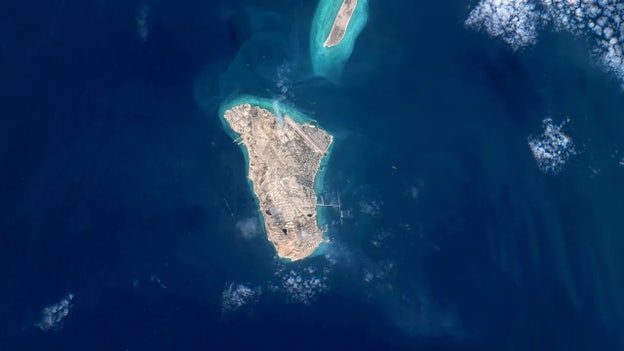
The United States could seize Iranian oil assets and potentially target the country’s main export hub at Kharg Island, President Donald Trump said Sunday.
In an interview with the Financial Times Trump suggested that taking control of the oil resources was a preferred option, while dismissing potential criticism back home.
“To be honest with you, my favorite thing is to take the oil in Iran, but some stupid people back in the U.S. say: ‘Why are you doing that?’ But they’re stupid people,” he was quoted as saying.
Trump indicated that Kharg Island — Iran’s primary oil export terminal — could be a potential target. Any move to seize or disrupt flow from Kharg would have significant economic consequences, potentially impacting global oil markets.
“Maybe we take Kharg Island, maybe we don’t. We have a lot of options,” Trump said.
Trumps remarks come as the Pentagon prepares for an expansion of military operations in Iran with the conflict now entering its fifth week.
Israel shoots down two Houthi drones as Yemen militia escalates ongoing war campaign
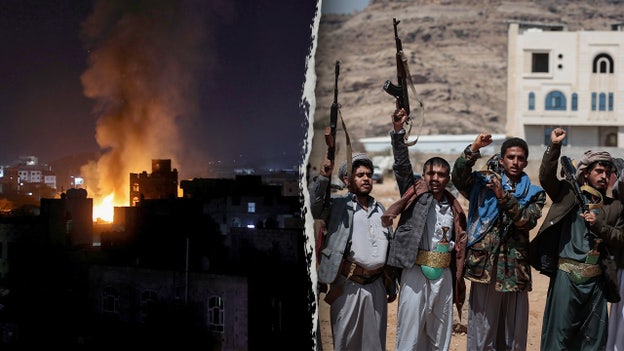
The Israeli Air Force (IAF) intercepted two drones launched from Yemen, the Israel Defense Forces (IDF) said Sunday.
“In the past hour, the Air Force intercepted two unmanned aerial vehicles launched from Yemen,” the IDF said in a post shared on X.
Yemen’s Iran-backed Houthi militia entered the Middle East war for the first time on March 28.
As previously reported by Fox News Digital, the Houthis said they "targeted sensitive Israeli military sites" with a "barrage of ballistic missiles."
The IDF, according to Ynet, said it intercepted both a cruise missile and a ballistic missile fired by the Houthis.
The group has also warned it could close a key waterway at the southern entrance of the Red Sea, increasing disruption to global shipping and oil supplies.
UK Minister: Israel’s plan to expand Lebanon security zone ‘deeply concerning’
The UK is concerned over Israel's plans to expand the security zone in southern Lebanon, Minister for the Middle East and North Africa Hamish Falconer said Sunday.
"Deeply concerned by Israel's announcement stating intention to expand its ground operations in Lebanon, where over 1 million people have already been forcibly displaced," Falconer said.
"Israel must avoid further exacerbation of the conflict and refrain from any action to seize Lebanese territory," he wrote on X.
On Sunday, Israeli Prime Minister Benjamin Netanyahu said he had ordered the expansion of the zone under Israeli military control in southern Lebanon.
Prime Minister Benjamin Netanyahu announced that Israel would capture additional territory in southern Lebanon to expand a security zone on Israel’s northern border, as the Israel Defense Forces (IDF) expanded its ground operation against Hezbollah.
In a video statement Netanyahu said he had ordered the military to "further expand the existing security zone" in Lebanon as a means to "fundamentally change the situation" in northern Israel.
Iranian nuclear plant no longer operational after Israeli strike, IAEA confirms severe damage
Iran’s Khondab heavy water production plant that was damaged in an Israeli strike has been rendered inoperable, the International Atomic Energy Agency (IAEA) reported Sunday.
The U.N. nuclear watchdog said its assessment was based on analysis of satellite images and its knowledge of the site.
It also said the installation contained no declared nuclear material.
“Based on independent analysis of satellite imagery and knowledge of the installation, the IAEA has confirmed the heavy water production plant at Khondab, which Iran reported had been attacked on March 27, has sustained severe damage and is no longer operational,” the agency said in a post shared on X.
The IAEA added: “The installation contains no declared nuclear material.”
The Israeli military said Friday that it had struck the reactor area near Arak as part of attacks on Iran’s nuclear-related infrastructure.
The IAEA has separately said the Khondab heavy water research reactor was under construction, was not operational, and contained no nuclear material, meaning no radiological consequences were expected.
Trump says US 'already' controlling key oil route as Iran conflict escalates

President Donald Trump said Sunday that the United States is already taking control of the Strait of Hormuz, the world’s most critical route for global oil shipments, which has all but been closed following the outbreak of U.S.-Israel military action against Iran.
Speaking in an interview with Israel’s Channel 14, Trump’s remarks were shared on X, where he claimed the move is “already happening,” while referring to the waterway as the “Strait of Trump.”
Trump also addressed tensions with Iran, saying he believes the country is “begging” for a deal, according to Channel 14’s post on X.
He added that any nation that had been “decimated,” as he described Iran, would be seeking negotiations.
The president also expressed strong appreciation for support from the Israeli public.
“I love Israel, love the people of Israel, and I’m very proud and happy about their support,” Trump said, citing a poll he claimed showed 99% approval.
US urges citizens to leave Iraq immediately amid Iran-backed militia threat
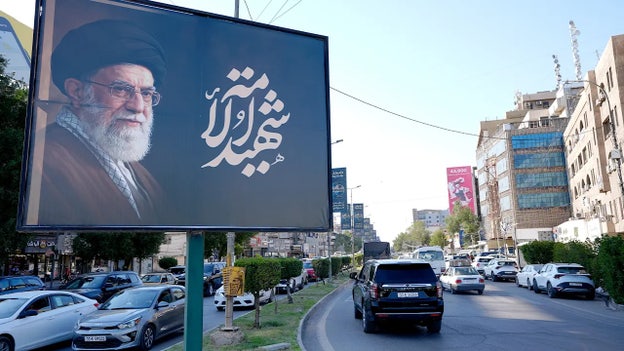
The U.S. Embassy in Baghdad issued an urgent security alert Sunday, warning Iran and its affiliated militias may be planning attacks on American-linked universities and other U.S.-associated targets across Iraq.
In a statement shared on X, the embassy said officials are advising all U.S. citizens to leave the country immediately amid escalating threats.
“Iran and its affiliated terrorist militias may intend to target American universities in Baghdad, Sulaymaniyah, and Dohuk, as well as other universities perceived as connected to the United States,” the embassy said.
“Iran has specifically directed threats toward American universities across various parts of the Middle East,” it said, before highlighting that Iran-aligned terrorist militias have carried out “widespread attacks on American citizens and U.S.-associated targets throughout Iraq, including in the Iraqi Kurdistan Region.”
“U.S. citizens are advised to depart Iraq immediately,” the embassy said, adding that Iran-aligned groups pose an ongoing threat.
The embassy said Iran and its affiliated armed groups pose a serious threat to public security in Iraq.
“These groups have conducted attacks and are likely to attempt further ones against U.S.-associated targets throughout Iraq, including diplomatic facilities, universities, businesses, energy infrastructure, and other sites believed to have ties to the United States, including in the Iraqi Kurdistan Region,” it said.
“Iran-aligned terrorist armed groups have also attacked commercial airports and hotels frequented by foreigners. These groups may attempt to kidnap Americans,” the embassy warned.
The embassy said the safety and security of American citizens is its “top priority, whether for President Trump, Secretary of State Rubio, or the Department of State.”
Ukraine 'open to joint work' to defend against Iranian drone, missile attacks, says Zelenskyy
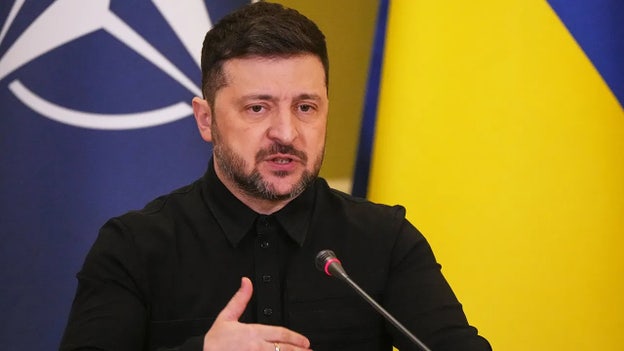
Ukrainian President Volodymyr Zelenskyy said Sunday he is in Jordan as part of a Middle East tour, signing defense agreements with Gulf states and offering Ukraine’s expertise in countering aerial attacks.
Meeting with King Abdullah II of Jordan, Zelenskyy said the leaders discussed potential security cooperation and the broader situation in the Middle East and Gulf region.
“Ukraine is open to joint work to defend against drone and missile attacks,” Zelenskyy wrote on X.
Drawing on Ukraine’s experience during Russia’s full-scale invasion, now in its fifth year, Zelenskyy stressed the importance of integrated defense systems.
“From our own experience, we know that without a unified system, it is simply impossible to establish comprehensive protection of people and critical infrastructure,” he said.
“We have such a system, because for the fifth year of Russia’s full-scale war, we have been forced to defend ourselves against constant Russian strikes, including those carried out using Iranian drones.”
Zelenskyy added that cooperation could be mutually beneficial, noting that countries receiving Ukraine’s expertise could help strengthen Kyiv’s own capabilities.
“It is also very important that those to whom we offer our expertise can help strengthen us as well. I thank His Majesty for the meeting and for his openness to dialogue,” Zelenskyy said.
Mojtaba Khamenei's new message raises questions about whether he’s alive
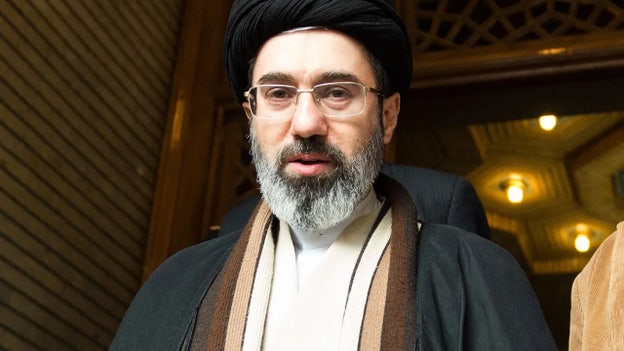
Iran’s Supreme Leader, Mojtaba Khamenei, has expressed gratitude to Iraqi groups and clerics for their support since the outbreak of the war, according to regional media reports.
The IRGC-linked Tasnim News Agency reported that Mojtaba conveyed a “clear position on aggression against Iran,” while also thanking Iraqi paramilitary groups that have been targeting U.S. bases in the Middle East over the past month.
The message did not include any evidence that Khamenei is alive, the Jerusalem Post said.
More than three weeks after his appointment, however, Khamenei has yet to appear in public.
His absence has fueled speculation following reports that he was injured in a joint U.S.-Israeli airstrike at the start of the conflict.
The strike killed his father, former Supreme Leader Ayatollah Ali Khamenei.
Khamenei has issued two written statements through state media since assuming leadership.
Iranian officials have attributed his absence to security concerns.
“The reason for his absence from public view is the observance of security considerations due to the current special circumstances,” said Ali Bahreini, Iran’s representative to the United Nations office in Geneva, according to state-affiliated media.
Power cuts hit Tehran as IDF announces strikes on multiple Iranian regime targets
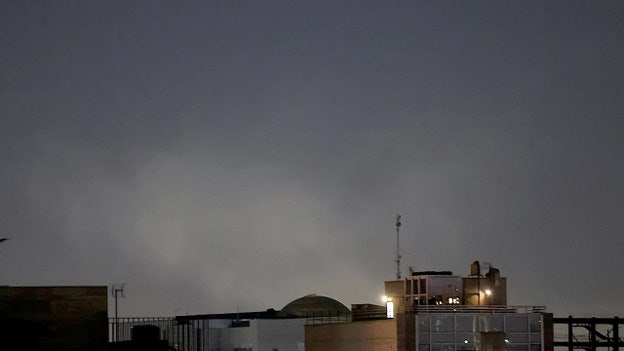
Power outages affected parts of Tehran and nearby areas on Sunday after damage to infrastructure, according to Iranian state media reports.
Citing the energy ministry, Iran International said shrapnel had struck a section of the electricity grid in Alborz province, leading to power cuts across several districts of Tehran and the city of Karaj.
State media confirmed that electricity disruptions were reported in both the capital and Alborz province following the incident, and that authorities were working to restore service, the outlet said.
The outages came as the Israel Defense Forces (IDF) announced that they were carrying out strikes on targets linked to Iran’s regime across Tehran.
EU declares solidarity with Gulf nations as Iranian airstrikes, drone attacks target civilians
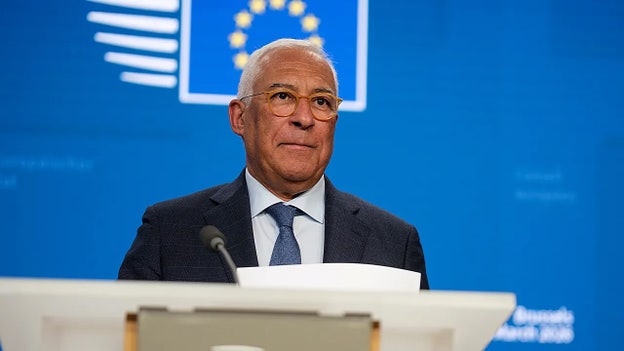
European Council President António Costa said Sunday that the European Union stood in solidarity with Gulf Cooperation Council (GCC) countries facing strikes and drone attacks by Iran.
“The EU stands in solidarity with the Gulf Cooperation Council countries in the face of continued Iranian airstrikes and drone attacks targeting civilians and infrastructure in the region,” Costa said in a post shared on X.
“These attacks must stop immediately,” he said before describing his call today with Sheikh Mohamed bin Zayed Al Nahyan, president of the UAE, where they discussed the latest developments.
“I reiterated that the EU stands by the United Arab Emirates, which has been among the hardest hit,” Costa said.
“The EU continues to urge all parties to de-escalate and give diplomacy a chance, in the interest of security and stability in the Middle East,” he added.
Netanyahu orders Lebanon buffer zone expansion as IDF strikes Iranian ballistic missile facility
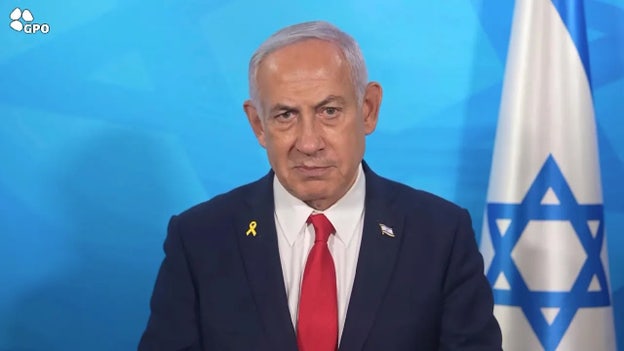
Israeli Prime Minister Benjamin Netanyahu announced Sunday an expansion of the security buffer zone in southern Lebanon, as part of efforts to strengthen protection along Israel’s northern border.
Speaking from the Northern Command, Netanyahu said the move is intended to create a larger defensive area to counter anti-tank missile threats, alter the security situation in the north and enable displaced residents to safely return to their homes.
“I have just instructed to further expand the existing security zone,” Netanyahu said in a video message shared on X.
“We are determined to change the situation in the north from its roots and restore security to the residents of the north.
“We will not tolerate a reality of ongoing threat to our settlements and citizens. We will continue to act with strength, determination and responsibility until we achieve the goal,” he added.
Netanyahu’s remarks came as the Israeli Defense Forces (IDF) confirmed a strike on a central site it described as one of only two facilities in Iran used to produce critical components for ballistic missiles.
“Additionally, dozens of weapon production sites were struck, including those for ballistic missile engines, UAVs and air defense systems,” the IDF said in a post on X.
Israel looking for 'solutions' to open Christian sites after barring church leader on Palm Sunday
Jerusalem’s Church of the Holy Sepulchre and other major holy sites were closed on Palm Sunday under Israeli wartime restrictions, disrupting one of Christianity’s holiest observances as the Iran war entered its fifth week.
The Catholic Church rebuked the police decision as "a manifestly unreasonable and grossly disproportionate measure."
Israeli police lamented the war restrictions limiting worship and acknowledged the need to "balance freedom" with "public safety."
"Under Home Front Command directives, life-saving restrictions apply to all holy sites in the Old City — for Jews, Christians, and Muslims alike," Israeli police posted to X, responding to an outcry on religious freedom in a video statement. "The Old City has been targeted by murderous missiles multiple times this month, alongside constant fire on residential areas."
"These threats do not discriminate between religions, and neither does our duty to protect you," the statement continued. "We are in active dialogue with religious leaders, including an upcoming meeting with the Patriarch, to examine solutions that balance freedom of worship with public safety."
The Latin Patriarchate said Cardinal Pierbattista Pizzaballa, the Latin Patriarch of Jerusalem, and Father Francesco Ielpo were stopped by Israeli police while trying to reach the church privately to celebrate Mass, after the traditional Palm Sunday procession had already been canceled.
Israel President Isaac Herzog called the restricted worshipers to "express my great sorrow over this morning's unfortunate incident."
This is an excerpt from an article by Fox News' Eric Mack.
S&P Global chairman assesses the Strait of Hormuz blockade’s impact on global energy prices
S&P Global Vice Chairman Daniel Yergin joined Fox News to discuss the impact of the Iran conflict on global energy markets, as well as efforts to reopen the Strait of Hormuz.
Yergin said on ‘Sunday Morning Futures' that the waterway's effective closure has caused oil, gas, diesel, and fertilizer prices to spike globally. He highlights the impact on international shipping and discusses how Iran is "waging war on the world economy" by controlling the key choke point.
Amb Huckabee responds after Israel blocks Christian priests from Jerusalem church on Palm Sunday
U.S. Ambassador to Israel Mike Huckabee responded after Israeli police blocked a Latin Patriarch from entering the Church of the Holy Sepulcher on Palm Sunday, saying it was an "unfortunate overreach."
"While all Holy sites in the Old City are closed due to safety concerns for mass gatherings including the Western Wall, Church of the Holy Sepulcher and Al Aqsa Mosque, the action today by the Israel Nat'l Police to deny Latin Patriarch Cardinal Pierbattista Pizzaballa and 3 other priests from entering the Church to offer a blessing on Palm Sunday is an unfortunate overreach already having major repercussions around the world." Huckabee wrote in a statement on X.
"Home Front Command Guidelines restrict any gatherings to 50 people or less. The 4 representatives of the Catholic Church were well below that restriction. Statements from the Gov't of Israel indicate the action to prohibit Cardinal Pizzaballa entry to the Church of the Holy Sepulcher were for safety reasons, but churches, synagogues, and mosques throughout Jerusalem have met with the restrictions of 50 or less. For the Patriarch to be barred from entry to the Church on Palm Sunday for a private ceremony is difficult to understand or justify," he continued.
"Israel has indicated it will work with the Patriarch to accommodate a safe means of carrying out Holy Week activities," his statement noted.
Jet fuel spikes as airlines warn supplies could run dry within weeks
Jet fuel prices in the U.S. have more than doubled in a matter of weeks as Middle East tensions squeeze supply, fueling concerns airlines could run short of fuel.
Prices jumped from about $2.17 to $4.57 per gallon by March 27, according to the Argus U.S. Jet Fuel Index. Airlines warn inventories could run dry within weeks, raising the risk of higher airfares and flight cancellations.
Airlines are already adjusting. United Airlines CEO Scott Kirby said the carrier will cut about 5% of planned flights in the near term as fuel costs surge, warning that if prices persist, jet fuel alone could add $11 billion in annual expenses.
Jet fuel, one of airlines’ largest expenses, is especially volatile due to thin inventories, specialized storage and limited spot trading, which can amplify price swings when supply tightens.
The Middle East exports about 1.1 million barrels per day of jet fuel—roughly 15–17% of global consumption—according to Jaime Brito, executive director of refining and oil products at OPIS.
Much of that supply moves through the Strait of Hormuz, where tanker traffic has slowed sharply amid rising regional tensions.
Israeli police restrict access to holy sites in Jerusalem amid bombardment from Iran
Israeli police have placed restrictions on access to holy sites in Jerusalem amid ongoing bombardment from ran this week.
"Under Home Front Command directives, life-saving restrictions apply to all holy sites in the Old City—for Jews, Christians, and Muslims alike," Israel's police announced on X.
"The Old City has been targeted by murderous missiles multiple times this month, alongside constant fire on residential areas. These threats do not discriminate between religions, and neither does our duty to protect you," the statement continued.
"We are in active dialogue with religious leaders, including an upcoming meeting with the Patriarch, to examine solutions that balance freedom of worship with public safety," it added.
Uber expands fuel relief program as Iran war fuels spike in gas prices

Uber is rolling out expanded fuel discounts and higher earnings incentives for U.S. drivers and couriers as rising gas prices from the Iran war continue to squeeze gig workers.
The company said it will significantly increase fuel savings opportunities through May 26, 2026, while also ramping up promotions aimed at helping drivers keep pace with higher costs at the pump.
At the center of the update is a major expansion of gas discounts through Upside and Shell Fuel Rewards. Drivers can now save up to $1.00 per gallon using Upside, quadrupling the previous maximum of 25 cents. Meanwhile, Shell Fuel Rewards discounts have been raised to as much as 21 cents per gallon, up from 7 cents.
Uber is also increasing cash-back rewards on fuel purchases. Drivers using the Uber Pro Card will receive an additional 5% cash back at gas stations nationwide.
Uber estimates that, when combining all discounts and rewards, top drivers could save as much as $1.44 per gallon, based on an average gas price of $3.98
Zelenskyy offers cutting-edge drone defense to Gulf allies amid Iran war
Ukrainian President Volodymyr Zelenskyy is turning battlefield innovation into bargaining power, offering Ukraine's anti-drone systems to Middle Eastern allies, while seeking more air-defense support as the war with Russia drags into its fourth year.
Zelenskyy met Friday in Abu Dhabi with United Arab Emirates (UAE) President Mohammed bin Zayed Al Nahyan, and the two discussed an agreement by which Ukraine would provide its cutting-edge counter-drone technology in exchange for ballistic missile support and financial aid.
In a wide-ranging interview with Fox News after the meeting, Zelenskyy detailed how Ukraine’s battlefield innovations, namely its anti-Russian drone systems, are influencing defense partnerships worldwide.
"We have, for example, drone interceptors. We have [a] system of electronic warfare and a lot of things. All these jointly work in one system. This is what we have [that] nobody has," Zelenskyy told Fox News correspondent Matt Finn in Abu Dhabi.
Ukraine is now sharing elements of that system with at least four Persian Gulf nations — the UAE, Qatar, Jordan and Saudi Arabia — as they confront growing threats from Iran’s drone capabilities.
But Zelenskyy emphasized the partnership must be reciprocal. Ukraine continues to face a "big deficit" of critical air defense weapons, particularly PAC-3 Patriot missiles used to intercept ballistic threats.
"We are ready to help Middle East countries with our expertise and with our knowledge, and we hope … that they can help with anti-ballistic missiles," Zelenskyy said.
This is an excerpt from an article by Fox News' Sophia Compton.
MAPPED: Where gas prices are rising the fastest from the Iran conflict
Gas prices are surging as the ongoing conflict with Iran drives up crude oil costs, fueling higher prices at the pump nationwide.
The national average now stands at $3.98 per gallon, up $1 from a month ago, according to AAA.
On the West Coast, drivers are seeing the highest costs, with prices reaching $5.87 per gallon in California and $5.32 in Washington.
Along the East Coast, gas prices are approaching or exceeding $4.00 in several areas, including $4.16 in Washington, D.C., and $3.93 in New York.
In the Midwest, Illinois stands out at $4.21 per gallon, while much of the region remains closer to the mid-$3 range. Southern states are generally lower, though still rising, with Texas at $3.60 and South Carolina at $3.64, while Florida is higher at $3.96.
Diesel prices are climbing faster than gasoline, reflecting their close ties to freight and industry—meaning increases can ripple through supply chains and raise costs across the economy.
Diesel averaged $5.41 a gallon, up $1.65 over the same period, according to AAA, surpassing $5 for the first time since December 2022 as the war in Iran continues to disrupt global energy supplies.
Democrat shares criticisms of Operation Epic Fury amid troops deployments
Rep. Adam Smith, D-Wash., joined 'Fox News Sunday' to discuss the ongoing military efforts in Iran, sharing his concerns over the goals of Operation Epic Fury's.
President Donald Trump ordered thousands of U.S. troops to deploy to the Middle East this weekend.
US, Israel launch strikes against Iranian military infrastructure amid Pakistan talks
Fox News chief foreign correspondent Trey Yingst reported on the escalating war in Iran as the U.S. prepares for ground operations this week, deploying 3,500 troops.
President Donald Trump reiterated last week that his administration wants the war with Iran to last only four to six weeks.
Iran responds to reports US weighing ground operations: 'We will never accept humiliation'
Iran is responding boldly Sunday to reports the U.S. might be prepping ground forces for the next stage of its designs to root out its nuclear weapons aspirations and chokehold on the Strait of Hormuz.
"As long as the Americans seek Iran's surrender, our response is that we will never accept humiliation," Iran's parliament speaker Mohammad Baqer Qalibaf said Sunday.
The speaker's statement came after a report from The Washington Post claiming the Trump administration and War Department are preparing alternatives for Trump to deploy ground forces, perhaps to secure remnants of the targeted Iranian nuclear program or root out further Iranian aggression to free up oil tankers through the Strait of Hormuz chokepoint.
The Post reported Saturday, citing anonymous sources, that the Pentagon is preparing options for potential U.S. ground operations in Iran that could last weeks if Trump approves an escalation. The plans reportedly envision limited raids by Special Operations and conventional forces rather than a full-scale invasion, with possible targets including Kharg Island and coastal weapons sites near the Strait of Hormuz.
"It’s the job of the Pentagon to make preparations in order to give the commander in chief maximum optionality," White House press secretary Karoline Leavitt told the Post in a statement, echoing remarks made during a press briefing this week. "It does not mean the president has made a decision."
Reuters separately reported that the administration has considered sending thousands of additional troops to the region and that Trump has weighed the use of ground forces to seize Kharg Island. Secretary of State Marco Rubio has said the United States is not currently postured for ground operations, which would give Trump "maximum" flexibility, but said objectives can be achieved without them.
This is an excerpt from an article by Fox News' Eric Mack.
Inside Iran’s military: missiles, militias and a force built for survival
Iran’s military is not designed to win a conventional war against the United States or Israel. It is designed to survive one, absorb damage and continue fighting over time, experts say.
That strategy is reflected both in how the force is built and how it is performing now, after weeks of sustained U.S. and Israeli strikes.
The scale of the campaign has been significant. More than 9,000 targets have been struck since the launch of Operation Epic Fury, according to a March 23, 2026, fact sheet from U.S. Central Command, alongside more than 9,000 combat flights, hitting missile sites, air defenses, Islamic Revolutionary Guard Corps command centers and weapons production facilities.
U.S. officials say the objective is clear.
"We are targeting and eliminating Iran’s ballistic missile systems … destroying the Iranian Navy … and ensuring Iran cannot rapidly rebuild," Joint Chiefs of Staff Chairman Gen. Dan Caine said during a March Pentagon briefing.
But analysts caution that the picture is more complex.
"It’s a mixed bag," Nicholas Carl, a fellow at the conservative American Enterprise Institute think tank and assistant director of the Critical Threats Project, told Fox News Digital. "On one hand, (Iran’s military) is badly degraded across the board, but the regime still retains a significant amount of capability."
This is an excerpt from an article by Fox News Efrat Lachter.
Ugandan military chief vows to back Israel against Iran in viral social media barrage
Uganda’s military chief has warned the African country’s armed forces could enter the Iran war on Israel’s side after issuing a series of statements on social media that went viral this week.
Gen. Muhoozi Kainerugaba — son of Ugandan President Yoweri Museveni — who is considered to be his likely successor, has spent this week making a barrage of posts on X in support of Israel.
"We stand with Israel because we are Christians," he wrote, adding in another post, "Uganda is the David that was forgotten and neglected by the world. We will defeat the giant, Goliath."
Kainerugaba began his social media blitz with, "We want the war in the Middle East to end now. The world is tired of it. But any talk of destroying or defeating Israel will bring us into the war. On the side of Israel!"
Uganda has 45,000 active military personnel in the Uganda People's Defense Force (UPDF), with around 35,000 reserves, according to its ministry of defense. It’s estimated to have approximately 240 tanks and over 1,000 armored fighting vehicles.
The nation is also heavily involved militarily in conflict-affected countries. Its soldiers fight as part of an African Union force against Islamist al-Shabab terrorists in Somalia. Their army is also still operating in the eastern Democratic Republic of Congo (DRC) against the Islamic State-linked ADF terrorist group.
While Iran is not known to have any interests in Uganda, it has been accused of covert operations in neighboring Kenya and Tanzania, including the running of smuggling networks and making controversial diplomatic and economic outreach with questionable motives throughout the region. Although landlocked, Uganda is said to be wary of Iran’s strategic interest in gaining a presence in the regional waters of the Indian Ocean and Red Sea.
This is an excerpt from an article by Fox News' Paul Tilsley.
Mediators gather in Pakistan for talks to end Iran war
Top diplomats from key regional powers gathered in Pakistan on Sunday to discuss how to end the fighting in the Middle East.
Nevertheless, there were few signs of peace taking hold as the U.S. and Israel continued strikes against targets across Iran this weekend.
Pakistan said foreign ministers from Saudi Arabia, Turkey and Egypt were participating in the talks in Islamabad. Pakistani Prime Minister Shehbaz Sharif said he and Iranian President Masoud Pezeshkian held “extensive discussions” on regional hostilities.
More than 3,000 people have been killed throughout the monthlong war that began with U.S. and Israeli strikes on Iran, triggering Iran’s attacks on Israel and neighboring Gulf Arab states. The war has also threatened oil and gas supplies with Iran’s grip on the strategic Strait of Hormuz shaking markets.
The Associated Press contributed to this report.
Live Coverage begins here