 Print
Print
 Close
Close

Closest known black hole to Earth discovered after years-long hunt
By Julia Musto
Published November 04, 2022
Astronomers have reportedly discovered the closest-known black hole to Earth.
BH1 was located about 1,600 light-years away in the constellation Ophiuchus, making it three times nearer to Earth than the previous record holder.
The dormant black hole is about 10 times more massive than the sun, according to astronomers using the International Gemini Observatory. The observatory is operated by the National Science Foundation's NOIRLab.
BLOOD MOON LUNAR ECLIPSE EXPECTED ON ELECTION DAY, LAST ONE FOR THREE YEARS
In a release, NOIRLab said this marked the first unambiguous detection of a dormant stellar-mass black hole in the Milky Way.
There are an estimated 100 million stellar-mass black holes in the Milky Way alone, with nearly all of them active.
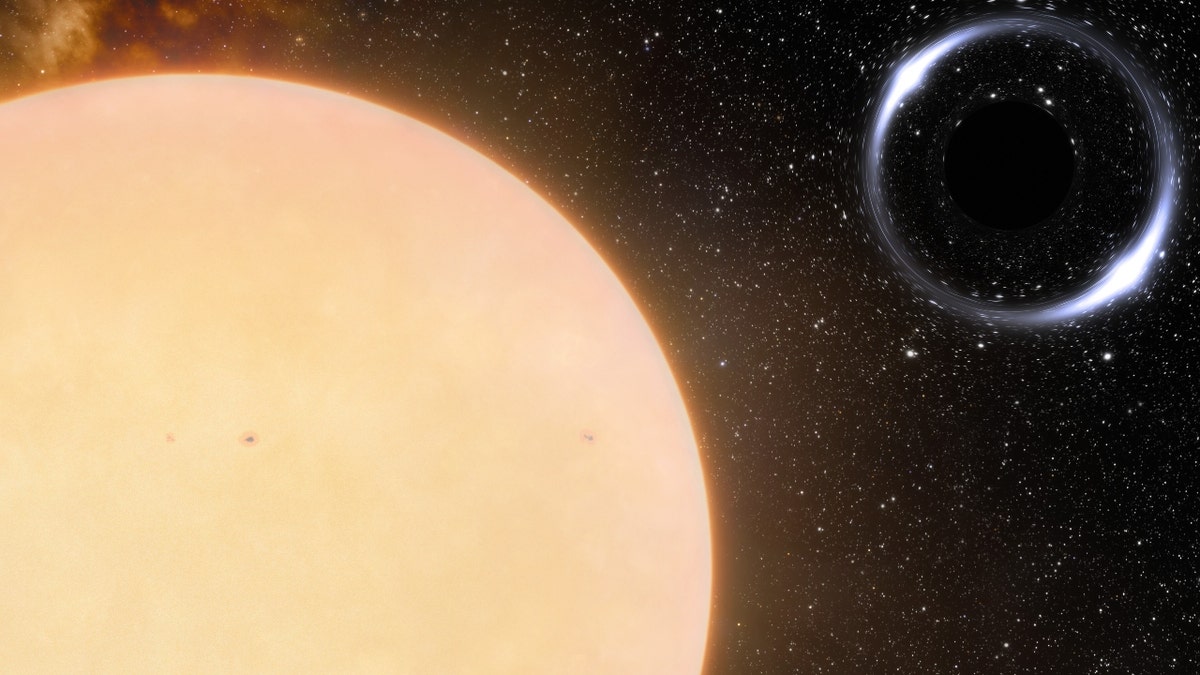
Astronomers using the International Gemini Observatory, operated by NSF’s NOIRLab, have discovered the closest-known black hole to Earth. (Credit: @GeminiObs/NOIRLab/NSF/AURA/J. da Silva/Spaceengine/M. Zamani)
Using the Gemini North telescope in Hawaii, the researchers discovered Gaia BH1 by making observations of the motion of the black hole's companion: a sun-like star that orbits the black hole at about the same distance as the Earth orbits the sun.
The few stellar-mass black holes in the galaxy have been detected using their energetic interactions with a companion star.
While material from a star becomes superheated and generates X-rays and jets spiraling toward a black hole, if the black hole is dormant it blends in with its surroundings.
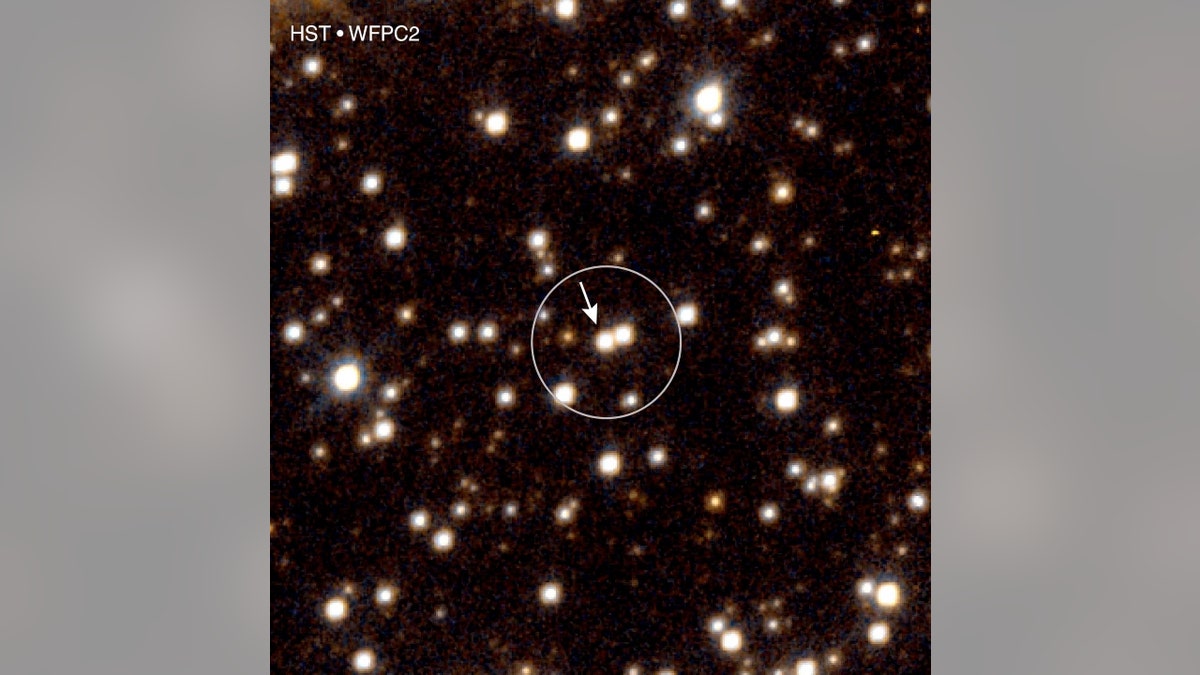
Two teams of astronomers using the Hubble Space Telescope and ground-based telescopes in Australia and Chile discovered the first examples of isolated stellar-mass black holes in Jan. 2000. (Photo by NASA REUTERS)
RUSSIA LAUNCHES ROCKET WITH MILITARY SATELLITE, UN LOOKS TO BLOCK SPACE ARMS RACE
Astronomers are not clear on just how the star and black hole came to be in their current positions.
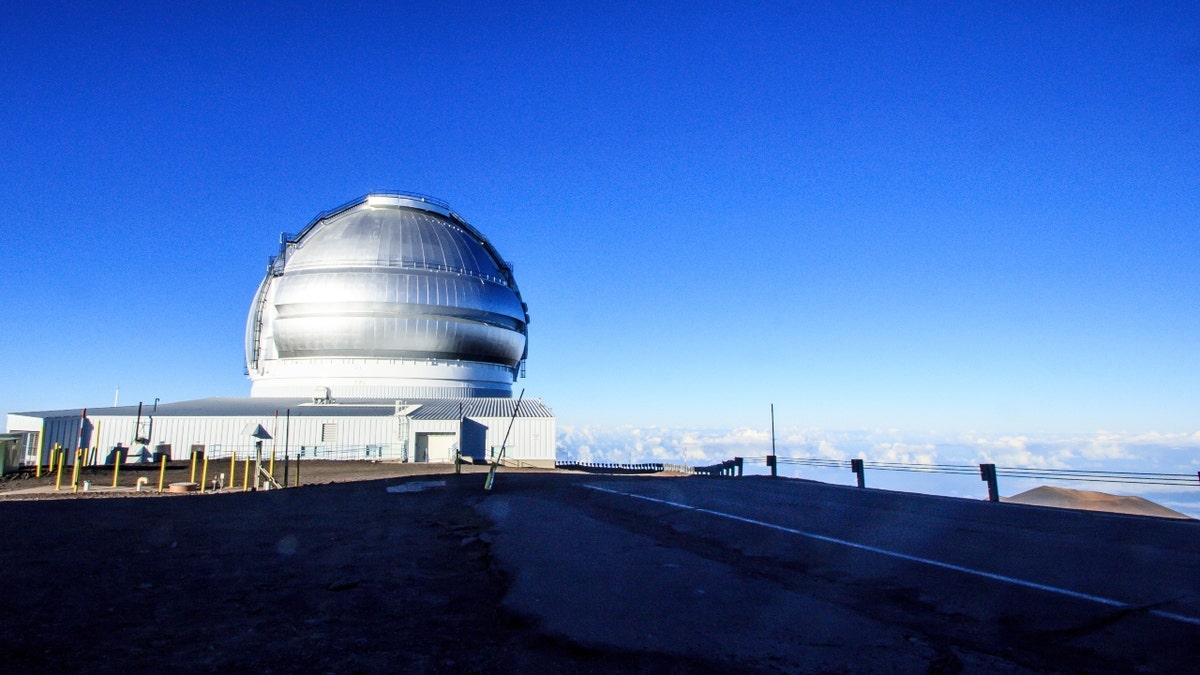
The Gemini Telescope at the Mauna Kea Observatories on the Big Island of Hawaii (Julie Thurston via Getty Images)
The release said the progenitor star that turned into the black hole would have been at least 20 times as massive as the sun and only lived a few million years.
In addition, if both stars formed simultaneously, the massive star would have turned into a supergiant.
CLICK HERE TO GET THE FOX NEWS APP
Modeling suggests such an event would have likely destroyed the companion or ended up on a much tighter orbit if it survived.
https://www.foxnews.com/science/closest-known-black-hole-earth-discovered-after-years-long-hunt