Iran faces 'last chance' to make deal, Trump says
President Donald Trump said the U.S. and Iran were resuming talks, claiming a deal to reopen the Strait of Hormuz and denuclearize Tehran is "imminent.” Iranian officials, however, have denied participating in direct talks with the U.S., saying that they are negotiating with mediators in Oman.
Coverage for this event has ended.
Iran shifts to political warfare, 'playing to the edge' to test Trump, expert warns
Iran is ramping up political pressure on the United States in a bid to gain leverage, a leading Iran analyst warned Tuesday.
"This is a regime that knows it cannot win an outright battle of conventional capability," Foundation for Defense of Democracies Iran Program Senior Director Behnam Ben Taleblu said on Fox News' "America Reports."
"They're even fighting a battle of wills right now against the Trump administration, both on the battlefield and diplomatically," he added.
"Clearly they have some steel, but this is a regime that has shown us, in word and deed, over the past 47 years, that it will play to the edge and that it will gamble. Unfortunately, we're in a very tough situation right now," Taleblu added.
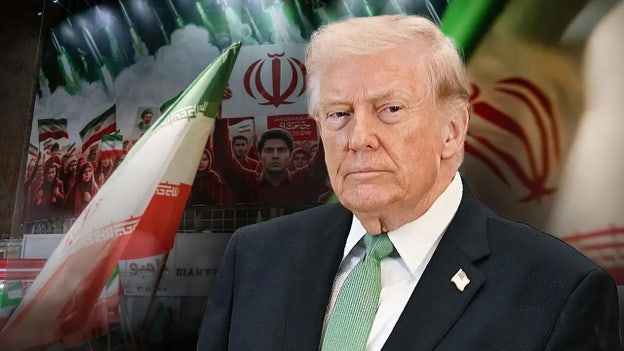
Taleblu also said no U.S. president has inflicted more damage on the Iranian regime than President Donald Trump, but argued that the administration has recently pulled back from several earlier threats.
"I think eight or nine — and even a newspaper run by Tehran's municipality basically said all of Trump's threats are watered down and that the U.S. is a paper tiger," he said.
"So this is a tough position for U.S. deterrence to be in right now, despite the good track record that the president has had."
Taleblu's remarks came as Qatar said Tuesday that mediators were making progress toward ending the war, although Tehran denied Trump's assertion that talks were already underway.
Israeli special ops veteran urges US to make Iran's IRGC 'paranoid' with covert attacks
The U.S. must shift its strategy against Iran, an Israeli special operations veteran warned Tuesday while arguing that Washington should target the Islamic Revolutionary Guard Corps' (IRGC) support network rather than using conventional military strikes.
“This is not conventional warfare. This is unconventional warfare,” Aaron Cohen said on Fox News' "Fox News @ Night."
“This is what the colonel and I refer to as low-intensity conflict. Special operations units, clandestine units, the CIA, Mossad, Navy SEALs, Delta, CAG — all of them were stood up in the 1950s specifically to be able to deal with this low-intensity conflict.”
“The real soft white underbelly here to really bend the mullahs, Trace, is going to be focusing operations on the support structure of the mullahs,” he said, describing how the regime is “built to be able to withstand military pressure.”
“Every time we hit them, what do they do? They stand up and say, ‘Great Satan can’t hit us with their explosions.’”
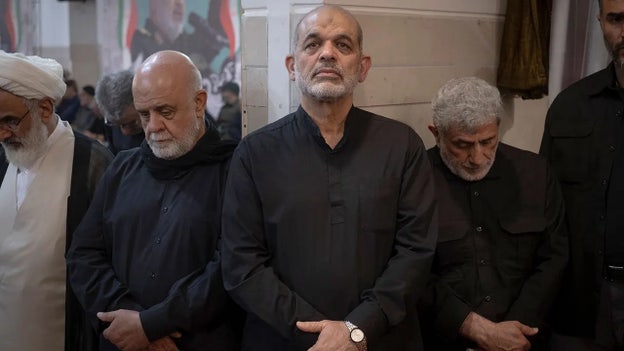
Cohen also said the U.S. military needs to be “attacking the middle, which is the IRGC, the money makers, the intelligence support apparatus.”
“Start hitting them. Start killing them, Trace. Start attacking them in their streets so that they get paranoid.”
“Israel has the intelligence, and I’m hoping that Trump sees the only way to actually bend the will of the mullahs is to make it so that the people who support them fear that the mullahs can no longer protect them,” he added.
More than half of some US weapons stockpiles used in Iran war, raising concerns about China threat
Some estimates show the U.S. has used more than half of its stockpiles for some weapons systems in the war with Iran.
The Center for Strategic and International Studies found the U.S. has enough missiles to continue fighting in Iran under any plausible scenario, but the group says the true issue with the shrinking stockpiles is future wars.
"We can go on against Iran for quite a long time, even if we've used half the inventory, that means that half the inventories are still available," said retired U.S. Marines Colonel and senior adviser with the CSIS Defense and Security Department Mark Cancian.
"The risk is about a future conflict in the Western Pacific against China."
Cancian points to reports that military officials have grown more concerned over the U.S. weapons inventory when factoring in other possible conflicts, such as one with China.
"The depletion of munitions was a major topic and a major reason for the suspension of air attacks," Cancian said.
"Our inventories were getting way below what the war planners wanted, that might encourage China to do something."
Almost one-third of Tomahawk missiles have been used since the war in Iran began. Nearly two-thirds of patriot missile interceptors have been depleted.
Just over half of precision strike missiles remain. President Donald Trump insists the U.S. has plenty of munitions to continue in Iran.
This is an excerpt from a report by Fox News' Bret Baier and Amy Munneke.
US blockade stalls Iran shipping, oil tankers stranded from Kharg to Indo-Pacific: report
The U.S. maritime blockade of Iran has effectively stalled shipping to and from the country's ports, advocacy group United Against Nuclear Iran (UANI) said Tuesday.
This came as empty Iran-flagged oil tankers grouped across the Indo-Pacific and loaded vessels were stationary off Kharg Island.
"The U.S. blockade is preventing transits to and from Iranian ports, causing clusters of empty Iran-flagged tankers and cargo ships to gather across the Indo-Pacific," UANI said in a post shared on X.
"On the other side of the blockade line, 13 laden tankers are loitering in the anchorage off Kharg Island, Iran," it added.
"Since the signing of the U.S.-Iran MOU on June 17, UANI has tracked at least 33 Iranian oil and petrochemical loadings, 13 of which originated from Kharg Island, Iran," UANI reported, adding that "departing Iran-flagged tankers are now heading to anchorages across the Indo-Pacific rather than back to Iranian ports because of the U.S. blockade."
Hesgeth rejects CNN report on depleted US missile stockpiles
War Secretary Pete Hegseth pushed back forcefully Tuesday against a CNN report claiming the U.S. military had exhausted nearly 80% of its THAAD missile interceptors during the Iran war and had warned the Pentagon.
“That banner is NOT TRUE, @CNN. Shame on you,” Hegseth said in a post on X.
“We don’t hate the Fake News media enough,” he added.
CNN also reported that the military had also used about half of its Patriot interceptors.
The outlet, citing sources, said senior military commanders warned the Pentagon that the stockpiles were “dangerously low.”
CENTCOM: Strait of Hormuz southern route open despite 'unwarranted Iranian aggression'
U.S. Central Command (CENTCOM) said Tuesday that the southern route through the Strait of Hormuz is open to vessels despite what it called "unwarranted Iranian aggression."
"The southern route through the Strait of Hormuz remains free and open for all commercial vessels seeking to transit the international waterway," CENTCOM said in a post on X.
"Over the past three months, U.S. forces have assisted more than 1,000 vessels in successfully transiting the strait despite unwarranted Iranian aggression, and these transits continue today," the command added.
The southern transit route in the Strait of Hormuz hugs Oman's coastline.
Iran weighs allowing Europe to clear mines in Strait of Hormuz: report
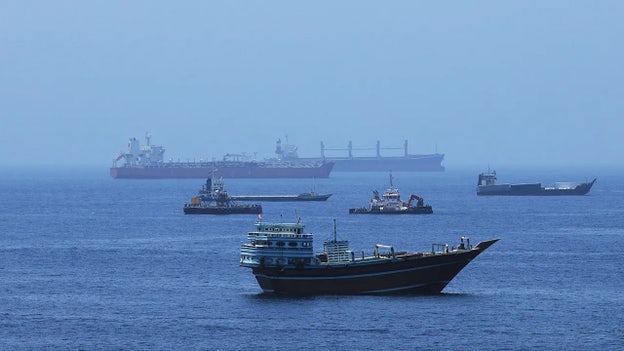
Iran is contemplating whether to allow European nations to clear mines from the Strait of Hormuz, Bloomberg reported Tuesday.
Citing diplomats, the outlet said the idea could form part of a deal to restore shipping through the key waterway and help ease talks with the United States.
Previously, Iran said it would not allow foreign countries to join demining efforts.
The officials said that in private meetings in recent weeks, Tehran has since "softened" its stance.
Iran’s unseen supreme leader becomes weapon in escalating power struggle, experts say
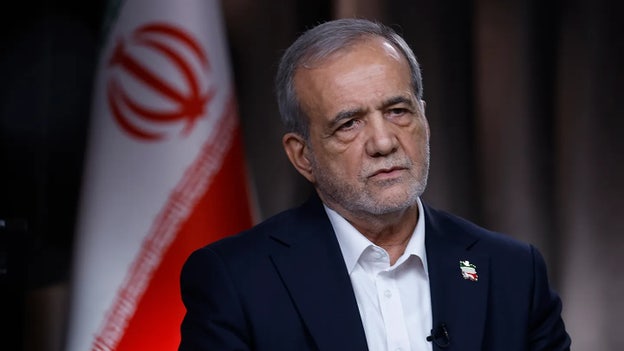
Iran’s rival political factions are increasingly invoking the authority of Supreme Leader Mojtaba Khamenei to attack their opponents and protect their own positions, even as questions persist over whether he is actively governing the country, according to an Iran expert.
The internal struggle surfaced in two reports published by Iran International concerning Iranian President Masoud Pezeshkian’s relationship with the new supreme leader.
In the first report, senior cleric Mohammad-Bagher Kharrazi, a relative of the Khamenei family by marriage, claimed Pezeshkian had repeatedly threatened to resign and was warned that his next resignation would be accepted.
Hours later, Iran International published a second report alleging Pezeshkian had met Mojtaba Khamenei only once, inside a vehicle with tinted windows at an undisclosed location in Tehran.
Kasra Aarabi, director of IRGC research at United Against Nuclear Iran, said the competing claims surrounding Pezeshkian and Mojtaba Khamenei reflected a deeper struggle inside what he described as an "Islamist oligarchic mafia system."
Under Ali Khamenei, Aarabi said, the supreme leader functioned as the system’s "godfather," arbitrating among rival Islamist factions and guaranteeing their access to power and money.
His removal created a vacuum that Mojtaba Khamenei’s appointment was intended to fill, but the new supreme leader’s prolonged public absence has left rival factions uncertain about who is actually in charge.
This is an excerpt from a report by Fox News Digital's Efrat Lachter.
Iran, Oman make progress on Strait of Hormuz reopening deal: report
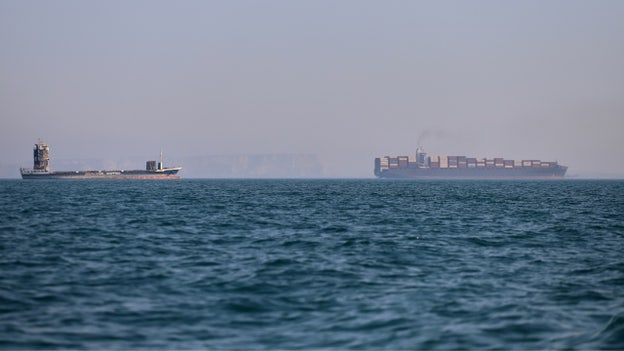
Iran and Oman advanced negotiations on a deal to reopen the Strait of Hormuz, The Associated Press reported Tuesday.
Citing officials, the outlet said an emerging agreement would allow ships to enter the Persian Gulf through an Iranian-controlled route and exit through a route controlled by Oman.
Service fees would be charged for providing security and preserving the maritime environment, two officials told the outlet and with any deal linked to lifting the U.S. blockade on Iran's ports.
President Donald Trump reiterated his stance on tolls on Aug. 3.
“I’m not going to let them charge,” Trump said. “Anybody’s going to charge, we’ll charge,” he added.
Trump, Qatar's emir discuss easing US-Iran tensions in push for diplomatic deal
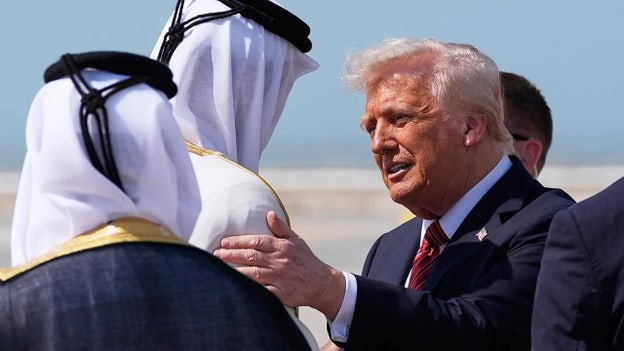
President Donald Trump spoke by phone Tuesday with Qatar's Emir Sheikh Tamim bin Hamad Al Thani, with the two leaders discussing efforts to reduce regional tensions and narrow differences between the United States and Iran, Reuters reported.
"During the call, they reviewed the latest regional developments, particularly efforts to reduce tensions between the United States and Iran and narrow their differences in a way that would increase the chances of reaching a lasting diplomatic settlement to the crisis," the emir's office said in a statement.
Iranian president rejects resignation rumors, vows to 'stand firm'
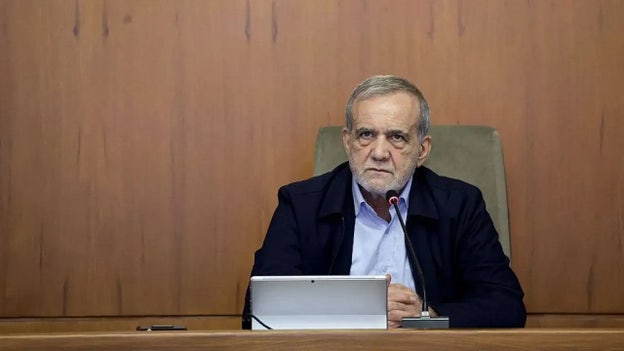
Iranian President Masoud Pezeshkian said Tuesday in part of a televised interview that he would not resign after a senior cleric claimed he had repeatedly threatened to do so.
“We are fully coordinated with the military forces. I will not resign, and I will stand firm,” Pezeshkian said, according to Iran International.
“If I resign, I will formally announce that I have resigned,” he clarified.
Mohammad-Bagher Kharrazi, whose sister is married to Supreme Leader Mojtaba Khamenei's brother, had claimed Pezeshkian threatened to resign "28 times" but stopped after being warned that his next resignation would be accepted, the outlet said.
Pezeshkian's comments came during an interview marking the second anniversary of his administration, Iran's semi-official Mehr News Agency reported.
US, Lebanon reopen talks in Rome to advance Hezbollah disarmament deal
The United States and Lebanon resumed negotiations in Rome on Tuesday aimed at implementing a framework agreement that includes the verified disarmament of Hezbollah.
The U.S. State Department said the latest round of talks are to "advance full implementation of the Trilateral Framework," according to State Department spokesperson Tommy Pigott.
"The United States remains fully committed to supporting both governments as they carry this process forward in a manner that delivers lasting security for both countries, eliminates security threats to Israel, and restores Lebanese state authority throughout the south," Pigott said in a post on X.
The June 26 framework agreement also calls for the Lebanese military to gradually assume security responsibility in pilot zones, enabling the Israeli military's phased redeployment from southern Lebanon.
US forces redirect 45 commercial vessels sailing to or from Iranian ports, CENTCOM says
U.S. Central Command (CENTCOM) on Tuesday highlighted the Navy's continuing role in enforcing the U.S. blockade against Iran, saying American forces have redirected dozens of commercial vessels while operating in regional waters.
In a post on X, CENTCOM shared a photo of a U.S. sailor standing watch inside the combat information center aboard the USS Boxer (LHD 4), an amphibious assault ship deployed to support the operation.
“As of Aug. 4, U.S. forces have redirected 45 commercial vessels, disabled 2 and boarded 2 to ensure compliance,” CENTCOM said.
The update comes as Iran has halted most traffic through the Strait of Hormuz since the start of the war in February, while the United States maintains a blockade of Iranian shipping and ports.
The Strait of Hormuz is one of the world's most strategically important waterways, typically carrying about one-fifth of global oil and liquefied natural gas shipments.
Bessent says US, Iran could reach Strait of Hormuz deal 'today or tomorrow'
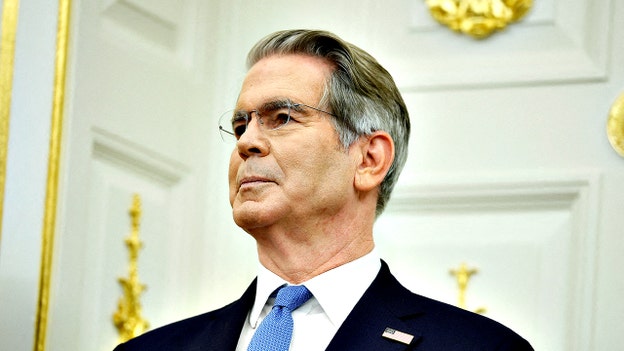
Treasury Secretary Scott Bessent said Tuesday the U.S. is in talks with Iran and suggested an agreement to reopen the Strait of Hormuz could come as soon as "today or tomorrow," a development that helped send oil prices lower.
Speaking on CNBC, Bessent said there is "a chance we may have a deal today or tomorrow to open the strait and move towards a more normalized position in this conflict."
Bessent said Iran's military has been severely weakened, pointing to heavy losses to its air force, navy, missile stockpile and missile production capability.
"Anything that happens in the Gulf will benefit Japan and indeed the rest of the world," he said.
Asked whether Iran would be allowed to charge ships to pass through the strait under a possible agreement, Bessent said he expects vessels would have free passage.
"I think it would be freedom of movement," he said. "I would expect the energy prices to settle back down, which... will be good for the entire world."
Bessent acknowledged conditions remain "a little dicey" but said ships have continued moving through the area over the past several days. He added that once the strait is fully open, hundreds — "if not a thousand" — ships waiting to leave the Gulf could get underway.
"It's not just energy," Bessent said. "It's fertilizer. It's refined products. It is the various industrial gases."
He said lower shipping costs and falling energy prices could trigger "a big relief trade."
Oil prices fell Tuesday after Bessent's comments, with Brent crude, the international benchmark, dropping $1.87 to $81.90 a barrel.
US military running low on key long-range missiles after months of Iran war: report
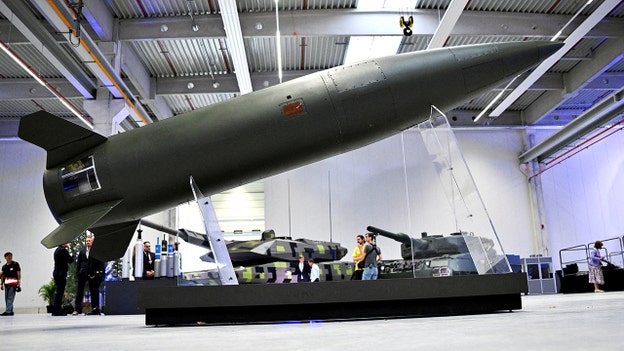
The U.S. Army has burned through much of its stockpile of precision long-range missiles during the five-month war with Iran, according to an exclusive Reuters report, raising new concerns about America's military readiness if another major conflict breaks out.
Citing three people familiar with the data, Reuters reported the Army has used "virtually all" of its Army Tactical Missile Systems (ATACMS) and newer Precision Strike Missiles (PrSM).
One source also told Reuters the U.S. has used a little less than half of its global supply of Tomahawk cruise missiles since the war began, though Reuters said it could not independently verify that figure. The Navy's Tomahawk missiles are launched from destroyers, cruisers and submarines and are designed to strike heavily defended targets without putting pilots at risk.
The precision-guided ATACMS and PrSM, which cost more than $1 million each, allow U.S. forces to strike targets from long distances and have become key weapons in modern warfare. ATACMS have also been supplied to Ukraine for strikes against targets inside Russia, while the PrSM is the Army's next-generation replacement with greater range.
Reuters reported the shrinking missile stockpile could force President Donald Trump to rely more heavily on riskier piloted bombing missions if he resumes large-scale attacks on Iran.
Trump launched the campaign alongside Israel in February after predicting the conflict would be brief. But as the war has dragged on, sources told Reuters they worry dwindling missile inventories could weaken the U.S. military's ability to deter adversaries such as China and Russia.
A fourth person familiar with the matter told Reuters that while U.S. Central Command has nearly exhausted the land-based missile inventory it had at the start of the war, it has continued replenishing supplies by drawing from stockpiles elsewhere around the world.
Asked about the reported stockpile data, the White House provided Reuters with a statement from Trump.
"The United States has far more munitions than anyone in the world, and far more than we need," Trump said.
"Our defense companies are, at this moment, making more munitions than they have ever made before, in addition to expanding their plants and equipment at record levels," he added.
While analysts agree U.S. production of key munitions has increased significantly, they have also cautioned that current manufacturing levels may not be sufficient to sustain a prolonged, high-intensity conflict.
CENTCOM shares video of F-22 stealth fighter refueling midair over the Middle East
U.S. Central Command (CENTCOM) on Tuesday shared new video showing a U.S. Air Force F-22 Raptor stealth fighter receiving fuel from a KC-135 Stratotanker while flying over the Middle East, offering a glimpse at the aerial refueling operations that help extend the aircraft's range during missions.
"The U.S. Air Force F-22 receives fuel from a KC-135 Stratotanker while flying over the Middle East," CENTCOM wrote in a post on X accompanying the footage.
The brief video shows the fifth-generation fighter connecting with the tanker aircraft high above the region before continuing its mission.
In February, Fox News Digital reported that 11 U.S. Air Force F-22 Raptor stealth fighters arrived at Israel's Ovda Air Base in what marked the first-ever operational deployment of American combat aircraft to Israel. The deployment was part of a broader U.S. military buildup in the Middle East amid heightened concerns over Iran's nuclear program and missile capabilities.
"The F-22 is indeed the most air-to-air capable fighter in the world; nothing comes close to it in the air-to-air role," retired Air Force Lt. Gen. Joseph Guastella, the former deputy chief of staff for operations at Air Force headquarters, said that month during a webinar hosted by the Jewish Institute for National Security of America (JINSA).
Designed to establish and maintain air superiority, the F-22 can operate in heavily defended airspace and suppress enemy air defenses. Before bombers or other strike aircraft can reach hardened nuclear or missile targets, the F-22's mission is to clear the skies, former Air Force generals said during the JINSA discussion.
Fox News Digital's Efrat Lachter contributed to this report.
World has lost 2.6 billion barrels of oil since US-Iran war began, Aramco CEO warns
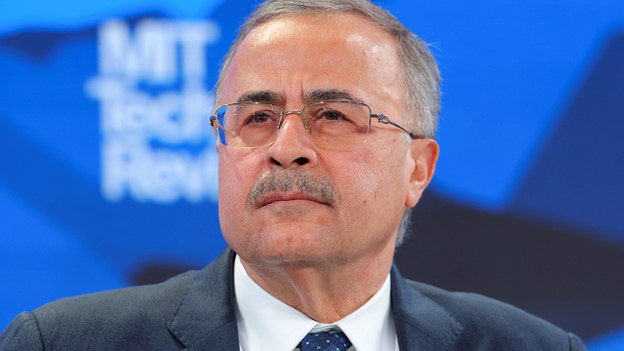
The world has lost more than 2.6 billion barrels of oil since the U.S. war with Iran began in February, according to the head of Saudi oil giant Aramco.
CEO Amin Nasser said Tuesday that the loss is equal to nearly one month of normal global crude production, highlighting how much the closure of the Strait of Hormuz has disrupted the world's oil supply.
"If the Strait were to open today, it would take up to 18 months at an average rate of 2.1 million barrels a day to replenish depleted inventories," Nasser said while discussing Aramco's second-quarter earnings.
His comments come as countries continue drawing from strategic petroleum reserves and oil companies look for ways to keep supplies moving despite the ongoing conflict.
Aramco reported a 44% increase in quarterly net profit to $32.69 billion, helped by higher oil prices and its ability to reroute shipments through Saudi Arabia's East-West Pipeline instead of the Strait of Hormuz.
Nasser said attacks on some Aramco facilities caused temporary production interruptions, but he said they did not have a material impact on the company's operations or finances. He credited the company's storage network, export terminals and pipeline system with helping keep oil flowing.
He also said releases from strategic reserves, commercial inventories and lower demand have helped ease some of the pressure on global markets.
Nasser, however, warned the market has little room for another major disruption.
Refineries around the world are already running near full capacity, he said, and a prolonged refinery outage or another supply interruption could tighten fuel supplies even further.
If conditions improve, Nasser said Aramco could restore production to pre-conflict levels within days and reach its maximum sustained production capacity of 12 million barrels per day within three weeks if requested.
Reuter contributed to this report.
Qatar says diplomatic efforts underway after US, Iran offer conflicting accounts of talks
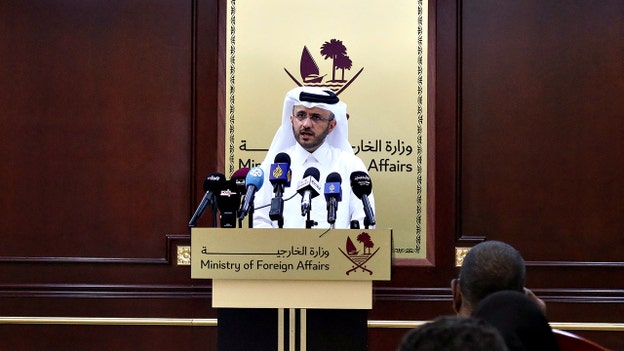
Qatar said Tuesday it is working with all sides to find a diplomatic solution as President Donald Trump and Iran continued to publicly disagree over whether direct talks are taking place.
"We're looking into a diplomatic solution," Qatari Foreign Ministry spokesman Majed al-Ansari said during a briefing. He said mediation efforts are continuing with all parties but did not provide details or address the conflicting claims from Washington and Tehran.
The remarks came a day after Trump said the U.S. had resumed talks with Iran and claimed a deal to reopen the Strait of Hormuz and address Tehran's nuclear program is "imminent."
Foreign Ministry spokesman Esmail Baghaei pushed back on Trump’s claim, saying on Monday that Tehran is not holding direct talks with the United States. Instead, he said, Iran is communicating through mediators in Oman on issues related to safe navigation through the Strait of Hormuz.
Trump accused Iran's leaders of publicly denying negotiations while privately requesting meetings.
"Whether Iran wants to admit it or not, we are, in fact, talking," Trump said Monday.
The Associated Press contributed to this report.
Liberia flagged ship hit in Strait, crew member missing
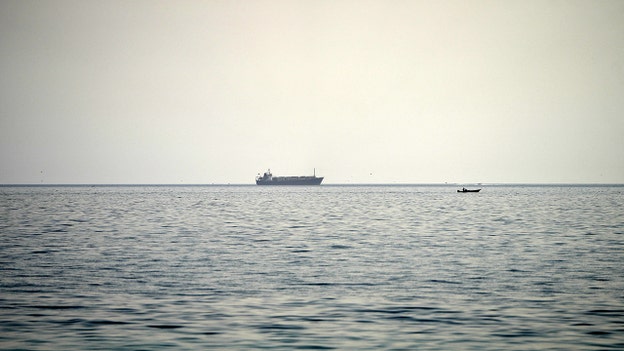
A Liberia-flagged cargo ship was struck by an unknown projectile Tuesday while transiting the strategically vital Strait of Hormuz near the coast of Oman, forcing the crew to abandon the vessel as rescuers searched for a missing crew member.
The dry bulk carrier Minoan Pioneer was hit in its engine room, maritime security sources told Reuters.
British maritime risk management firm Vanguard separately told the outlet that the impact sparked a fire in the ship's accommodation area.
“The crew are fighting the fire and require assistance, while the third engineer is reported missing," it said.
A salvage operation is underway, with a tugboat equipped for firefighting dispatched to the scene, one maritime security source said. Most of the crew evacuated into a lifeboat and are reported to be safe, according to the outlet.
It was the fourth attack on a vessel in the waterway since Friday as tensions remain high in the Strait of Hormuz, one of the world's most important maritime chokepoints.
President Donald Trump had vowed last month “to bomb and destroy” one Iranian bridge or power plant each time Iran shoots at a ship in the Strait of Hormuz.
Meanwhile, Iran has halted most traffic through the Strait of Hormuz while the U.S. maintains a blockade of Iranian shipping and ports, disrupting a waterway that typically carries roughly one-fifth of global oil and liquefied natural gas shipments.
Trump says he is giving Iran ‘every last chance’ to reach deal
President Donald Trump said Monday that he is giving Iran “every last chance” to reach a deal before the U.S. carries out a far more punishing military operation.
“I want to give them every last chance before decapitation. Very tough to do,” Trump told reporters in the Oval Office. “…I'm very proud of the fact that I'll give people a chance. This is a big move to do an attack that big on a country.”
Trump said Iranian officials called him after learning about the planned military operation.
“Hopefully they'll come to their senses," Trump added. "So they called me, and they said, 'Please don't attack. We'll make a deal.' That's the real truth. And everyone knows it."
Trump told reporters they’re talking now with negotiations focused first on reopening the Strait of Hormuz, then on Iran’s denuclearization, with Saudi Arabia, the United Arab Emirates and Qatar backing the diplomatic push.
The president said that if “given a chance to let a lot of people live,” that he wants to “give that chance.”
“I'm under no time constraint,” Trump said.
But Trump’s former Vice President Mike Pence said on Fox News the president should strike the remaining nuclear facilities in Iran.
“One does not make peace with one's enemy,” Pence said. “One makes peace with one’s defeated enemy.”
Live Coverage begins here