
US strikes 'on a hold,' as talks, battle for Strait of Hormuz control loom with Iran
President Donald Trump and his Iran negotiators have resumed technical and political talks, snapping a streak of nightly airstrikes at 13 days, bring potential peace to the Middle East and stability to the Strait of Hormuz.
Coverage for this event has ended.
Iran issues second warning to Ukraine after alleged Caspian Sea attack
Iran issued a second warning to Ukraine on Sunday following what Tehran said was an attack on a vessel in the Caspian Sea.
Iranian officials claimed the attack on July 25 triggered an explosion aboard the vessel, killing one sailor and wounding another.
"Any attack on Iran always comes with a cost, and that remains true today. The U.S. and Israel are well aware of this," Ebrahim Azizi, head of the Iranian Parliament's National Security Commission, said in a post on X.
"Ukraine, too, may soon come to understand that Iran does not let actions go unanswered," he added, warning that the list of those "who have miscalculated continues to increase."
Iranian Foreign Minister Abbas Araghchi also blamed Ukrainian President Volodymyr Zelenskyy for the attack and said earlier Sunday that the incident "cannot go unanswered."
Where gas prices are rising as the Iran war rattles oil markets
The fallout from the war is increasingly showing up at American gas stations. Gasoline prices have risen more than 30% since fighting involving Iran began, as fears of supply disruptions rippled through global oil markets.
AAA says the national average for a gallon of regular gasoline now stands at $4.09, up 15 cents from just a week ago.
The impact varies sharply by state.
Drivers in California are paying an average of $5.62 per gallon, while prices stand at $4.28 in Montana, $4.26 in Illinois and $4.23 in Pennsylvania. Texas remains below the national average at $3.70, while Florida is averaging $3.98 per gallon, according to AAA data from July 25.
That's nearly 95 cents higher than a year ago, when the national average was $3.15 per gallon. According to AAA, rising oil prices fueled by instability in the Middle East are the primary driver behind the latest surge.
While the fighting remains thousands of miles away, its economic effects are reaching American households through higher fuel costs and higher prices for the goods that depend on transportation.
Iran accuses US of trying to undermine ICC over Netanyahu arrest warrant
Iran's Deputy Foreign Minister Kazem Gharibabadi accused the United States of seeking to undermine the International Criminal Court in response to its pursuit of Israeli Prime Minister Benjamin Netanyahu.
Gharibabadi said Netanyahu, who is the subject of an ICC arrest warrant, claimed that Secretary of State Marco Rubio promised to take action against the court.
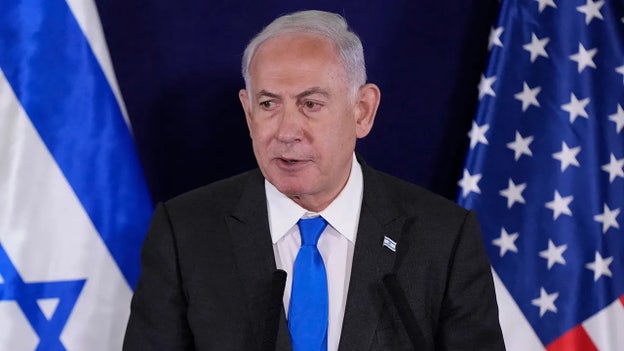
"The Prime Minister of the Zionist regime, the accused with an arrest warrant from the International Criminal Court, brazenly declares that the U.S. Secretary of State has pledged to act against the Court pursuing him," Gharibabadi said in a post on X.
"They call the Court 'corrupt' because it dared to pursue Washington's wanted criminal," he added.
The ICC issued arrest warrants in 2024 for Netanyahu and former Israeli Defense Minister Yoav Gallant, as well as for a Hamas military commander, citing alleged war crimes and crimes against humanity committed during the Gaza conflict.
IAEA chief, Pakistan FM discuss regional tensions after US, Iran halt attacks
Pakistani Foreign Minister Ishaq Dar and International Atomic Energy Agency (IAEA) Director General Rafael Mariano Grossi discussed the U.S.-Iran conflict on a call Sunday, the Pakistani Foreign Office said, as fighting between the two sides paused.
"They exchanged views on the latest regional developments and underscored the importance of continued diplomacy, dialogue and constructive engagement in advancing regional and international peace and stability," the Foreign Office said in a post shared on X.
Director General Grossi also expressed hope that the parties would "sustain dialogue and engagement following the Islamabad Memorandum of Understanding, with a view to achieving a peaceful and durable outcome," it said.
Oil prices plunge as Trump pauses Iran strikes, fueling hopes for diplomacy
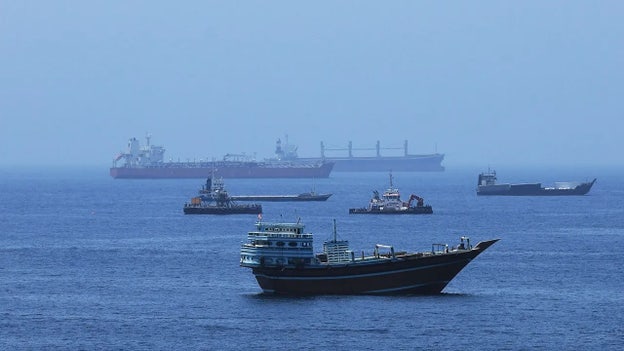
Oil prices fell more than 5% on Monday after President Donald Trump paused U.S. military strikes against Iran following two weeks of attacks, Reuters reported.
Brent crude futures fell $5.58, or 5.8%, to $91.20 a barrel as of 10:04 p.m. GMT. U.S. West Texas Intermediate crude dropped $4.91, or 5.5%, to $84.40 a barrel.
The decline reflected easing concerns over potential disruptions to global oil supplies with investors hoping for diplomacy to ease tensions between Washington and Tehran, the outlet said.
Mojtaba Khamenei vows Iran will keep backing Hezbollah, declares 'jihad and resistance' only path
Iran’s Supreme Leader Mojtaba Khamenei said Sunday that Tehran would maintain its support for Hezbollah as a strategic policy in a letter to the terror group's secretary-general, while declaring there was no path forward except "jihad and resistance."
“In line with the policy set by the great martyred Leader of the Islamic Revolution, the Islamic Republic of Iran considers the defense of these oppressed yet powerful mujahideen [of Hezbollah] to be its strategic mandate,” Khamenei said in a series of posts shared on X.
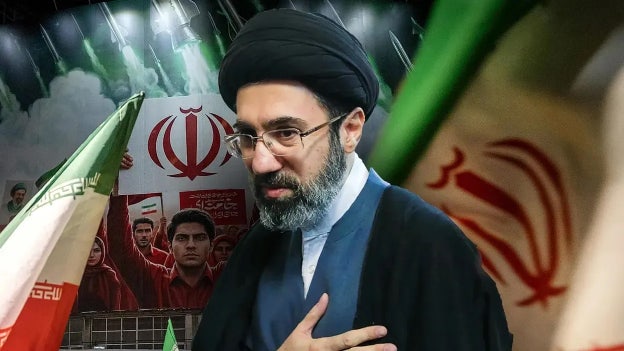
“Today, as the nations of the world have grown weary of the tyranny and oppression of the U.S. government and the criminal Zionists, who are the destroyers of lives and generations, there remains no path forward except jihad and resistance,” he added.
The Iranian leader also said that Tehran has “designated the preservation of Lebanon’s territorial integrity and the absolute, unconditional termination of the Zionist regime’s aggression as the primary condition for any agreement to end the imposed war against the aggressive U.S.”
Kuwait emir, British prime minister discuss regional developments amid Mideast tensions
Kuwait's Emir Sheikh Meshal Al-Ahmad Al-Jaber Al-Sabah spoke by phone with U.K. Prime Minister Andy Burnham on Sunday, congratulating him on his new appointment.
According to a statement, the two leaders also discussed bilateral ties and regional developments.
During the call, they reviewed the "historic relations that unite the two countries and friendly peoples, a number of issues of mutual interest, and the latest developments in the regional and international arenas, particularly with regard to the current circumstances the region is experiencing," and exchanged views on them.
The statement added that Burnham "affirmed his country's standing alongside the State of Kuwait and its friendly people and its support for all that would preserve its sovereignty and security and safeguard its stability."
One overlooked fuel is quietly making the Iran conflict a lot more expensive for Americans
Diesel powers the trucks delivering groceries, the tractors harvesting crops, the freight trains moving goods and the heavy equipment building new homes.
Because it's woven into nearly every step of the supply chain, higher diesel prices can ripple through the economy and raise the cost of everyday essentials.
National average diesel prices have climbed from about $3.56 per gallon in January to more than $5 per gallon, adding significant costs for trucking companies, farmers and businesses that rely on the fuel.
The recent jump in diesel prices follows heightened tensions surrounding the Iran war, which have fueled concerns about global energy supplies. While drivers notice higher gasoline prices first, economists say diesel is the "workhorse fuel" behind the U.S. economy, making it a key driver of transportation and business costs.
That means the effects may extend far beyond the pump. From supermarket shelves to Amazon deliveries and construction materials, rising diesel costs can quietly make nearly everything Americans buy more expensive—even after oil prices begin to stabilize.
Qatar PM urges diplomacy, pushes US-Iran deal to safeguard Strait of Hormuz
Qatar's Prime Minister and Foreign Minister Sheikh Mohammed bin Abdulrahman Al Thani spoke with United Arab Emirates Deputy Ruler of Abu Dhabi and National Security Adviser Sheikh Tahnoon bin Zayed Al Nahyan on Sunday, during which they discussed bilateral ties and regional developments, Qatar's Foreign Ministry said in a statement.
The ministry also said the two officials discussed regional developments and coordination to "de-escalate tensions and strengthen security and stability in the region."
"HE the Prime Minister and Minister of Foreign Affairs stressed the importance of all parties adhering to dialogue and diplomacy and implementing the understandings reached under the memorandum of understanding between the United States and the Islamic Republic of Iran, including ensuring freedom of navigation in the Strait of Hormuz, to maintain regional security, preserve the gains achieved, and enhance regional stability," the ministry said.
The prime minister and foreign minister also reiterated Qatar's "full support for all efforts aimed at reducing tensions and reaching a comprehensive agreement that achieves lasting peace in the region."
Iran sold $18 billion in oil during war and ceasefire, oil minister claims: report
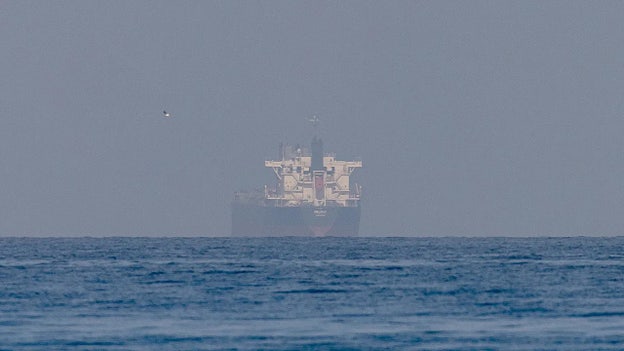
Iran sold $11.5 billion worth of oil during the war and another $6.5 billion during the subsequent ceasefire, Oil Minister Mohsen Paknejad claimed July 25, according to Reuters.
Paknejad also said the lower risk to tanker traffic during the ceasefire boosted exports and had allowed Iran to sell part of its roughly 100 million barrels of stored crude oil and gas condensate.
The combined $18 billion in sales generated more than 60% of the oil revenue projected in Iran's annual budget, Paknejad claimed, according to the outlet.
GOP Sen. Bill Cassidy says Congress must soon weigh in on Iran war
Cutting off funding for the Iran war is not a viable solution, but Trump administration must soon seek congressional approval for its strategy, according to Sen. Bill Cassidy, R-La.
“We’re not going to abandon our men and women on the front line,” Cassidy told Sunday's CNN "State of the Union," warning against allowing Iran to control the Strait of Hormuz or rebuild its conventional and nuclear capabilities.
Cassidy said the U.S. needs an alternative to either withdrawing and empowering Tehran or continuing to spend tens of billions of dollars on a campaign that has not yet delivered clear results.
“The president needs to come to Congress, the American people, and say, ‘These are the facts,’” Cassidy said, calling for a broader debate if the administration cannot bring the conflict to a quick end.
GOP Rep. Mike Turner: Cheaper gas is not worth the risk of a nuclear Iran
Reopening the Strait of Hormuz and lowering energy prices would not justify allowing Iran to retain a path to nuclear weapons, Rep. Mike Turner, R-Ohio, warned Sunday.
“The foolish trade is to say, well, we’ll have the straits open, we will have lower gas prices, but we’ll have a nuclear Iran,” Turner told ABC’s “This Week.”
Turner, a member of the House Armed Services Committee, said the White House is taking a methodical approach as it balances military force with negotiations.
He also clarified that previous U.S. strikes may have destroyed Iranian enrichment sites without eliminating Tehran’s broader nuclear ambitions.
Bipartisan frustration on Capitol Hill over how the conflict has been handled and how the White House and Pentagon have explained it was acknowledged by Turner, but he noted that “America, the United States cannot do this alone."
CENTCOM commander reportedly urged halt to Strait of Hormuz bombing to gear up for final strikes
U.S. Central Command chief Adm. Brad Cooper reportedly recommended pausing the bombing campaign around the Strait of Hormuz before a massive campaign to finish the job against Iran.
U.S. officials have not publicly confirmed the recommendation, but sources indicate that 20% of the original Epic Fury targets remain.
Iran warns alleged Ukrainian vessel attack killing Iranian sailor ‘cannot go unanswered’
Iranian Foreign Minister Abbas Araqchi accused Ukraine of attacking an Iranian commercial vessel and killing a sailor, warning Sunday that the incident “cannot go unanswered.”
Iran said the attack in the Caspian Sea resulted in an explosion that killed one sailor and injured another.
Araqchi said he raised the alleged strike during calls with European Union foreign policy chief Kaja Kallas and Russian Foreign Minister Sergei Lavrov.
He blamed Ukrainian President Volodymyr Zelenskyy for the attack but provided no additional details about the vessel, its location or when the incident occurred.
Lavrov, in a statement posted on the Russian Foreign Ministry's website, offered condolences in connection with the death of a sailor in the attack.
Lavrov said Araqchi thanked local authorities in the Russian region of Astrakhan, where the vessel started its journey, for helping the crew "and stressed the need to put an end to such adventures by the Kyiv regime."
The statement also said Araqchi informed Lavrov of "continuing diplomatic efforts aimed at de-escalating tension in the Middle East".
Reuters contributed to this report.
Trump put Putin, Xi ‘on notice’ against helping Iran target US bases, Amb. Waltz says
President Donald Trump has warned Russian President Vladimir Putin and Chinese President Xi Jinping against helping Iran target American forces in the Middle East, U.S. Ambassador to the United Nations Mike Waltz said Sunday.
“The president," Waltz told Sunday's “Face the Nation” on CBS, "has put both on notice, frankly, that they should not be assisting and that bad things will happen if they are."
Waltz pointed to the close military relationship between Russia and Iran, including Tehran’s past transfer of drones and drone technology to Moscow for use against Ukraine.
His comments came after Ukrainian President Volodymyr Zelenskyy alleged that Russian satellite surveillance of U.S. military installations in the Gulf had been shared with Iran.
Waltz did not confirm the claim, saying Zelenskyy’s statement and Trump’s warning should “stand on their own.”
Retired Vice Adm. Harward: US may be preparing for ‘boots on the ground’ in Iran
The U.S. may be using the pause in strikes on Iran to reposition forces for a larger military operation, including the possible deployment of ground troops, retired Vice Adm. Robert Harward said Sunday.
"Any singular bomb isn't the answer to the overall efforts and capabilities have, and I think the real options they may be preparing now for his boots on the ground to really show the Iranian people that we're moving to the end of this government in Iran," Harward, a former deputy commander of U.S. Central Command, told “The Sunday Briefing,” noting "he's come to the realization – he tried to MOU; he gave them the opportunity; they responded with aggression going after the Straits.
“I think the president’s preparing to go the full way on this,” Harward concluded, arguing the pause could allow the military to prepare for “the next step of escalation.”
GOP Sen. John Kennedy: Ending Iran campaign now would be a ‘huge mistake’
Ending the U.S. campaign against Iran now would be a “huge mistake,” according to Sen. John Kennedy, R-La., who urged the Trump administration to maintain pressure on Tehran while avoiding the deployment of American ground troops.
“We need to stay the course, at least for a few more months,” Kennedy told CBS's "Face the Nation," arguing that Washington should not “cut and run” despite rising energy costs.
The U.S. should tighten sanctions on Iranian oil, continue its blockade and consider bombing Pickaxe Mountain, according to Kennedy.
Kennedy did criticize the timing of a U.S. civilian nuclear agreement with Saudi Arabia, saying it could send the wrong message while Washington is fighting to prevent Iran from obtaining a nuclear weapon.
“The world’s on a hair trigger,” Kennedy said, adding that the Saudi deal might make sense in the future but is “not good timing” during the Iran conflict.
Amb. Mike Waltz insists US military has enough weapons for Iran campaign, blasts stockpile leaks
Despite narratives the Congress is underfunding Pentagon weapons stockpiles, the military has all the weapons it needs to continue operations against Iran, according to U.S. Ambassador to the United Nations Mike Waltz on Sunday.
“The U.S. military," Waltz told NBC’s “Meet the Press,” "has everything that it needs to conduct this campaign as effectively as it needs to be.”
Waltz acknowledged that years of support for Ukraine and operations against the Houthis had strained some inventories, but said the Trump administration is rebuilding stockpiles and investing in cheaper munitions and new technology.
He also sharply criticized officials leaking information about U.S. weapons supplies, saying those responsible “deserve to be in jail.”
Senate Majority Whip John Barrasso: Dems sabotaging Trump’s hand on Iran
Democrats are trying to limit President Donald Trump’s ability to confront Iran, Senate Majority Whip John Barrasso, R-Wyo., warned Sunday.
“The president is going to continue to negotiate from a position of strength,” Barrasso told “The Sunday Briefing.” "But right now, the Democrats in the House and in the Senate are trying to tie the president's hands."
Democratic opposition to military funding and weapons spending could leave U.S. troops without the resources they need as tensions with Iran remain high.
"They are voting against funding for the troops, against the weapons that the troops need, and it’s disgraceful what the Democrats are doing now,” Barrasso said.
"We need to make sure that our troops are fully funded and have the resources they need to be the greatest fighting force on Earth."
Pentagon report: 4 US service members killed, 207 injured since July 7
Four U.S. service members have been killed and 207 injured in overseas operations since July 7, according to the Defense Casualty Analysis System.
The Pentagon database, maintained by the Defense Manpower Data Center, identifies all four fatalities as active-duty Army personnel. The figures were current as of July 25.
1st Lt. Tyler James Feehan, 25, of Ewa Beach, Hawaii
Died July 18 from wounds suffered in a July 17 enemy attack at Muwaffaq Salti Air Base in Jordan. He was an air defense artillery officer assigned to 2nd Battalion, 55th Air Defense Artillery Regiment at Fort Bragg, North Carolina.
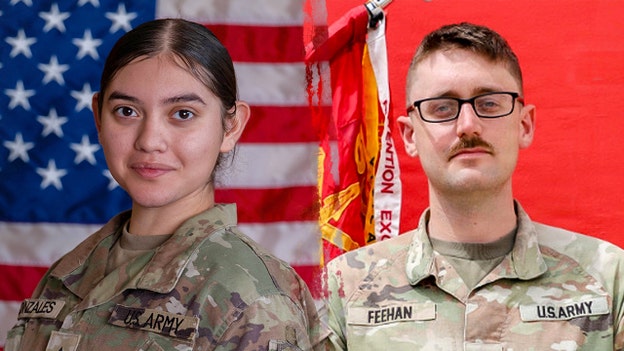
Pfc. Isabella Gonzales, 19, of Carrollton, Texas, and 1st Lt. Tyler James Feehan, 25, of Ewa Beach, Hawaii, were fatal victims of a July 17 enemy attack at Muwaffaq Salti Air Base in Jordan. (U.S. Army)
Pfc. Isabella Gonzales, 19, of Carrollton, Texas
Killed in the July 17 attack at Muwaffaq Salti Air Base. She was an air and missile defense crewmember assigned to 1st Battalion, 57th Air Defense Artillery Regiment in Ansbach, Germany.
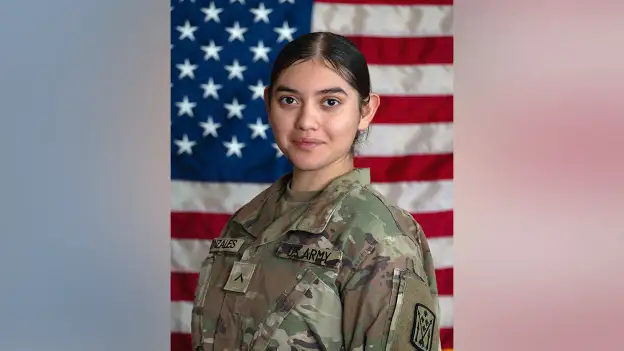
Staff Sgt. Angel S. Rampersad, 28, of Ozone Park, New York
Killed in the same July 17 attack in Jordan after initially being listed as missing. Her identity was formally confirmed July 25. She served with the same battalion as Gonzales as a signal operations support specialist.
Staff Sgt. Michael Emmanuel Swinton, 30, of Fayetteville, North Carolina
Killed July 19 during the controlled detonation of a downed one-way attack drone at Erbil Air Base in Iraq. He was a Patriot fire-control operator and maintainer assigned to 2nd Battalion, 55th Air Defense Artillery Regiment. The incident remains under investigation.
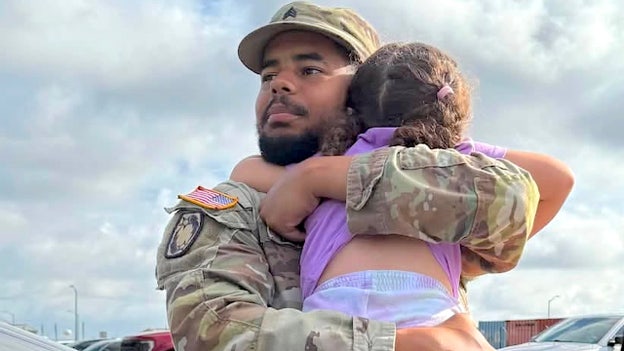
Staff Sgt. Michael Emmanuel Swinton, 30, of Fayetteville, North Carolina, was killed July 19 during the controlled detonation of a downed one-way attack drone at Erbil Air Base in Iraq. (Facebook)