

















ISIS could exploit Syria power shift, analyst warns
As Kurdish control collapses in northeast Syria, analyst Brian Carter explains how poor detention records and rushed releases could give ISIS a window to regroup during the transition.
As the U.S. military moves thousands of ISIS detainees across the border into Iraq, Washington is effectively closing the door on the Kurdish era of counter-terrorism and trusting that a unified Syrian state — once its adversary — can now hold the line against a swelling insurgent threat.
The transfer is intended to prevent mass breakouts from facilities long run by Kurdish Syrian Defense Forces now that Syria's new government has taken control in northeastern Syria.
The shift carries consequences for Washington beyond the immediate fight against ISIS. A breakdown in detainee handling or security during the transition would undermine claims of a durable ISIS defeat — a milestone President Donald Trump declared in 2019 after U.S.-backed forces dismantled the group’s territorial caliphate.
Iraqi intelligence officials are warning that ISIS could again find space to operate amid Syria’s political and security transition, citing internal assessments that put the group’s strength as high as 10,000 fighters. United Nations estimates place the number far lower — about 3,000 Islamic State members across Syria and Iraq as of August 2025 — underscoring the uncertainty U.S. planners face as detention systems fracture, custody shifts across borders, and regional authority is rapidly reconfigured.
TRUMP VOWS 'VERY SERIOUS RETALIATION' AGAINST ISIS AFTER DEADLY SYRIA AMBUSH KILLS US SOLDIERS
Hamid al-Shatri, head of Iraqi intelligence, told The Washington Post recently that ISIS had grown from roughly 2,000 fighters to as many as 10,000 fighters in just over a year.
"This certainly does pose a danger to Iraq, because ISIS — whether it’s in Syria or Iraq or anywhere in the world — is one organization, and it will certainly try and find ground once more in order to launch attacks," al-Shatri said.
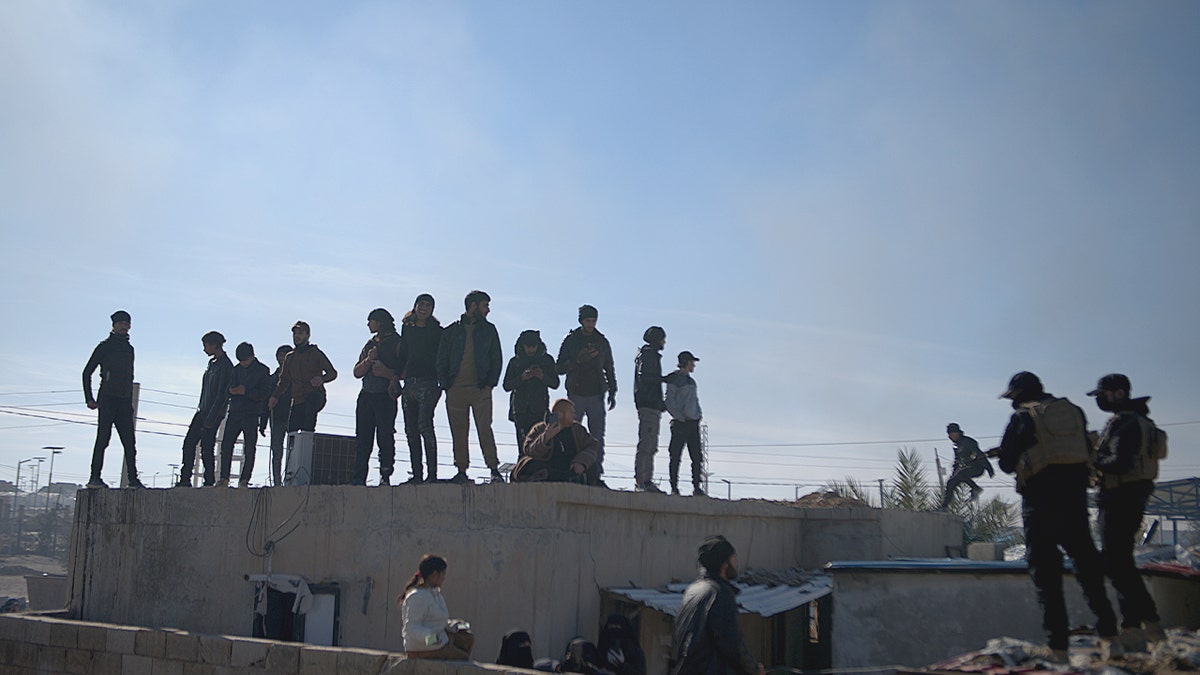
Syrian security forces increased security measures at Al-Hawl refugee camp. (Santiago Montag/Anadolu via Getty Image)
Brian Carter, a Middle East analyst at the Washington, D.C., free-market American Enterprise Institute think tank, cautioned that Iraqi assessments should be viewed in context, noting that Baghdad has long harbored deep concerns about Syria’s new leadership and its Islamist roots — factors that can shape how Iraqi officials assess the threat emanating from across the border.
Trump declared the U.S. had defeated ISIS in 2019 after U.S.-backed forces dismantled the group’s territorial caliphate. Since then, the group has partially reconstituted as an insurgent network, maintaining sleeper cells across the region.
Fox News Digital reached out to the White House for comment and has yet to receive a reply.
That persistence was underscored Dec. 13, 2025, when an ISIS-affiliated gunman killed U.S. National Guard Sgts. Edgar Brian Torres-Tovar and William Nathaniel Howard in Palmyra, Syria — the first U.S. combat deaths in Syria since the 2024 transition.
The attack prompted a U.S. military response known as Operation Hawkeye Strike, a series of airstrikes targeting more than 100 ISIS infrastructure sites days later. U.S. officials, including Defense Secretary Pete Hegseth, described the mission as aimed at "eliminating ISIS fighters," signaling a more aggressive posture as Syria’s landscape fractured.
CHAOS IN SYRIA SPARKS FEARS OF ISIS PRISON BREAKS AS US RUSHES DETAINEES TO IRAQ
For years, the U.S.-backed Syrian Democratic Forces (SDF) guarded roughly 10,000 ISIS detainees in Syria. But that system is now breaking down.
Following the Jan. 18, 14-point agreement brokered by U.S. envoy Tom Barrack, the SDF is being integrated "individually" into the Syrian National Army. This has forced a rapid reorganization of security responsibilities.
The collapse of Kurdish autonomy has directly affected detention operations. Syrian government forces have taken over major sites, including Shaddadi Prison and Panorama Prison, both of which saw intense fighting Jan. 19 during Operation Hawkeye Strike. U.S. military officials have framed the subsequent detainee transfers as a critical effort to prevent a broader security failure.
"We are closely coordinating with regional partners, including the Iraqi government," said Adm. Brad Cooper, commander of U.S. Central Command, following the Jan. 21 transfer of the first 150 high-risk fighters to Iraq. "Facilitating the orderly and secure transfer of ISIS detainees is critical to preventing a breakout that would pose a direct threat to the United States."
Analysts say one of the most delicate challenges facing Syria’s new government is that not everyone held in ISIS detention facilities is actually an ISIS fighter. Years of mass arrests, shifting front lines and inconsistent record-keeping have left authorities with incomplete files on who was detained for terrorism and who was swept up for political or security reasons.
LINDSEY GRAHAM SAYS 'STRONG CONSENSUS' TO PROTECT KURDS AS SYRIAN FORCES ADVANCE ON TERRITORY
While up to 7,000 detainees are slated for transfer, the situation remains volatile. Syrian authorities recently completed a takeover of the al-Hol camp, which houses 24,000 people.
Kurdish-led forces said they withdrew from the camp amid "international indifference," leaving Syrian authorities to manage a population analysts warn could complicate release decisions during a fragile transition.
"There’s always a risk when you’re moving large numbers of people in a hurry," said Daniel Byman, a senior fellow at the Center for Strategic and International Studies.
Byman said the danger lies not in ISIS’s current strength, but in the conditions surrounding a security transition.
"These groups are weak, right? So this isn’t 2015," he said. "But chaos is good for ISIS."
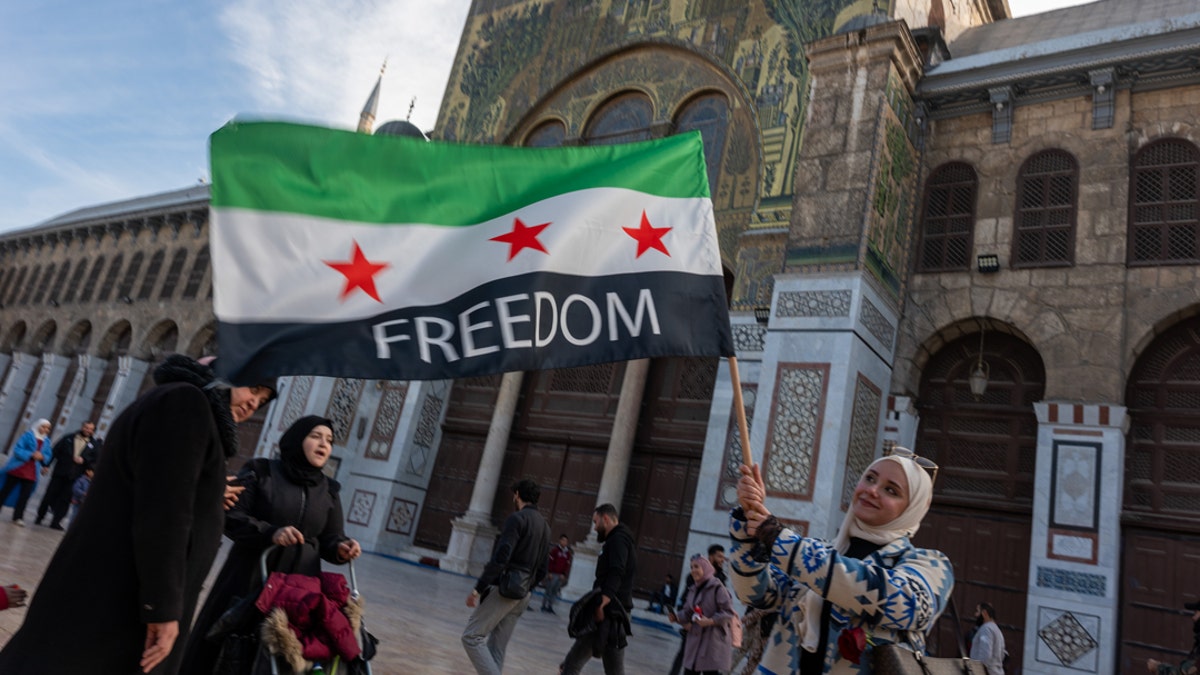
Analysts say one of the most delicate challenges facing Syria’s new government is that not everyone held in ISIS detention facilities is actually an ISIS fighter. (Spencer Platt/Getty Images)
Carter warned that if a ceasefire between SDF and Syrian government forces does not hold, ISIS may work to exploit the fighting.
Byman warned that periods of declining local authority — marked by fewer troops and fractured control — historically create openings.
"If there are fewer troops around, it’s easier for a relatively small group to survive and maybe even grow," he said.
The U.S. currently has around 900 troops in Syria, and is in the process of withdrawing all troops from Iraq by the end of the year.
"There’s going to be a window of opportunity for ISIS as the Syrian government regains control," Carter said, warning that security forces distracted by internal reorganization could struggle to maintain pressure.
But, "I think it’s actually a net positive for the United States," Carter added. "It puts these detainees in a country that has shown an ability to prosecute them."
Carter noted that Iraq’s purpose-built prisons are better positioned than the often improvised SDF sites.
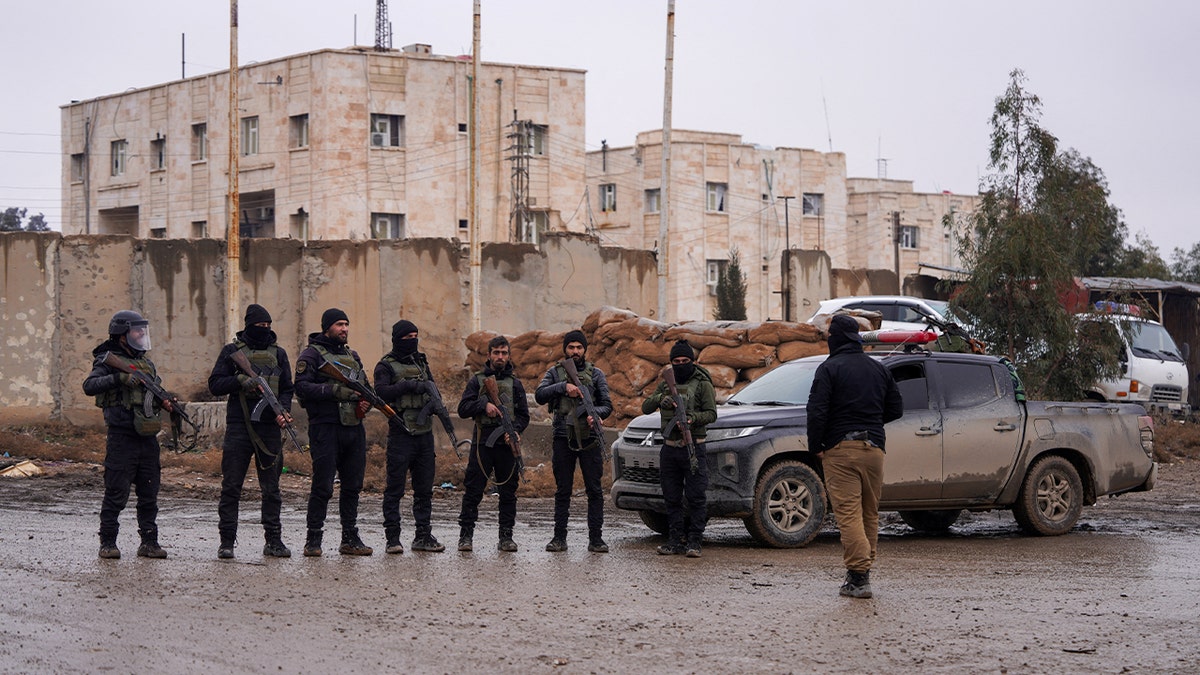
Syrian security forces stand guard outside a Syrian prison. (Karam al-Masri/Reuters)
CLICK HERE TO DOWNLOAD THE FOX NEWS APP
As responsibility for tracking ISIS fighters becomes increasingly diffuse, analysts say the outcome will depend on whether regional governments can manage detainees and close gaps during this rapid political transition.
"When you’re saying, ‘we don’t care about your region,’ your ability to coordinate your allies declines," Byman warned.
