
US strikes around 90 targets in Iran, who threatens 'grave consequences'
Trump has declared the ceasefire over, leading to strikes on Iran's IRGC installations targeting the Strait of Hormuz and leaving Iran threatening retaliation and causing fear in the oil market and gas prices amid renewed fighting.
Coverage for this event has ended.
Khamenei officially buried at Imam Reza shrine in Mashhad
Iran’s former Supreme Leader Ayatollah Ali Khamenei was finally laid to rest early Friday at the Imam Reza shrine in Mashhad, Iran, according to a statement posted by his official office.
“In the early hours of Friday, July 10, 2026, the pure body of the martyred Leader of the Islamic Revolution, Grand Ayatollah Sayyid Ali Hosseini Khamenei … was laid to rest in the luminous shrine of Imam Reza,” Khamenei’s official X account said.
The burial concludes several days of funeral ceremonies that took Khamenei’s body through Iraq and Iran following his death during the conflict with Israel and the United States.
Pelosi accuses Trump of dragging US back into ‘illegal war’ with Iran
Former House Speaker Nancy Pelosi accused President Donald Trump on Thursday of “once again” dragging the United States back into “a dangerous and illegal war with Iran” after the administration resumed military strikes following attacks on commercial shipping in the Strait of Hormuz.
“Having failed to secure a lasting peace or achieve his stated objectives, President Trump has once again dragged America back into a dangerous and illegal war with Iran,” Pelosi wrote on X.
Pelosi also argued Trump ignored Congress by continuing military operations.
“By ignoring the vote of the Congress to stop this war, the President has doubled down on endangering American servicemembers, driving up costs at the pump, and forcing working families to foot the bill for this unnecessary war of choice,” she wrote.
The White House has defended the renewed strikes as a response to what it calls Iranian violations of the U.S.-Iran memorandum of understanding and attacks on commercial vessels transiting the Strait of Hormuz.
Axios reports regional mediators working to salvage US-Iran nuclear talks after strikes
Regional mediators including Qatar, Pakistan and other Middle Eastern countries are working to de-escalate tensions between the United States and Iran and revive negotiations on a nuclear deal, Axios reported Thursday, citing sources from the mediating countries and a U.S. official.
According to Axios, Qatari, Pakistani, Turkish, Egyptian and Saudi officials have held multiple calls with U.S. and Iranian counterparts since Wednesday in an effort to calm tensions after renewed military actions.
One regional source involved in the mediation told Axios there are “extensive diplomatic efforts” underway to secure de-escalation and schedule another round of nuclear talks.
The report comes after a U.S. official told Fox News on Thursday that despite Iran’s violations of the memorandum of understanding, “the United States is still committed to finding a resolution, and technical talks continue.”
Fox News' Aishah Hasnie contributed to this reporting.
WSJ reports Israel shared intelligence with US on alleged new Iranian plot to kill President Trump
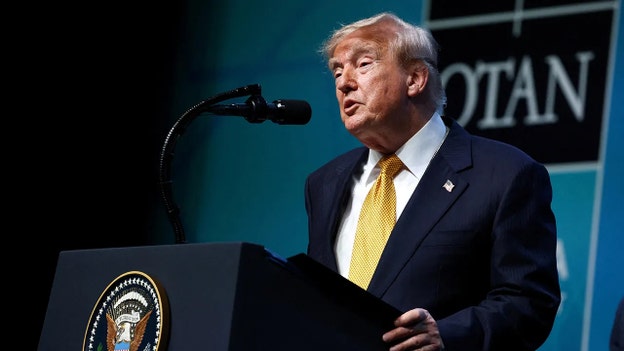
The Wall Street Journal, citing people familiar with the matter, reported Thursday that Israel recently shared intelligence with the United States indicating Iran was considering a new plot to assassinate President Donald Trump.
According to the Journal’s exclusive report, the intelligence would represent an escalation in the conflict between Washington and Tehran if confirmed. Iran has long vowed retaliation against Trump over the 2020 U.S. strike that killed Islamic Revolutionary Guard Corps Gen. Qassem Soleimani.
The White House referred the Journal to comments Trump made Wednesday, when he said he was “on every list” of Iranian assassination targets.
“I guess I’ve been a little bit lucky, but that maybe doesn’t last very long,” Trump said.
White House says Iran talks continue despite MOU violations, 'acts of terrorism'
The Trump administration said Thursday it remains committed to a diplomatic resolution with Iran despite accusing Tehran of violating the memorandum of understanding that paused hostilities.
President Donald Trump “made his feelings very clear yesterday in no uncertain terms. Iran’s attacks on these innocent vessels are acts of terrorism,” a U.S. official said on background.
The official said the memorandum of understanding is “performance-based” and that “Iran’s actions constitute failed performance at an unacceptable level.”
Despite the violations, the official said the U.S. continues to pursue diplomacy.
“The United States is still committed to finding a resolution, and technical talks continue. Iran can never possess a nuclear weapon,” the official said.
Fox News' Aishah Hasnie contributed to this reporting.
Reza Pahlavi marks anniversary of anti-regime protests, urges world not to forget slain Iranians
Exiled Iranian Crown Prince Reza Pahlavi on Thursday marked the anniversary of anti-regime protests that he said began Jan. 8, saying the demonstrations shattered the country’s silence and calling on the international community not to forget those killed.
“January 8th and 9th were not just two nights of protest. They were the night Iran’s silence broke,” Pahlavi said in remarks posted in a video on X, claiming tens of thousands of Iranians were killed during the crackdown and thousands more have since been arrested, tortured or sentenced to death.
Pahlavi compared the protesters to resistance movements that fought tyranny in Europe and the American Revolution, saying they “preferred to die free and standing than to live cowered on their knees.”
He also urged world leaders not to allow diplomacy with Tehran to overshadow the protests.
“Do not let a negotiating table in Geneva or Islamabad erase what happened in the streets of Tehran, Mashhad, and Kermanshah,” Pahlavi said, arguing that a free Iran would reopen the Strait of Hormuz, end the nuclear threat and bring “true peace.”
Pahlavi concluded by saying, “A free Iran is no longer a matter of hope. It is a matter of fact.”
CENTCOM rejects Iranian claim of control over Strait of Hormuz
U.S. Central Command (CENTCOM) pushed back Thursday on Iranian state media claims that commercial transit through the Strait of Hormuz is only permitted via routes designated by Tehran.
“Iran does not control the Strait of Hormuz,” CENTCOM said in a post on X.
The command said U.S. forces have helped facilitate the successful transit of more than 800 commercial vessels carrying approximately 380 million barrels of crude oil through the strategic waterway since early May.
The statement comes as U.S. officials stress that American forces are helping commercial vessels navigate the strait following renewed attacks on shipping and heightened tensions with Iran.
Iran rejects NATO claims on Hormuz, says US is main source of regional insecurity
Iran’s embassy in Turkey rejected NATO’s claims regarding freedom of navigation in the Strait of Hormuz and Tehran’s nuclear program, calling them “baseless, politically motivated and unacceptable,” according to Iran’s state-run IRNA news agency.
In a statement reported Thursday by IRNA and shared by Iran International English, the embassy said Iran has played a “responsible” role in preserving maritime security in the Persian Gulf and the Strait of Hormuz.
The embassy also accused the United States and other “extra-regional actors” of being the primary source of insecurity in the region and reiterated that Iran’s nuclear program is entirely peaceful.
Netanyahu, Trump discuss US moves in Gulf as Israel raises concerns over Turkey
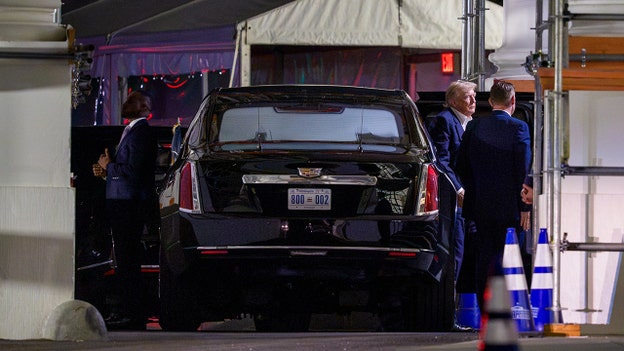
Israeli Prime Minister Benjamin Netanyahu and President Donald Trump spoke by phone Thursday evening and agreed to continue coordination between the U.S. and Israel across multiple fronts, Netanyahu’s office said.
Trump updated Netanyahu on recent U.S. actions in the Gulf, according to a statement from the prime minister’s office translated from Hebrew.
Netanyahu, meanwhile, raised what his office described as the seriousness of statements made by Turkish President Erdogan and members of his government against Israel’s existence, as well as Israel’s need to maintain security zones along its borders.
US official says recent explosions in Iran were not American strikes
A U.S. official and a U.S. defense official told Fox News on Thursday that recent explosions reported in Iran were not caused by American strikes.
“The U.S. military has not carried out any strikes in Iran in the last few hours,” a U.S. defense official said to Fox News.
The clarification comes after reports of new explosions inside Iran amid heightened tensions following earlier U.S. strikes on Iranian military targets tied to threats against commercial shipping in the Strait of Hormuz.
Fox News' Liz Friden contributed to this report.
Finnish grocery chain says it was not involved after branded truck appeared in Khamenei funeral

A Finnish grocery retailer said it had no involvement after a refrigerated truck bearing branding resembling its K-Group logos appeared to transport former Iranian Supreme Leader Ali Khamenei’s coffin during funeral ceremonies held in Iraq.
Video circulated by Reuters showed the coffin being unloaded from the truck in Karbala, prompting widespread attention in Finland. The unusual scene was shared by Iran International and later reported by Finnish outlets including Yle and Ilta-Sanomat.
Kesko, the parent company of K-Group, told Yle it only became aware of the vehicle after seeing the images. The company said its deliveries are handled by partner-owned vehicles and suggested the truck may have been sold by a transport contractor without K-Group decals being removed.
“There is no indication that Kesko or K-Group had any involvement in Khamenei’s funeral procession or owned or operated the vehicle,” the company said, adding it would remind transport partners to remove company branding before selling equipment.
Jailed Catholic woman's hunger strike highlights Iran religious persecution — US demands action
The State Department condemned Iran’s intensified repression of Christians, including a Catholic woman on hunger strike in a prison known as one of the most brutal in the theocratic state.
The Trump administration statement on widespread human rights violations carried out by the Iranian regime coincides with new military strikes against it in response to Tehran’s attacks on commercial tankers in the Strait of Hormuz.
The Christian woman on hunger strike is 42-year-old Ghazal Marzban, who sits in Iran’s infamous Evin prison in Tehran, according to Human Rights Activists News Agency (HRANA). Iran sentenced Marzban, a Catholic, to nearly 10 years in prison for practicing her Christian faith, Iranian experts told Fox News Digital. Marzban’s physical health, as of late May, had deteriorated. Her current condition is not known.
It is unclear if the administration plans to ramp up pressure on Iran’s leaders for their widepsread persecution of religious minorities and opponents of the regime.
A State Department spokesperson told Fox News Digital, "We are aware of these reports. It is reprehensible that the Iranian regime continues to persecute religious minorities, including Iranian Christians."
Article 18, an organization that promotes religious freedom in Iran, noted that following Marzban’s conversion, the Islamic law graduate was banned from taking her bar entry examination. Her husband, who also converted to Christianity, has been denied medicine for his Parkinson’s disease, according to Article 18.
Fox News Digital sent a press query to Iran’s U.N. Mission about Marzban and the plight of practicing Christians in Iran.
The State Department spokesperson said, "In Iran, human rights and fundamental freedoms, including the freedoms of expression, peaceful assembly, association, and religion or belief, are completely ignored. The regime targets members of religious and ethnic minority groups and uses tactics like arbitrary arrest and torture to intimidate opponents and silence dissent."
After the regime reportedly murdered as many as 45,000 Iranian demonstrators within a 48-hour period in January, including as many as 22 Iranian Christians, the security forces of the regime arrested vast numbers of protesters.
President Donald Trump has cited the number of 45,000 Iranians killed by the regime. The State Department told Fox News Digital that Iran’s leaders should free those protesters still in detention.
"We reaffirm our unwavering solidarity with the people of Iran and call for the immediate and unconditional release of all political and wrongfully detained prisoners, including those facing persecution for peacefully exercising their fundamental freedoms," said the State Department spokesperson.
This is an excerpt of an article by Fox News Digital's Benjamin Weinthal.
Netanyahu: ‘War is not yet over,’ vows Iran will ‘not have nuclear weapons’
Israeli Prime Minister Benjamin Netanyahu said Thursday that “the war is not yet over” and vowed Iran “will not have nuclear weapons” as he praised Israeli and U.S. military operations during remarks at an Israeli Air Force graduation ceremony.
“The Iranian axis is weaker than ever, while Israel is stronger than ever,” Netanyahu said. “Yet, I must say that the war is not yet over. Alongside old challenges, new challenges are emerging.”
Netanyahu credited Operations “Rising Lion” and “Roaring Lion” with crippling Iran’s nuclear and ballistic missile infrastructure, saying Israel eliminated senior nuclear scientists and military leaders while establishing aerial superiority over its adversaries.
“Our policy is clear: with an agreement or without an agreement, Iran will not have nuclear weapons,” he said.
Netanyahu also praised U.S.-Israeli military cooperation, calling it “a massive force multiplier,” and said the partnership allowed both countries to remove what he described as an immediate threat to Israel and the broader Western world.
US moves double-digit number of ships through Strait of Hormuz in 24 hours
The U.S. military has helped move ships through the Strait of Hormuz in the “double digits” over the last 24 hours, a U.S. official told Fox News, as commercial traffic remains strained amid renewed fighting with Iran.
Kpler has identified six vessels crossing the strait so far Thursday, down from 25 on Wednesday.
A U.S. official said the military’s effort to help commercial shipping pass through the waterway has not stopped. U.S. forces are not physically escorting ships, but remain in near-constant communication with commercial shipping vessels.
“Though U.S. forces are not escorting, we continue to communicate and coordinate with commercial ships seeking to freely and safely transit the Strait of Hormuz,” CENTCOM spokesperson Capt. Tim Hawkins said in a June 1 statement.
Fox News' Liz Friden and Lauren Simonetti contributed to this reporting.
UK’s likely next PM wants to be tougher on Israel

Andy Burnham, who is expected to be named Britain’s new prime minister later this month, said the U.K. should increase pressure on Israel over its actions in Gaza, he told The Guardian.
Burnham criticized the British government’s early response to Israel’s military campaign in Gaza following the Oct. 2023 Hamas-led attack on Israel, saying the U.K. was “too slow to call for a ceasefire.”
He said Britain should consider further sanctions on those involved in violence in Gaza, as well as measures targeting trade in goods linked to settlements.
Reuters contributed to this report.
US official: Israel-Lebanon talks move to implementation stage
The first so-called pilot zone in Lebanon, in which the Lebanese army will assume control of an area now occupied by Israeli forces, will launch in "a matter of days," with further zones being mapped out and planned, a U.S. official said Thursday.
Israel-Lebanon talks have moved to the implementation stage of a framework aimed at easing tensions along the border, the official confirmed to Fox News.
The Rome discussions are being held behind closed doors and are expected to allow the governments to hand off work to technical teams, which will address issues outlined in the framework.
CENTCOM is coordinating with both countries to move the process forward.
The U.S. is also expected to begin outreach soon to international partners to help the Lebanese government restore sovereignty in the pilot zones and across the country more broadly, the source added.
War Secretary Pete Hegseth has canceled a trip to the region this week after President Donald Trump's NATO summit announcement the U.S.-Iran ceasefire might be dead after Iran's memorandum of understanding (MOU) violations.
Reuters and Fox News’ Gillian Turner contributed to this report.
CENTCOM posts photo of F-16 fighter jet taking off from Middle East base
Gulf Cooperation Council condemns Iranian attacks on Saudi, Qatari vessels in Strait of Hormuz
The Gulf Cooperation Council (GCC) strongly condemned Iranian attacks targeting commercial vessels in the Strait of Hormuz and in the waters of GCC member states, calling the strikes a threat to international security and global energy supplies.
In a statement posted to X and translated to English here, GCC member states denounced the attack on the Saudi commercial vessel Wadiyan and the Qatari LNG carrier Al Rekayyat as they transited the Strait of Hormuz, saying the strikes endangered the lives of their crews.
The council said the attacks represented an “unacceptable assault” on maritime safety and freedom of navigation. It also said Iranian attacks on commercial vessels in the territorial waters of Bahrain and Kuwait violated international law, a United Nations Security Council resolution guaranteeing safe maritime passage, and a U.S.-Iran memorandum of understanding tied to a ceasefire and the reopening of the Strait of Hormuz.
The GCC said its member states stand in full solidarity, stressing that the security of Gulf countries is “indivisible” and that aggression against one member state is a direct threat to all.
The council also cited the right of individual and collective self-defense under Article 51 of the U.N. Charter, saying member states have the right to take necessary measures to preserve their sovereignty, security and stability.
Fox News' Liz Friden contributed to this report.
US official: Dozens of Iranian drones and missiles intercepted since last night
Dozens of Iranian drones and missiles have been intercepted by U.S. and partner forces since last night, a U.S. official confirmed to Fox News.
The official confirmed earlier ABC News reporting that “dozens” of Iranian drones and missiles had been taken down as Iran and the U.S. exchange strikes after President Donald Trump declared the ceasefire all but over amid Iran violations.
The interceptions point to a continued high-tempo defensive effort by U.S. and allied forces as Iran launches waves of aerial threats across the region.
Fox News' Liz Friden contributed to this report.
US military continues helping commercial ships transit Strait of Hormuz; WTI oil falls to $72.32
The U.S. military is continuing to help commercial vessels move through the Strait of Hormuz, most with their transponders turned off for security while monitor by U.S. forces, a U.S. official told Fox News.
The U.S. facilitated transits the past few days and will continue to do so and the effort to help commercial shipping get through the Strait of Hormuz has not stopped, despite reports to the contrary, the official added.
“Since early May, U.S. forces have helped facilitate the successful transit of more than 800 commercial vessels and 380 million barrels of crude oil through the Strait of Hormuz,” a U.S. official told FOX Business earlier Thursday.
Oil prices slid over 1% on Thursday as markets assessed the escalating conflict between the U.S. and Iran and its implications for efforts to end the war and fully reopen the Strait of Hormuz.
About 20% of global oil supplies passed through the strait before the Iran war.
Brent futures LCOc1 fell $1.12, or 1.4%, to $76.90 a barrel at 11:02 a.m. ET, while U.S. West Texas Intermediate crude CLc1 fell $1.20, or 1.6%, to $72.32.
WTI closed Wednesday at its highest since June 22.
The U.S. military effort does not amount to a physical escort mission. A U.S. Central Command spokesperson said June 1 that American forces “are not escorting” commercial vessels, but continue to “communicate and coordinate with commercial ships seeking to freely and safely transit the Strait of Hormuz.”
A U.S. defense official previously told Fox News that the Navy remains in near-constant communication with commercial ships seeking passage, sharing threat information, timing guidance, weather conditions and coordinates.
Many of the vessels have crossed with transponders turned off.
The continued U.S. role comes as commercial shipping remains under strain in the region.
A Joint Maritime Information Center advisory said the Strait of Hormuz threat level is “SEVERE,” citing Iranian attacks, navigation interference, mine-risk reporting and continued IRGC hailing and routing pressure on vessels.
Reuters, Fox News' Liz Friden and FOX Business’ Lauren Simonetti contributed to this report.
State Dept warns of far-left terror convergence with Hamas, Iran-backed entities
Violent far-left and anarchist networks are increasingly converging with pro-Hamas and Iran-backed actors, a State Department official warned, saying the administration is using counterterrorism tools and international partnerships to confront what it views as an emerging transnational threat.
Since the Oct. 7 attacks, the official said, U.S. partners have raised concerns that “pro-Hamas, very violent groups” operating in multiple countries are beginning to overlap with far-left and anarchist groups that use political violence.
“The resurgence of violent far-left political terrorism is not a new phenomenon — it is an old threat re-emerging with strong transnational links and new convergences,” the official said on background.
The U.S. remains focused on major terrorist threats such as ISIS, al-Qaida and other Salafi-jihadist groups, the official added, saying violent far-left, anarchist and anti-capitalist networks now fit into a broader category of “new and emerging threats.”
The State Department has taken what the official described as unprecedented steps over the past year to target transnational far-left and anarchist terrorism, including antifa-aligned groups.
“Our efforts target violent activity meeting the definition of terrorism,” the official said, citing assassinations, kidnappings, threats against U.S. facilities and law enforcement, and attacks on critical infrastructure, military personnel and civilians.
Fox News' Nicholas Kalman contributed to this report.
US official hails getting 380 million barrels of crude through Strait of Hormuz during ceasefire
The Trump administration is stressing the key fact of having gotten "380 million barrels of crude" out of the Strait of Hormuz during the ceasefire that now might lead to a new U.S.-forced blockade amid Iran violations.
“Since early May, U.S. forces have helped facilitate the successful transit of more than 800 commercial vessels and 380 million barrels of crude oil through the Strait of Hormuz,” a U.S. official told FOX Business on Thursday.
Oil traded around $73 a barrel as markets continued to monitor traffic through the Strait of Hormuz, a critical chokepoint for global energy shipments.
Before renewed overnight strikes, 25 vessels crossed the strait Wednesday, including three crude oil tankers.
Two of the tankers were empty, while one headed into the Gulf, where its loading activity and eventual exit route will be closely watched.
Route tracking showed 14 Iranian vessels, seven IMO-designated vessels, three dark or unknown vessels and one Omani vessel crossing the waterway.
The data comes as traders remain focused on whether regional tensions could disrupt shipping flows through the Strait of Hormuz, the world’s most important oil corridors.
FOX Business’ Lauren Simonetti contributed to this report.
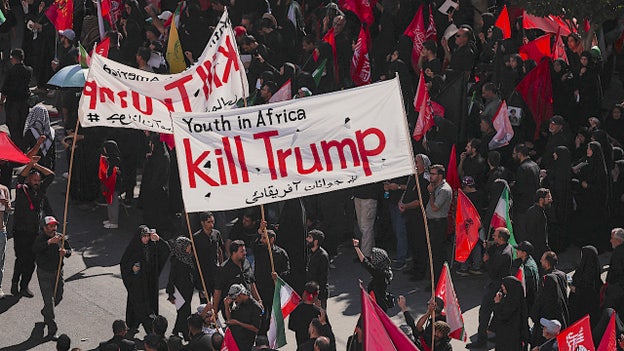
Khamenei funeral nears Iranian shrine, radicals carry banners calling for killing Trump
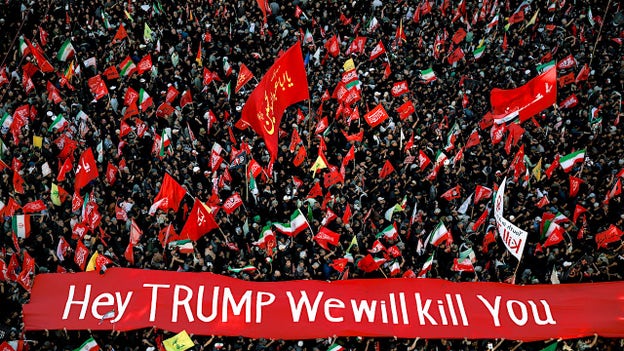
The funeral procession for slain Iranian Supreme Leader Ayatollah Ali Khamenei approached the Shrine of Imam Reza in Mashhad on Thursday, with mourners carrying revolutionary placards and a massive banner threatening President Donald Trump.
Khamenei’s body was carried slowly by truck through packed streets toward the gold-domed Shi’ite shrine, where crowds dressed in black waved Iranian flags and images of the late supreme leader.
Mourners chanted revenge slogans against Trump, while placards reading “Kill Trump” appeared in the crowd.
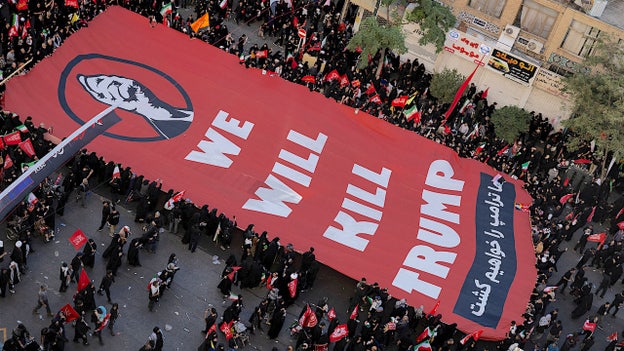
President Donald Trump told reporters he knows he is 'No. 1 on the Iran kill list.' (Alkis Konstantinidis/Reuters)
Khamenei’s son and successor, Mojtaba Khamenei, has still not appeared publicly since the strike that killed his father Feb. 28.
Radical Islamic terrorism is a threat around the globe from the world's No. 1 state sponsor of terror. (Alkis Konstantinidis/Reuters)
Senior sources in Tehran said he was badly wounded in the attack and has issued written statements but no public video, image or voice recording.Iranian authorities are using the funeral crowds to project unity and strength after Khamenei’s 37-year rule.
Mojtaba Khamenei was appointed supreme leader with backing from the Revolutionary Guards, who are now widely seen as the dominant force in Iran’s political and military decision-making.
Reuters contributed to this report.
UKMTO report: Strait of Hormuz threat now 'severe' as shipping faces mines, IRGC pressure
Commercial shipping through the Strait of Hormuz is operating under a "severe" threat warning after a string of Iranian-linked maritime attacks and fresh reporting of mine risks, navigation interference and continued IRGC pressure on vessels moving through one of the world’s most critical energy chokepoints, according to Joint Maritime Information Center advisory Thursday.
Iranian attacks — six since June 12 — have raised the Strait of Hormuz threat level due to “deliberate hostile action” considered likely under current conditions.
The advisory warns that vessels should maintain “extreme vigilance” as navigation interference persists and mine-risk reporting remains relevant inside and near the Traffic Separation Scheme.
"Commercial traffic through the Strait of Hormuz continued at reduced levels, with vessels transiting via both the southern Omani corridor and the northern Iranian-controlled route. Traffic levels reflected a cautious posture among operators following the three-vessel attack earlier this week. US-assisted commercial transits proceeded without interruption despite the elevated threat environment. IRGC hailing, UAS activity, and targeted surveillance continued throughout the period, indicating sustained monitoring of commercial shipping and a continued intent to assert presence across key transit lanes."
Iran, Oman and Turkey discuss Hormuz tensions as diplomats push to prevent escalation
Iran’s foreign minister held separate phone calls with his Turkish and Omani counterparts as regional diplomacy continues around the latest developments and a possible ceasefire.
Iran’s foreign minister discussed the latest regional developments with his Omani and Turkish counterparts, including recent events in the Strait of Hormuz and stressing the need to use diplomatic channels to prevent further escalation, according to a joint statement.
Iran’s foreign minister also discussed the latest regional developments with Pakistan’s army chief, according to a statement.
The calls point to continued regional efforts to manage the conflict, with Turkey and Oman both positioned as key Strait of Hormuz diplomatic interlocutors as fighting and ceasefire uncertainty keep pressure on the region.
Reuters contributed to this report.
Retired Vice Adm. Robert Harward: Trump can 'finish the job' against Iran after ceasefire collapses
President Donald Trump has a major opening to intensify pressure on Iran after Trump declared the ceasefire over and raised the possibility of taking over Kharg Island, according to retired Vice Adm. Robert Harward said.
“They're all cheering: They know the opportunity the president has,” Harward said Thursday on Fox News' "Fox & Friends," arguing Trump’s use of force had exposed Iranian weakness and shown Tehran had not mounted a meaningful response.
Harward, a former Navy SEAL who served on President George W. Bush’s National Security Council and grew up in Tehran, said Iran has historically used negotiations and standoffs to strengthen its position rather than capitulate.
“Iran has never capitulated on anything," he added. "They've only worked to enhance their position, their financial status, and the president understands this."
Reconstituting a blockade would allow Trump to use military, financial and political pressure to “finish the job and go after the government of Iran,” he urged.
Harward also urged the administration to look beyond the Gulf for potential targets, saying remote coastal areas would be difficult for the regime to defend or resupply.
“Start there. Take it out. Put boots on the ground if you’d have to,” he said, arguing that such a move would send the Iranian public a message that “America is serious.”
Iran’s terrain and supply lines create vulnerabilities, particularly if a blockade prevents Tehran from moving reinforcements south, he concluded.
“Work your way up the Gulf, take out the coastline, but ultimately also hold Tehran at risk as well,” he said.
IRGC warning world to get out of its Strait of Hormuz, denouncing US 'adventurism and interference'
The Islamic Revolutionary Guard is boldly making statements to attempt to project power over the Strait of Hormuz on Thursday morning.
Iran’s Revolutionary Guards Navy warned Thursday that foreign powers have “no stake” in the Strait of Hormuz and said U.S. involvement in determining traffic routes through the key waterway would draw a “crushing response.”
In a statement, the IRGC Navy accused Washington of “adventurism and interference” as tensions rise over commercial shipping in one of the world’s most important oil corridors.
American bases in the region would be targeted if what the IRGC called “U.S. aggression” is repeated, according to state media.
The IRGC also claimed Iran had increased vessel transit through the strait over the past two weeks, but said recent U.S. actions had seriously disrupted the process of reopening the route.
Transit capacity under Iran's supervision had recovered to about 50% of pre-war levels over the past two weeks, the IRGC claimed, adding that transit capacity was only being expanded for vessels granted permits to use routes designated by Iran.
The warning comes as the U.S. and Iran trade strikes and threats over maritime security in the Gulf, with Washington saying its military operations are aimed at protecting commercial vessels and civilian mariners.
Tehran has since taken effective control of the strait, allowing it to force a stalemate in its confrontation with the world's most powerful military.
"The U.S. has yet to learn that bullying and breaking its commitments no longer come without a cost. Let me be clear: If you strike, you will be struck back," Iran's top negotiator, Mohammad Baqer Qalibaf, wrote Wednesday night on X.
"The Strait of Hormuz will be reopened only under Iranian arrangements, not through U.S. threats."
Reuters contributed to this report.
Qatar reportedly slows LNG ramp-up after Hormuz tanker attack
Qatar has reportedly paused efforts to increase output at its Ras Laffan LNG complex after an attack on a tanker in the Strait of Hormuz, keeping operations at minimum levels as the Iran war continues to rattle energy markets.
The move was reported by Thursday by Bloomberg.
Ras Laffan is one of the world’s most important LNG hubs, and any delay in restoring higher production risks tightening supply for buyers already watching the Gulf’s shipping lanes with growing alarm.
Strait of Hormuz oil tanker traffic grinds to near halt
Oil tanker traffic through the Strait of Hormuz slowed to a near standstill Thursday as renewed U.S. strikes on Iran and Tehran’s retaliation in the Gulf sharply raised shipping risks.
“Tanker traffic through the Strait of Hormuz has essentially stopped, which tells you more about risk perception right now than any statement from Washington or Tehran,” Jorge Leon, head of geopolitical analysis at Rystad Energy, wrote in a report.
Just two tankers had sailed through the strait in the early hours of Thursday, according to Kpler data and analysis cited by Reuters.
They included the crude supertanker Berg 1, which had loaded at Iran’s Kharg Island and is subject to U.S. sanctions, and the Marshall Islands-flagged chemical tanker Well Sail.
Shipping industry sources said more vessels were switching off their public AIS tracking transponders, making it harder to monitor traffic through the critical oil chokepoint.
Reuters contributed to this report.
US strikes killed 3 IRGC members, Iran state media reports
Three members of Iran’s Revolutionary Guards were killed in U.S. strikes on Iran on Thursday, Iran’s Mizan news agency reported.
The reported deaths come as U.S. forces continue targeting Iranian military infrastructure tied to missile, drone and maritime threats after Tehran’s attacks on commercial shipping in the Strait of Hormuz.
The latest casualties could further inflame tensions between Washington and Tehran, with Iran warning of retaliation as the conflict tests the security of Gulf states and key global energy routes.
Reuters contributed to this report.
Oil rises as US-Iran conflict puts Strait of Hormuz shipping at risk
Oil prices rose Thursday as markets weighed the escalating conflict between the U.S. and Iran and the growing risk to shipping through the Strait of Hormuz.
Brent crude futures climbed 53 cents, or 0.68%, to $78.55 a barrel by late morning GMT, while U.S. West Texas Intermediate gained 39 cents, or 0.53%, to $73.91 a barrel.
Both benchmarks hit their highest levels since June 22 on Wednesday.
The move came after the U.S. military launched strikes on Iran, prompting Iranian attacks on Kuwait and Bahrain.
Some war insurers have advised shipowners to pause voyages through the Strait of Hormuz, sources told Reuters, as regional tensions threaten one of the world’s most important oil routes.
“Generally, it’s a very nervous market,” Saxo Bank analyst Ole Hansen said. “Any news that dampens the prospect of a peace deal is adding a bit to the market.”
Hansen said Brent will likely trade in a $75-to-$85 range over the next month as traders assess whether the latest flare-up disrupts energy supplies or slows efforts to reopen the strait fully.
Reuters contributed to this report.
US official: Bushehr nuclear power plant was not targeted in railway bridge strikes
The U.S. struck two railway bridges in Iran overnight that were used to transport Iranian military weapons and supplies, a senior U.S. official and a U.S. official told Fox News.
The strikes lasted roughly seven hours, beginning around 4 p.m. ET and ending around 11 p.m. ET, the officials said.
The details came after an Iranian official claimed a U.S. strike hit near the Bushehr nuclear power plant, according to Reuters.
A senior U.S. official pushed back on that account, saying the strikes were conducted along Iran’s coastline using precision munitions.
The official said the nuclear power plant was not a target, adding that if it had been targeted, it would have been hit.
Fox News’ Liz Friden contributed to this report.
Kuwait intercepts missiles and drones as Iran war threatens Gulf states
Kuwait's armed forces detected and intercepted three ballistic missiles, one cruise missile and 10 hostile drones in its airspace at dawn Thursday, marking the latest sign that the Iran war is testing defenses across the Gulf.
Debris from the interceptions caused material damage in several locations across the country and left one person injured, the Kuwaiti Ministry of Defense wrote on X. The injured person was receiving medical care and was in stable condition, the ministry said.
Kuwait said its land force engineering teams responded to several reports involving remnants from the interception operations.
The armed forces remain on alert and are continuing their duties to protect the country and safeguard citizens and residents, the ministry said.
Fox News' Liz Friden contributed to this report.
Sirens sound in Jordan from reported Iranian missile launches
Sirens sounded in Jordan on Thursday after missiles launched from Iran were detected in the kingdom’s airspace, the state news agency reported.
Jordan reportedly intercepted eight missiles launched from Iran, with no casualties or damage reported, a Reuters alert later announced.
The Jordan government spokesperson said the Jordanian Armed Forces were on high alert and prepared to respond to any threat targeting Jordan’s security.
The alert underscored the regional risks from the latest escalation involving Iran, with neighboring countries bracing for potential spillover as missile and military activity intensifies.
Reuters contributed to this report.
PM: Iraq drawing closer to US on diplomacy to try to help broker Iranian peace deal
Iraq will announce a new political cooperation and economic partnership with the United States ahead of Prime Minister Ali al-Zaidi’s visit to Washington later this month, his office said Thursday.
Iraq is working to create “a state of rapprochement” between Washington and Tehran, as Baghdad continues to balance its ties with both the U.S. and neighboring Iran, according to Al-Zaidi on Saudi-owned Al Arabiya TV.
The planned announcement comes as Iraq seeks to deepen economic ties with Washington while maintaining its role as a regional intermediary between two longtime rivals.
Reuters contributed to this report.
Iran claims US projectile hit area around Bushehr nuclear plant
Iran's deputy governor of Bushehr province claimed a U.S. projectile struck the area surrounding Iran's Bushehr nuclear power plant Thursday, according to Iranian state media.
President Donald Trump and the White House have frequently warned that Iranian talking points and peacemakers cannot be trusted to be truthful.
The official said several locations in Bushehr province, including the perimeter area of the nuclear facility, were hit in U.S. attacks.
Reuters contributed to this report.
Renewed US strikes on Iran contingent on IRGC behavior in Strait of Hormuz
President Donald Trump did not think the latest military strikes would have to escalate into a full-fledged conflict with Iran.
"Anything that happens is going to be over very quickly," Trump said Wednesday before returning overnight to Washington, D.C., "and will only make it safer, including for oil."
Asked before the NATO summit on Wednesday whether the memorandum of understanding with Iran was over, Trump said: "It's a very interesting question. To me, I think it's over. I don't want to deal with them."
"If we make a deal with Iran I'm not sure that will stick," Trump said later.
A U.S. official reportedly told Axios that the latest escalation with Iran could last “a day or two, a week or a month,” depending on whether Tehran continues attacking commercial vessels in the Strait of Hormuz.
Oil trading at $73 a barrel as Trump weighs restoring Strait of Hormuz blockade
Oil traded around $73 a barrel as markets continued to monitor traffic through the Strait of Hormuz, a critical chokepoint for global energy shipments.
Before renewed overnight strikes, 25 vessels crossed the strait Wednesday, including three crude oil tankers.
Two of the tankers were empty, while one headed into the Gulf, where its loading activity and eventual exit route will be closely watched.
Route tracking showed 14 Iranian vessels, seven IMO-designated vessels, three dark or unknown vessels and one Omani vessel crossing the waterway.
The data comes as traders remain focused on whether regional tensions could disrupt shipping flows through one of the world’s most important oil corridors.
FOX Business' Lauren Simonetti contributed to this report.
CENTCOM hails striking of 90 Iranian targets: We 'remain vigilant, lethal' at Trump's direction
U.S. forces hit roughly 90 Iranian military targets Wednesday in another round of strikes aimed at weakening Tehran’s ability to threaten commercial shipping in the Strait of Hormuz, U.S. Central Command said.
CENTCOM said the targets included air defense systems, coastal surveillance assets, missile and drone storage sites, naval capabilities and military logistics infrastructure along Iran’s coastline.
The strikes followed a separate operation the night before, when U.S. forces hit about 80 Iranian military targets, including more than 60 Islamic Revolutionary Guard Corps small boats, after Iran attacked three commercial vessels transiting the Strait of Hormuz, according to CENTCOM.
The command said the latest operation was designed to “further degrade” Iran’s ability to attack commercial shipping and civilian mariners in the critical waterway.
“U.S. forces remain vigilant, lethal, and prepared to execute operations directed by the Commander in Chief,” CENTCOM said.
President Donald Trump declared the ceasefire "over" Wednesday, concluding the NATO summit in Ankara, Turkey.
US, Iran return to swapping strikes on military targets amid standoff in Strait of Hormuz
The U.S. military struck roughly 90 targets in Iran on Wednesday, widening a fast-moving exchange after the end of the ceasefire.
U.S. officials said the strikes were aimed at Iranian military sites tied to missile, drone and maritime threats after attacks on commercial vessels in the Strait of Hormuz.
Iran responded by warning of “grave consequences” for U.S. allies involved in the operation and signaling that further retaliation could follow.
President Donald Trump declared the ceasefire with Iran effectively “over,” because Tehran had continued the targeting shipping in one of the world’s most important energy corridors.
The renewed fighting sent oil prices higher and raised concerns that the conflict could again spill across the Gulf.
Iranian forces have also launched missile and drone attacks on U.S. positions in the region, according to reports, while Gulf states issued safety advisories amid the escalating exchange.
Live Coverage begins here