
Trump reveals 'present' from Iran, confirms estimated timeline for war
President Donald Trump is pushing for the U.S. and Iran to come to a negotiated ceasefire this week after Iran continues to defy proposals. Israeli claims it killed the Iranian commander who ordered the closure of the Strait of Hormuz.
Coverage for this event has ended.
Trump weighs deploying 10,000 extra troops to Middle East, defense official says
The Pentagon is considering sending up to 10,000 additional ground troops to the Middle East, a senior defense official said Thursday, according to the Wall Street Journal.
While the official said it was not yet clear which units would be mobilized, the new deployment would be in addition to the 1,500 troops deployed from the 82nd Airborne.
Earlier Thursday, President Donald Trump confirmed he was placing a hold on strikes against Iran’s energy sector for another 10 days, until April 6. The pause is intended to allow time for ceasefire negotiations to take place.
Pakistan is reportedly mediating the talks between the two nations.
Follow the latest updates in the war against Iran
Click here to follow the latest updates in the war against Iran
IDF announces strike against Iranian missile, mine facility
The Israel Defense Forces announced a strike against an Iranian missile and sea mine facility.
"STRUCK: Iranian Regime’s primary facility for the productions of missiles and sea mines in Yazd, Iran," the IDF noted in a post on X.
"The site was used for the planning, development, assembly, and storage of advanced missiles intended for launch from cruise platforms, submarines, and helicopters toward both mobile and stationary maritime targets," the post added.
US officials schedule closed UN Security Council meeting about Iran war
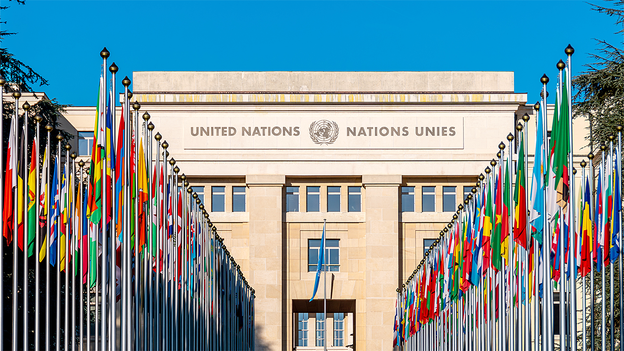
The United Nations Security Council is scheduled to hold a closed consultation about the ongoing war against Iran.
The meeting, set for Friday morning, was scheduled by the U.S., which holds the Security Council presidency.
Russia had requested the meeting on U.S.-Israeli attacks on civilian infrastructure in Iran, two U.N. diplomats said on Thursday.
The Associated Press contributed to this report.
Thai cargo ship runs aground following Iranian attack in Strait of Hormuz: report
A Thai-flagged cargo vessel that was attacked by Iranian forces in the Strait of Hormuz and was abandoned by its crew has run aground, according to Iranian-affiliated media.
The ship, the Mayuree Naree, was attacked on March 11, and three of its mariners went missing and remain unaccounted for, the Tasnim and Fars news agencies reported.
Another 20 crew members who abandoned the ship in a lifeboat were rescued by the Omani Navy and have since returned to Thailand.
The vessel ran aground near the village of Ramchah on Qeshm Island, the outlets reported.
Iran requiring approval for 'non-hostile' South Korea to pass through Strait of Hormuz
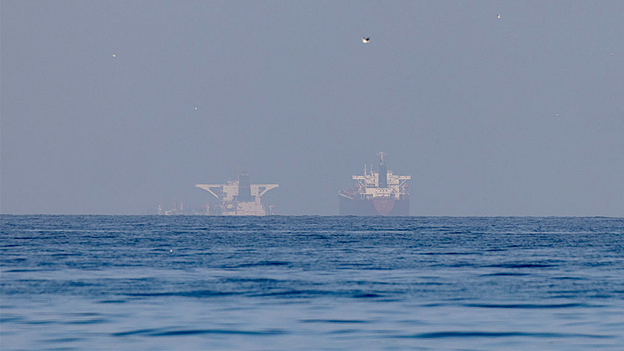
The Iranian ambassador to South Korea said while Tehran considers Seoul a "non-hostile" state, the Asian country must still coordinate with Iran's government and military authorities for approval to pass through the Strait of Hormuz.
Ambassador Saeed Koozechi made the comments during remarks at an event on Thursday in which he criticized U.S. and Israeli attacks against Iran.
He also said Tehran had asked Seoul to provide details on South Korean ships stranded in waters near the strait. South Korea said 26 of its vessels remain in waters around the strait.
The ambassador additionally argued that Iran, as a direct party in the war, has the right to sanction U.S. and Israeli firms, although he did not say whether South Korean ships would be blocked from trading with the U.S.
The Associated Press contributed to this report.
US eases sanctions on Belarus after Trump vows to support farmers impacted by Iran war
The U.S. government on Thursday said it eased sanctions on a group of Belarus-linked financial and potash firms, as President Donald Trump pledged to support American farmers impacted by the war on Iran.
The conflict in the Middle East has largely halted the export of nitrogen fertilizers manufactured in the Persian Gulf and prevented farmers’ ability to obtain key fertilizer ingredients.
The skyrocketing cost of fertilizer due to the war has stopped some U.S. farmers from accessing it at any price.
Trump said during a Cabinet meeting that he intends to announce policies to support American farmers, as his administration and Israel continue attacks against Iran.
This comes after Belarus' leader, Alexander Lukashenko, met with Trump's special envoy for Belarus, John Coale, and ordered the release of 250 political prisoners as part of a deal to ease some U.S. penalties.
The Associated Press contributed to this report.
Australia says surveillance jet making ‘constructive’ contribution to Iran war after Trump criticism
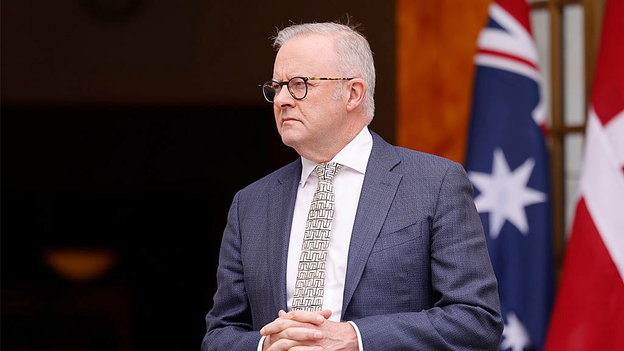
Australian Prime Minister Anthony Albanese said his country's government has made a "constructive" contribution to the war on Iran, including through a military surveillance jet, after President Donald Trump criticized Australia's response to the escalating conflict.
"We've been constructive. We've provided the E-7 Wedgetail aircraft that is playing a critical role in support of the Gulf states," Albanese told reporters on Friday, referring to a surveillance jet requested by the United Arab Emirates.
"President Trump is someone who I've enjoyed a very constructive relationship with," the prime minister said. "I said very early on that I wasn't going to comment on all of his commentary on a day-to-day basis, but I again reiterate that there is no request being made to Australia that has not been agreed to."
On two occasions, Trump has listed Australia among the U.S. allies he says have not offered enough military assistance.
"Australia was not great. I was a little surprised by Australia," Trump said in his latest disapproval of the country's response.
The Associated Press contributed to this report.
Iran sends letter to UN after assassination threats against foreign minister, parliament speaker
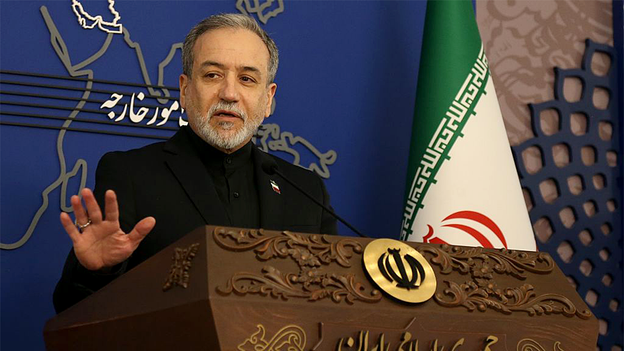
The Iranian government sent a letter on Thursday to the United Nations over allegations that the country’s foreign minister and parliament speaker had been "targets for assassination" as the U.S.-Israeli strikes on the Middle Eastern nation continue.
The letter signed by Ambassador Amir Saeid Iravani, Permanent Representative to the U.N., cites media reports stating that Foreign Minister Abbas Araghchi and Speaker Mohammad Bagher Qalibaf had both been spared by the U.S. and Israel amid negotiations to reach a ceasefire.
"The reports indicate the existence of an operational framework contemplating the assassination of the highest-ranking political officials of the Islamic Republic of Iran," the letter reads.
"The conditional nature of the purported ‘suspension’ further underscores that the threat remains real, deliberate and ongoing," it continued.
The letter called any such attacks "state-sponsored terrorism."
Iranian Supreme Leader Ayatollah Ali Khamenei and other military commanders were killed in the strikes that began late last month.
Qalibaf has been considered a possible negotiating partner to the U.S., and Araghchi has been engaged in diplomatic outreach.
The Associated Press contributed to this report.
UAE intercepts 15 Iranian missiles, 11 drones in latest attacks
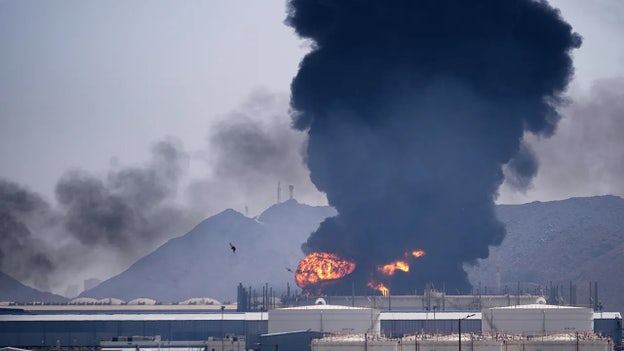
The United Arab Emirates said Thursday it had intercepted 15 ballistic missiles and 11 drones launched from Iran, as officials described a sustained wave of attacks that has killed three people and injured more than 160 since the campaign began.
In a post shared on X, the UAE also said that since the start of the “blatant Iranian attacks, UAE air defenses have engaged 372 ballistic missiles, 15 cruise missiles and 1,826 UAVs.”
“The attacks resulted in the martyrdom of two members of the armed forces while performing their national duty, in addition to the martyrdom of a Moroccan civilian contracted by the Armed Forces, as well as eight fatalities of Pakistani, Nepali, Bangladeshi, Palestinian and Indian nationalities,” the post said.
A total of 169 people were also injured, with injuries ranging from minor to moderate and severe, the UAE said.
“The injured included nationals of the UAE, Egypt, Sudan, Ethiopia, the Philippines, Pakistan, Iran, India, Bangladesh, Sri Lanka, Azerbaijan, Yemen, Uganda, Eritrea, Lebanon, Afghanistan, Bahrain, Comoros, Türkiye, Iraq, Nepal, Nigeria, Oman, Jordan, Palestine, Ghana, Indonesia, Sweden and Tunisia.”
The Ministry of Defence also affirmed that it remains “fully prepared and ready to deal with any threats and will firmly confront anything that aims to undermine the security of the country, in a manner that ensures the protection of its sovereignty, security and stability and safeguards its interests and national capabilities.”
Cargo ship struck by projectiles runs aground near Iran; 3 crew members missing
A Thai-flagged cargo ship that was struck by unknown projectiles in the Strait of Hormuz earlier this month has run aground off Iran’s Qeshm Island, according to Iran’s Tasnim News Agency.
Thailand said 20 crew members from the vessel, Mayuree Naree, were rescued by the Omani navy, while three remained missing following an explosion at the stern that sparked a fire in the engine room, Reuters reported.
Separately, Lloyd’s List reported that Iran has been forcing oil tankers to take a new route through a narrow passage in the Strait of Hormuz controlled by the IRGC.
Some vessels have reportedly been charged millions of dollars to transit the route, a system shipping sources have dubbed the “Tehran tollbooth.”
Germany condemns Iran’s 'indiscriminate attacks on Gulf states', urges de-escalation
German Foreign Minister Johann Wadephul expressed full solidarity with Saudi Arabia on Thursday after meeting with his counterpart, Faisal bin Farhan, condemning what he said was Iran’s indiscriminate attacks.
“The Iranian regime’s indiscriminate attacks on Gulf states continue. You have our full and continued solidarity. Good to meet you, @FaisalbinFarhan,” he said on X.
Wadephul also emphasized the need to avoid further escalation and protect regional stability.“We agree we must prevent further escalation. Regional stability must not be jeopardized. #G7,” Wadephul added.
Iranian regime hardliners escalate push for nuclear bomb: report
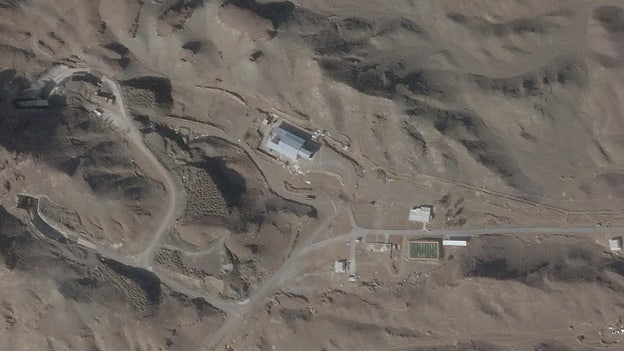
Hardliners in Iran are pushing for a tougher nuclear stance against the U.S., including “building or acquiring a bomb” and calls to withdraw from the Nuclear Non-Proliferation Treaty (NPT), according to reports.
Leading figures tied to the regime and the IRGC are said to be questioning current policy, signaling growing pressure to change Tehran’s nuclear strategy.
The Jerusalem Post reported that sources claim hardliners advocating nuclear policy changes are gaining ground within Iran’s leadership.
On Thursday, Tasnim News Agency also urged Iran to withdraw from the NPT while maintaining a civilian nuclear program.
State media also quoted Mohammad Javad Larijani calling for a suspension of the treaty, saying Iran should reassess whether it serves its interests.
Iranian state TV aired comments from Nasser Torabi, who said: “We need to act in order to build a nuclear weapon. Either we build it, or we acquire it.”
Despite the narrative, one of the sources alleged there was no plan to change Iran’s nuclear doctrine yet, and Iran had not decided to seek a bomb, but others were questioning the existing policy and demanding a change, the Jerusalem Post said
EU Council President urges Israel to pursue diplomacy, 'maximum restraint'
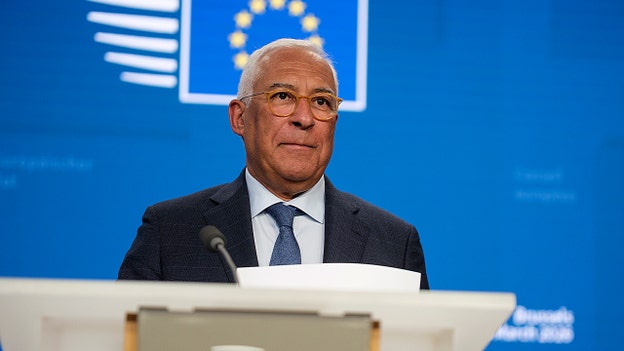
European Council President António Costa has urged the President of Israel to exercise restraint and diplomacy while reaffirming the European Union’s solidarity with Israelis facing ongoing attacks.
In a post shared on X Thursday where he described a phone call with President Herzog, Costa said he “expressed the EU’s solidarity with the Israeli people in light of the daily attacks by Iran and Hezbollah. Such attacks must stop immediately.”
“Amid the ongoing violence in the Middle East, I called for de-escalation and maximum restraint, the protection of civilians and civilian infrastructure, and full respect for international law by all parties,” Costa said before describing how only diplomacy can ensure a “sustainable solution to Iran’s threats, including on the nuclear file.”
Costa went on to urge Israel to “seize the moment for direct talks with Lebanon.”
“Lebanese stability and territorial integrity must be preserved, and Israel must ensure the protection of civilians and civilian infrastructure,” he said.
Costa also clarified that the call addressed the humanitarian situation in Gaza, which he said “must urgently improve, as well as the need for Hamas’s disarmament.”
“The situation in the West Bank is extremely worrying and I urged action to address settler violence. There is an urgent need to de-escalate and end the violence, as well as to halt continued settlement expansion.” Costa said.
Houthis warn of joining Middle East war as Red Sea attack fears grow
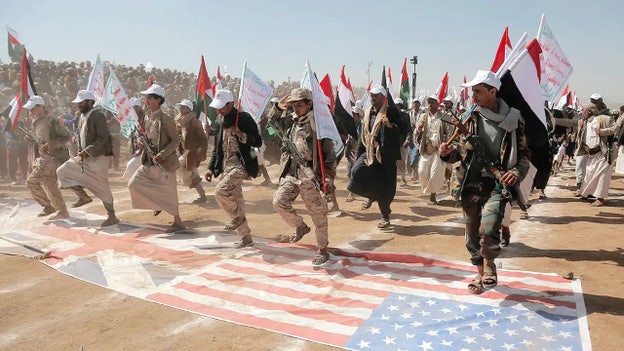
The leader of Yemen’s Iran-backed Houthi movement has warned that the group could launch a military response amid the ongoing war between Iran and the U.S./Israel.
“As the people of Yemen, we repay loyalty with loyalty,” Houthi leader Abdulmalik al-Houthi said.
“Any development in the battle that requires a military response, we will promptly undertake it — just as we did in previous rounds,” he said according to The Times of Israel.
So far, the Houthis have not entered the conflict. However, a Houthi official told Reuters Thursday that the group is prepared to resume attacks in the Red Sea.
““We stand fully militarily ready with all options. As for other details having to do with determining zero hour, they are left to leadership and we are monitoring and following up with the developments and will know when is the suitable time to move,” they said.
“Until now Iran is doing well and is defeating the enemy every day and the battle is going in its direction. If anything contrary to this happens, then we can assess,” they said.
Patriot missile systems deployed in Middle East as US military claims historic air defense coverage
U.S. Army soldiers are deploying Patriot mobile interceptor missile systems as part of an effort to build the most expansive air defense network ever established in the Middle East, the U.S. Central Command (CENTCOM) said Thursday.
In the fourth week of Operation Epic Fury, CENTCOM said the systems form a critical layer of a coordinated regional shield.
“U.S. Army soldiers maintain Patriot mobile interceptor missile systems, helping maintain the most extensive air defense umbrella in the Middle East,” CENTCOM said in a post shared on X.
Twelve-year-old Iranians can carry out war-related support roles, IRGC says
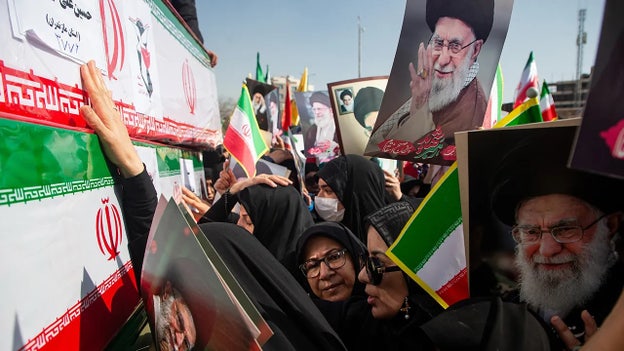
Iranian children as young as 12 years old are allowed to take up war support roles within the IRGC, according to reports.
Iran International reported that a cultural official with the Guards in Tehran had said on Iranian state TV that an initiative called “For Iran” was recruiting the age group for activities such as patrols, checkpoints, and logistics.
“Given that the age of those coming forward has dropped and they are asking to take part, we lowered the minimum age to 12,” he said.
The outlet also cited concerns during the 2022 protests triggered by the death of Mahsa Amini, when images were shared on social media showing children and teenagers in uniforms.
Hezbollah targets church in Lebanon, others close doors to displaced Shi'ites
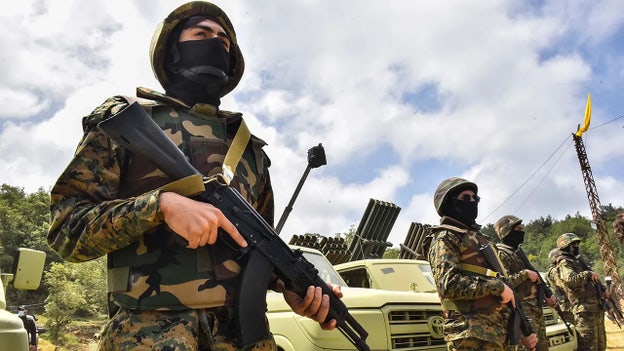
Hezbollah shelled a church in a Christian village in Lebanon after clashes broke out over the presence of Lebanese people displaced from the country’s south, according to the Jerusalem Post reported.
The outlet reported that false rumors had been circulating from Hezbollah, claiming that Israeli Defense Forces (IDF) soldiers were hiding in the church. A source also told Lebanon-based Murr Television station that no soldiers were in the church.
One resident was reportedly injured in the Hezbollah attack.
“To clarify what is being circulated, the Dibil municipality confirms that the Israeli army has not entered the town but is only present on its outskirts, while Lebanese security forces are deployed within the town and are fully carrying out their duty to maintain security and stability,” the municipality said in a statement.
“They [Hezbollah] attacked us the first time, then the next day they came back and spat on us. They attacked us a second time, and the next day they went out in protests, on motorcycles, shouting ‘Zionist, Zionist,’ and so on," one resident said.
Trump halts Iran energy strikes for 10 days as talks continue
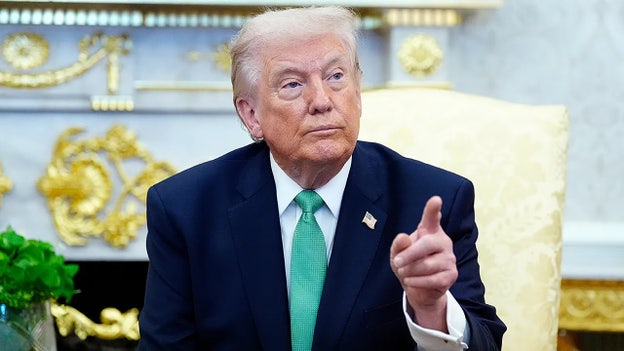
Strikes on Iran’s critical energy plants will be paused for 10 days, President Donald Trump said Thursday before stating that discussions with Tehran were going well.
“As per the Iranian government’s request, please let this statement serve to represent that I am pausing the period of energy plant destruction by 10 days to Monday, April 6, 2026, at 8 p.m. Eastern Time,” Trump said in a post shared on Truth Social.
“Talks are ongoing and, despite erroneous statements to the contrary by the Fake News Media and others, they are going very well,” he added.
Former UK spy chiefs urge Starmer to designate IRGC as a terrorist organization
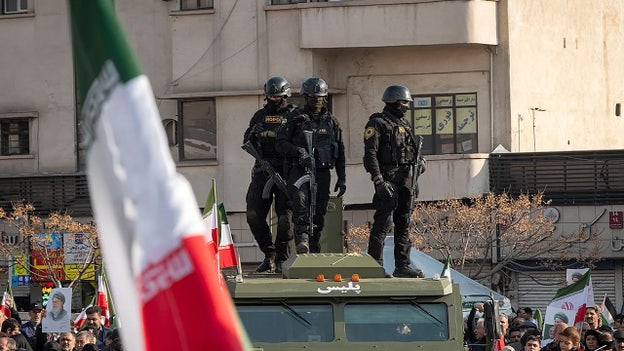
Former U.K. intelligence chiefs have criticized Prime Minister Keir Starmer for declining to designate Iran’s Islamic Revolutionary Guard Corps (IRGC) as a terrorist organization, warning it risks undermining national security.
Writing in the Telegraph, the former officials argued that proscription is a “necessary step” to curb the group’s activity in Britain and demonstrate that the U.K. is “prepared to defend its own security and democratic institutions.”
The group warned that the government’s “continued reluctance” and “continued hesitancy” “risk leaving us strategically exposed” as Iran maintains control over the Strait of Hormuz and carries out missile strikes against U.S. and U.K. military assets.
The comments followed an Iranian-linked group claiming responsibility for an antisemitic firebomb attack in London on March 23, as well as charges against two Iranians accused of spying on Jewish individuals.
“Iranian state actors and their proxies are already active inside the U.K.,” the group told the outlet.
They also noted that Britain’s allies have already taken the step of proscribing the IRGC, warning: “If the U.K. plans to resist criticism for refusing to help our U.S. allies secure the Strait of Hormuz, it would be prudent to head off the impression of equivocation and weakness on the whole Iran file,” they said.
Thousands of Iranians arrested since protests face death on 'crimes against the state'
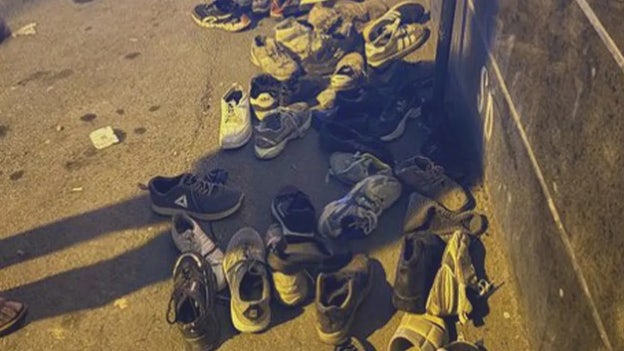
Thousands of Iranians arrested since the protests started in December 2025 face long prison sentences or execution on charges of “crimes against the state,” according to a new report.
The Jerusalem Post reported that those detained include protesters, social media users and young people caught up in the unrest.
Many families are also in the dark about the whereabouts of their relatives, with information emerging mainly through prison records and human rights groups.
Iran has also intensified its crackdown, the report says, carrying out executions in some cases.
On March 19, for example, authorities publicly hanged three young men—19-year-old wrestler Saleh Mohammadi, 21-year-old Saeed Davoudi and Mehdi Ghasemi—who were arrested during the January protests and convicted of “waging war against God,” according to the judiciary.
Rights groups have condemned the executions, saying they followed unfair trials based on torture and forced confessions.
Amnesty International has warned that at least 30 people, including minors, could face the death penalty.
Internet restrictions have further isolated citizens, leaving many unable to communicate or learn the fate of detained loved ones, the report says.
Rubio condemns Iran after deadly Iraq missile strike, offers condolences to Kurdish forces
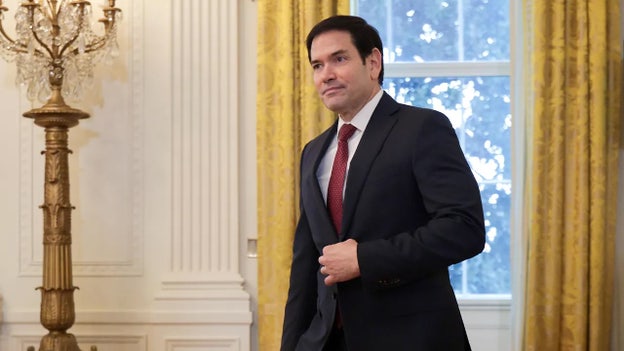
U.S. Secretary of State Marco Rubio spoke Thursday with Kurdistan Regional Government Prime Minister Masrour Barzani, offering condolences after an Iranian missile attack and condemning violence tied to Tehran and its allied militias.
The call came in the wake of a March 24 strike that killed members of the Kurdish Peshmerga and renewed U.S. concerns over attacks targeting U.S. interests and energy infrastructure in the region.
“The Secretary offered his condolences to the families of the Peshmerga killed in an Iranian missile attack on March 24 and wished a speedy recovery to those injured,” Principal Deputy Spokesperson Tommy Pigott said in a statement.
“The Secretary strongly condemned the continued attacks by Iran and Iran-aligned Iraqi terrorist militias against U.S. citizens and energy infrastructure across Iraq,” Pigott said.
“The Secretary also expressed his gratitude to the Kurdistan Regional Government for enabling oil from Iraq, including from the Iraqi Kurdistan Region, to reach global markets,” the statement said.
Explosions reported across Tehran, IDF announces strikes on regime targets
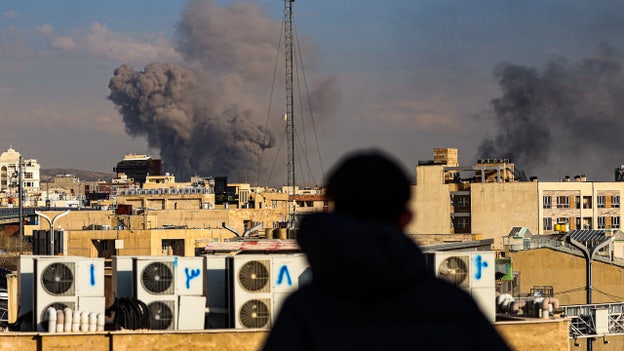
Explosions were heard across Tehran and Karaj on Thursday, according to Iranian state media.
The reports came after the Israeli Defense Forces (IDF) announced it had completed a new wave of strikes, targeting regime launch sites.
The strikes were in Kermanshah and Dezful with weapons storage and aerial defense systems hit as well as regime operatives, the Jerusalem Post said.
More than 60 IAF fighter jets dropped more than 150 munitions to target Iranian weapon production sites in Tehran and central Iran, the outlet said.
The IDF also struck Iran's primary missile and defense system production facility in Parchin, as well as a factory for casting and filling warheads with explosive materials.
A Quds Force production site and military defense system in Isfahan were also hit, along with weapon production sites.
What a US ground operation in Iran could look like as Pentagon preps final phase
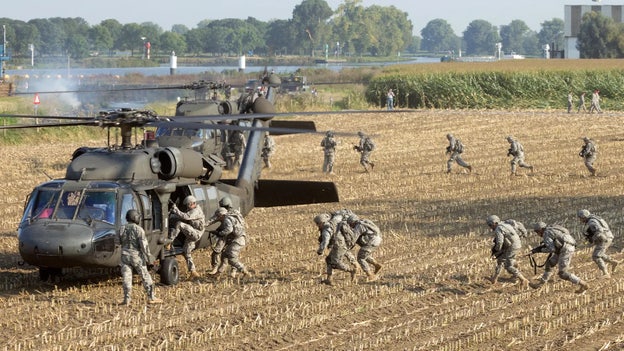
The U.S. is positioning ground-capable forces in the Middle East after Iran rejected negotiations Wednesday, as speculation grows that Washington could be preparing a decisive next phase and what a ground operation inside Iran might actually look like.
Military experts say the deployments are not a precursor to a large-scale invasion but instead position the U.S. for targeted, short-duration missions — the kind of operations that could be aimed at delivering an intended "final blow" as diplomatic off-ramps narrow.
But all options for a ground campaign come with high risk, they say.
U.S. officials have not confirmed any decision, but reporting indicates the Pentagon is weighing a range of aggressive options, including expanded strikes and potential ground operations.
In recent days, the Pentagon has moved ground-capable forces into the region, including around 1,000 paratroopers with the Army’s 82nd Airborne Division.
Among them is the 1st Brigade Combat Team, a core component of the military’s Immediate Response Force rapid-response unit designed to deploy on short notice to crises anywhere in the world.
Also deployed were a few thousand Marines and sailors assigned to the 31st Marine Expeditionary Unit and its Amphibious Ready Group, led by the amphibious assault ship Tripoli.
Marine expeditionary units and airborne forces often are among the first U.S. units deployed in a conflict to rapidly establish an initial presence and respond to emerging crises.
President Donald Trump said early Thursday on Truth Social Iran "better get serious soon, before it is too late, because once that happens, there is NO TURNING BACK, and it won’t be pretty!"
Military experts said the types of forces being deployed point to a more limited set of options on the ground.
"It is not for the type of ground invasion that we saw in Iraq," James Robbins, Institute of World Politics dean and former special assistant to Defense Secretary Donald Rumsfeld, told Fox News Digital. "There simply aren’t enough troops."
"The most logical step is to try to secure the straits by taking some key positions inside Iran," Ehud Eilam, a former official with Israel’s Ministry of Defense, told Fox News Digital.
"For the Marines, it would probably be somewhere along the Iranian side of the Persian Gulf, around the straits or nearby to establish a base of operations," Robbins said.
This is an excerpt from a report by Morgan Phillips
Trump leaning toward ground assault, convinced Iran will back down: official mediator
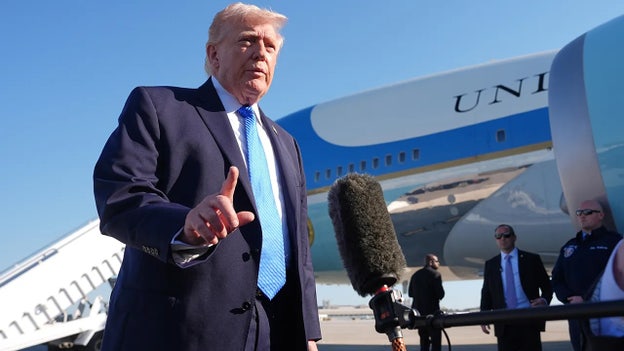
President Donald Trump is weighing ordering a massive U.S. ground operation against Iran, an official from one of the nations mediating ceasefire talks has said.
According to the Times of Israel, a senior official involved in mediating said the president believes Tehran will also ultimately yield under increased military pressure.
The official noted that Washington recognizes Iran is unlikely to accept the concessions outlined in the administration’s 15-point proposal, prompting the U.S. to deploy thousands of troops to the region with the reported objective of seizing Kharg Island.
The outlet also reported that a second official from another mediating nation cautioned that while U.S. forces may be capable of capturing the island, maintaining control over it would likely require a prolonged military commitment and additional troop deployments, meaning an extended conflict.
Trump announced earlier this week he would extend his deadline for Iran to accept the 15-point framework until Friday.
The president warned that failure to comply could result in a sweeping campaign targeting Iran’s power infrastructure.
Sara Netanyahu highlights support for Israel, lone soldiers during Washington visit
Sara Netanyahu, wife of Israeli Prime Minister Benjamin Netanyahu, met in Washington this week with spouses of world leaders, including first lady Melania Trump.
As well as participating in events hosted at the White House, Mrs. Netanyahu used the visit to highlight international support for Israel during its ongoing war.
During the meetings, Mrs Netanyahu emphasized Israel’s resilience amid the conflict and drew attention to the sacrifices of “lone soldiers” — young people who serve in the Israeli military without immediate family in the country — and highlighted the profound commitment shown by young men and women who come to Israel on their own to serve in the IDF.
The meetings also underscored broader themes of national unity, support for children, and the role of global leadership in times of crisis.
“In my meetings in Washington, I really felt the warmth, support, and solidarity for Israel among other world leaders’ spouses,” Mrs. Netanyahu said.
“I spoke about Israel’s resilience during wartime, the extraordinary sacrifices made by lone soldiers and their families, and how deeply important it is to protect the next generation and ensure our children can grow up in safety, dignity, and hope,” she added.
Seizing Iran's Kharg Island could backfire on U.S. forces: report
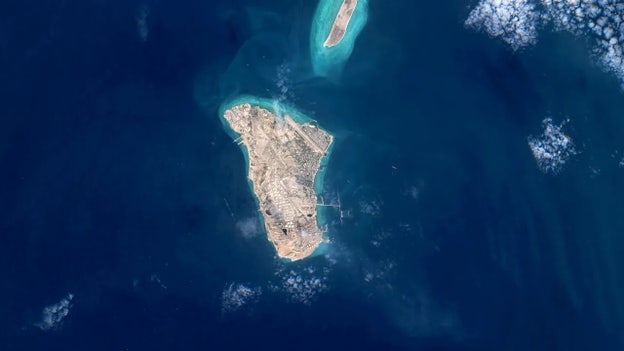
Seizing Iran’s Kharg Island — the hub for roughly 90 percent of its prewar oil exports — may seem like a powerful way to pressure Tehran, but a new report by the Foundation for the Defense of Democracies (FDD) warns the U.S. move could create more problems than it solves.
The concern comes as U.S. Marines are set to arrive in the Middle East, and reports claim President Donald Trump is considering plans to occupy the island to force Iran to reopen the Strait of Hormuz and gain leverage in negotiations.
In reality, the biggest challenges would begin after any successful seizure, the report says.
Kharg Island’s close proximity to Iran’s mainland would leave U.S. forces exposed to sustained attacks from rockets, artillery and drones.
Defending the island would also require significant resources, including a large-scale campaign to suppress Iranian firepower along the coast.
Rather than securing a strategic win, occupying Kharg could delay reopening the Strait and give Tehran more opportunities to impose costs on U.S. forces, the report says.
The report’s conclusion is that Kharg Island offers no quick victory and only the risk of a prolonged and costly entanglement.
France convenes 35 nations to coordinate reopening of the Strait of Hormuz
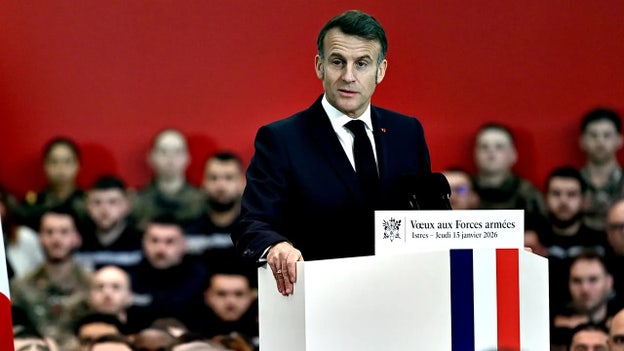
France’s top military official held a videoconference with counterparts from 35 countries to discuss restoring maritime traffic through the Strait of Hormuz, the Defense Ministry said Thursday.
The ministry did not identify the participating nations.
“This initiative, independent of the ongoing military operations in the region, is strictly defensive in nature. Its purpose is to organize the resumption of shipping through the Strait of Hormuz once hostilities have ceased,” the ministry said in a statement.
IDF widens security zone in Lebanon, expands ground operation, says 750 Hezbollah terrorists killed
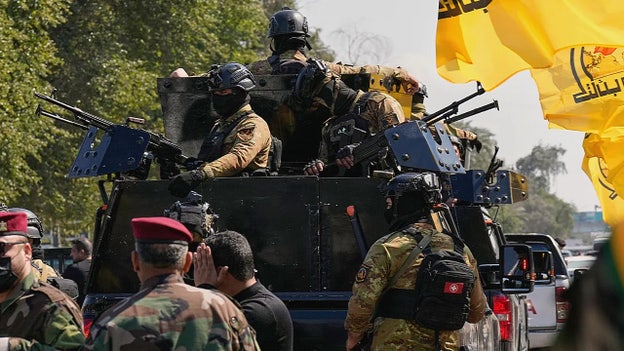
The Israeli Defense Forces (IDF) have killed more than 750 Hezbollah fighters in Lebanon since the start of the war with Iran, the chief of the IDF Northern Command, Maj. Gen. Rafi Milo announced Thursday.
“We have expanded the ground operation one step further to widen the security zone,” Milo said, according to The Times of Israel.
“We are operating according to an organized plan to strike and push back the enemy and to distance the threat for better protection of the residents of the north,” Milo added.
“So far, we have eliminated more than 750 terrorists, destroyed infrastructure throughout Lebanon, and we continue the deep strikes against the organization’s centers of gravity. We are applying pressure on Hezbollah, pushing it northward and destroying its capabilities,” he said.
Meanwhile, the IDF also announced that it killed Hassan Mohammad Bashir, a senior commander in Hezbollah’s anti-tank array in the Hajir area.
“Bashir advanced hundreds of terror attacks against IDF troops and Israeli civilians,” the IDF said in a post shared on X.
“He commanded several terrorist cells and recently, he had begun integrating into the anti-tank array north of the Litani River.”
Brother, sister indicted in alleged IED plot at Florida base tied to Iran war; one suspect in China
A brother and sister have been indicted in connection with the placement of a possible explosive device at MacDill Air Force Base in Florida, Fox News Digital has learned.
MacDill Air Force Base houses the headquarters of U.S. Central Command (CENTCOM), which is currently handling Operation Epic Fury against Iran.
The FBI said Alen Zheng, who is believed to have planted the device, is currently in China. He is facing charges of attempted damage to government property by fire or explosion, unlawful making of a destructive device and possession of an unregistered destructive device.
FBI Tampa also arrested his sister, Ann Mary Zheng, who is charged with accessory after the fact and tampering with evidence.
She is accused of hiding or damaging a 2010 Mercedes-Benz to prevent its use in legal proceedings, court documents show.
"Today’s indictments are the result of tremendous investigative work from our FBI teams and great coordination from our state, local, and federal partners across the board," FBI Director Kash Patel said in a statement to Fox News Digital.
"No one who targets our brave service members and military facilities will ever get away with it — and this FBI will pursue all those responsible for the incident at MacDill Air Force Base to the ends of the earth," he added.
Hegseth defends Trump Iran strikes, demands media ‘get it right’
War Secretary Pete Hegseth defended U.S. military operations targeting Iran during a Cabinet meeting Thursday, praising the campaign as swift and decisive while criticizing media coverage of the conflict.
Hegseth took aim at the press early in his remarks, urging reporters to accurately portray the war effort.
"You wouldn’t know it if you listened to the dishonest, anti-Trump media," Hegseth said. "These cameras… they have a choice. You’re either informing the American people of the truth or you’re not… My message to the media is: get it right."
Hegseth framed the operation as a historic success, crediting President Donald Trump for authorizing what he described as a rapid and effective dismantling of Iran's military capabilities.
"Iran had a modern military, and never in recorded history has a nation’s military been so quickly and effectively neutralized," Hegseth said. "This is not an endless war. It’s a decisive campaign with clear objectives… to destroy Iran’s offensive military capabilities and ensure they never obtain a nuclear weapon."
The remarks come as the administration outlines its strategy following recent strikes on Iranian targets, describing the campaign as focused on defined military objectives rather than prolonged engagement.
Trump declines to say whether Iran still has enriched uranium
President Donald Trump declined to say whether the U.S. believes Iran still has access to enriched uranium on Thursday.
Trump was pressed on the issue during a Cabinet meeting at the White House, telling reporters that he "can't" divulge the information.
"I can't talk about specifics. A lot of people said that wouldn't matter. Maybe it does matter. Who knows? But I wouldn't talk," Trump said. "I can't say what we're going to do, because if I did, I wouldn't be sitting here for long."
"Steve [Witkoff] said that they've got enough uranium to make 11 bombs. That's a very scary thing," Fox News White House correspondent Jacqui Heinrich prodded.
"Again, I can't talk to you about that. You're asking me a question. You're essentially saying, Will I go in and do something? I can't talk to you about that," Trump said.
Trump says US won't abandon Gulf states after Iran war: 'We're going to be protecting them'
President Donald Trump admitted that U.S. allies in the Gulf want the U.S. to continue the offensive against Iran rather than rushing to a peace deal on Thursday.
Trump made the statement in response to questions from Fox News White House correspondent Jacqui Heinrich during a Cabinet meeting.
"There's some reports that Gulf allies are concerned about winding down the war too soon and potentially leaving Iran," Heinrich said, asking Trump to respond.
"Well, they'd probably like us to stay, but--If we if we don't stay, look, it's a beautiful thing about airplanes that go 2000 miles an hour is you can get back there very quickly," Trump said. "If we don't stay, we're going to be protecting them."
"We know, you know, they've been very good," he added. "Hey, Qatar, Saudi Arabia, in particular, Qatar, Saudi Arabia, UAE, the three of them, Kuwait, Bahrain, they've been 100%."
Trump reveals the 'present' from Iran
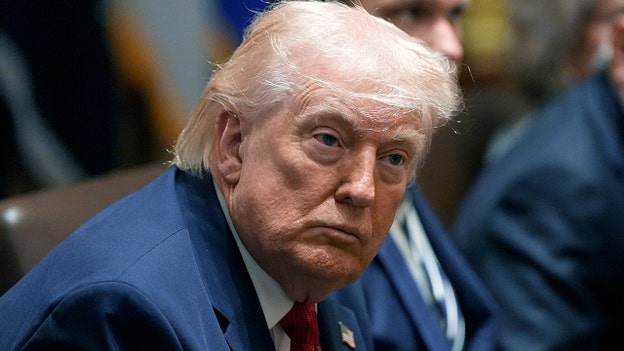
President Donald Trump revealed that the "present" from Iranian negotiators was them allowing at least eight oil tankers to pass through the Strait of Hormuz earlier this week.
Trump said Thursday that the boats passing through the Strait was a sign to the U.S. that the negotiators were demonstrating, "we're real and solid."
The tankers may have been Pakistani-flagged, said Trump, who first hinted at the "present" this week.
"I said, 'Well, I guess we're dealing with the right people,'" Trump continued. "And actually they then apologized for something they said, and they said, we're going to send two more boats."
Trump floats suspending the gas tax amid Iran war: 'It's in our pocket'
President Donald Trump on Thursday floated the possibility of suspending the gas tax to keep prices low amid the war with Iran and the closure of the Strait of Hormuz.
Trump made the statement in response to questions from reporters during a Cabinet meeting at the White House.
"It's in our pocket," he said, though he gave no details on a threshold that push him to suspend the tax.
Trump confirms estimated timeline for ending Iran war
President Donald Trump confirmed that the U.S. still plans for the war in Iran to last just four to six weeks on Thursday.
Trump made the statement during a Cabinet meeting at the White House, telling reporters that the U.S. is already "way ahead of schedule" on the conflict.
"We estimated it would take approximately 4 to 6 weeks to achieve our mission, and we're way ahead of schedule. If you look at, what we've done in terms of the destruction of that country, I mean, we're way ahead," Trump said.
Trump calls Iran's former leaders 'sick,' wanted to 'take over' the Middle East
President Donald Trump condemned Iran's former leaders as "sick" on Thursday, saying they had ambitions to "take over" the Middle East.
Trump made the comments during a Cabinet meeting at the White House, confirming to the press that he still expects the war to last just four to six weeks. He also said Iran's current leadership are now "begging" to negotiate a ceasefire.
"Just so we set the record straight, because I've been watching the Wall Street Journal's fake news and all these stories that get printed like, oh, I want to make a deal. They are begging to make a deal. Not me. They're begging to make a deal," Trump said.
"And anybody that saw what was happening over there would understand why they want to make a deal. But they say, oh, we're not talking to them," he continued, saying only a "fool" would refuse to negotiate.
"And they're not fools. They're very smart, actually, in a certain way, and they're great negotiators. I say they're lousy fighters, but they're great negotiators. and, they are begging to work out a deal," he added.
US Navy addresses injury aboard USS Abraham Lincoln aircraft carrier
The U.S. Navy's Central Command says a sailor who was injured aboard the USS Abraham Lincoln has been transported to shore for medical care Thursday.
The U.S. 5th Fleet made the announcement in a post on X, saying the sailor did not face life-threatening injuries.
"A U.S. Navy Sailor was injured aboard USS Abraham Lincoln (CVN 72) while the aircraft carrier was conducting flight operations in the Arabian Sea on March 25. The injury is not combat-related nor life threatening," the 5th Fleet wrote.
"The Sailor has been transported ashore for additional medical care and remains in stable condition. The circumstances of the incident are under investigation," the statement continued.
"The Abraham Lincoln Carrier Strike Group continues to conduct strike missions in support of Operation Epic Fury," the fleet added.
Iran-linked influence campaign pushes anti-Israel messaging disguised as US voices: report
A new analysis of social media activity during the opening days of Operation Epic Fury suggests that much of the online backlash and anti-Israel content may not have been driven by Americans at all.
The report identified recurring narratives pushed by foreign-based accounts, including claims that the operation was a "betrayal of MAGA," "highly unpopular with the American people" and carried out "on behalf of Israel."
Sixty percent of the most viral posts on X mentioning "Iran" during the first week of the operation originated from accounts based outside the United States — despite often presenting themselves as American voices, according to research conducted by Argyle Consulting Group, a private intelligence and data analysis firm.
"These aren’t just random opinions," Eran Vasker, CEO and co-founder of Argyle Consulting Group, told Fox News Digital.
"What we’re seeing is discourse that looks American — written in English, using U.S. political language — but is actually coming from outside the country … almost impossible for a regular user to detect," Vasker said, explaining that the accounts "look very American" and mirror domestic political language and debates.
The analysis examined 100 highly X viral posts — each with more than 10,000 shares — between Feb. 28 and March 7. In total, posts containing the word "Iran" generated 98 million posts, 696.4 million interactions, and an estimated 1.5 trillion potential views, making it one of the largest online information events on record.
Foreign accounts alone generated 155.6 million views, compared to 93.4 million from U.S.-based accounts, outpacing them by more than 60 million views in the sample.
Even more striking, every single foreign-based post in the dataset was negative toward the operation, while the only supportive content came from U.S.-based users, Argyle found.
This is an excerpt from an article by Fox News' Efrat Lachter.
Biden political priorities impeded Iran negotiations, former secretary of state admits
Former Secretary of State Antony Blinken acknowledged that the Biden administration's political calculus, including the 2022 midterm elections, complicated its push for a tougher nuclear agreement with Iran, lamenting that "sometimes politics gets in the way."
Blinken admitted President Joe Biden gave into the pull of midterm politics.
"You have midterm elections: It shouldn't be, but it is too often a factor," Blinken told The New York Times' David Sanger at a Harvard forum Tuesday.
As President Donald Trump and Israel have pounded Iran's nuclear and ballistic missile aspirations, including decapitation strikes on multiple iterations of leadership, Blinken now "regrets" his administration never secured what officials had described as a "longer and stronger" follow-on deal to the original Iran nuclear agreement.
"I wish we had gotten there," Blinken said. "We worked very hard on getting that longer and stronger agreement. And I think at various points, we were really leaning into it.
"The Iranians were leaning back at other points. They were leaning in, and we had our own constraints. You know, I'll acknowledge, too, that sometimes politics gets in the way.
When pressed on whether that meant Biden did not want to move forward before the elections, Blinken said the administration was trying to find the "right time" to complete an agreement. But he added that, even accounting for the political considerations, Iran "wasn’t conceding enough to make that deal worthwhile."
"So what did we do?" Blinken said. "We actually kept the pressure on them."
This is an excerpt from an article by Fox News' Eric Mack.
2 killed, 3 wounded in UAE from missile interception shrapnel
Two people were killed and three more were wounded after shrapnel from an Iranian missile struck the United Arab Emirates on Thursday.
UAE officials said the shrapnel came from an Iranian missile that had already been intercepted.
The incident comes as Iran's Arab neighbors have become increasingly angry with Tehran.
The Associated Press contributed to this report.
Iran ‘charging fees’ to pass through Strait of Hormuz, official says
The secretary-general of the Gulf Cooperation Council said Thursday that Iran is charging fees for ships to safely transit the Strait of Hormuz.
Jasem Mohamed al-Budaiwi is the first top official to accuse Iran of charging for safe passage through the strait, the narrow mouth of the Persian Gulf through which 20% of all natural gas and oil once passed.
Al-Budaiwi oversees the GCC, a bloc of six Gulf Arab nations including Bahrain, Kuwait, Oman, Qatar, Saudi Arabia and the United Arab Emirates. He spoke during a news conference in Riyadh, Saudi Arabia.
The Associated Press contributed to this report.
US troops brace for ‘hit-and-run’ guerilla attacks as 82nd Airborne deploys to Iran, analyst warns
Iran could significantly increase U.S. casualties if its elite military and proxy forces shift to guerrilla-style hit-and-run attacks in the region, a leading military analyst has warned.
Michael Eisenstadt of the Washington Institute for Near East Policy spoke as the Pentagon moved elements of the Army’s 82nd Airborne Division into the Middle East amid a new escalation in the conflict, according to reports.
"Iran has large infantry units in its military that are equivalent to the brigade combat team of the 82nd Airborne," Eisenstadt, a former U.S. Army Reserve officer, told Fox News Digital.
"The 82nd Force is too small to cause significant harm to Iran, but it is large enough to be vulnerable to Iranian strikes, and this would enable Iran to significantly increase U.S. casualties," he said.
Eisenstadt, who has worked as a U.S. government military analyst, claimed that, even if major conventional operations begin to wind down in the Middle East region, the danger may only evolve rather than disappear.
"We could see an end to major combat operations, with activity shifting to guerrilla-style hit-and-run attacks in the Gulf and other gray-zone activities by Iran," he said.
"Think of the aftermath of the 1991 Gulf War with Iraq, in which we had to contain the Iraqis for a decade after a very successful war."
More than 90% of Iranian missiles intercepted, but a dangerous imbalance is emerging
EXCLUSIVE: As U.S., Israeli and allied forces continue to intercept the vast majority of Iranian missiles and drones, a new report and expert analysis reveal a growing concern behind the headline success: the cost and sustainability of the defense itself.
More than 90% of Iranian projectiles have been intercepted during the war, according to a report obtained by Fox News Digital from the Jewish Institute for National Security of America (JINSA), thanks to a layered regional air defense system built during years of coordination.
But beneath that success lies a widening imbalance that could shape the next phase of the conflict.
The report highlights a critical trend: Iran’s least expensive weapons are proving the most disruptive and are draining costly U.S. and Israeli interceptors.
The current air defense architecture, integrating U.S., Israeli and Arab systems, has proven highly effective at stopping incoming threats. Early warning systems, shared radar coverage and pre-positioned assets have allowed multiple countries to work together to defeat Iranian missiles and drones.
During a press briefing on Wednesday, press secretary Karoline Leavitt said, "More than 9,000 enemy targets have been struck to date … Iran's ballistic missile attacks and drone attacks are down by roughly 90%," she said, adding that U.S. forces have also destroyed more than 140 Iranian naval vessels, including nearly 50 mine layers.
A surge of U.S. assets before the war, including Terminal High Altitude Area Defense (THAAD), batteries, Patriot systems, two carrier strike groups and roughly 200 fighter aircraft, helped absorb Iran’s opening salvos and maintain high interception rates, according to JINSA's report.
This is an excerpt of an article from Efrat Lachter
Trump tells 'strange' Iranian negotiators to 'get serious' 'before it is too late'
President Donald Trump urged Iranian negotiators to "get serious" about making a deal with the U.S. on Thursday.
"The Iranian negotiators are very different and 'strange.' They are 'begging' us to make a deal, which they should be doing since they have been militarily obliterated, with zero chance of a comeback, and yet they publicly state that they are only 'looking at our proposal.' WRONG!!! They better get serious soon, before it is too late, because once that happens, there is NO TURNING BACK, and it won’t be pretty!" Trump wrote in a statement on Truth Social.
Trump has granted a Iran a five-day window to negotiate with the U.S. before American and Israel forces begin targeting Iran's energy infrastructure.
White House press secretary Karoline Leavitt reiterated on Wednesday that Trump fully intends to carry out the threat if necessary.
Iran's Revolutionary Guard Navy leader targeted in strike: senior Israeli official
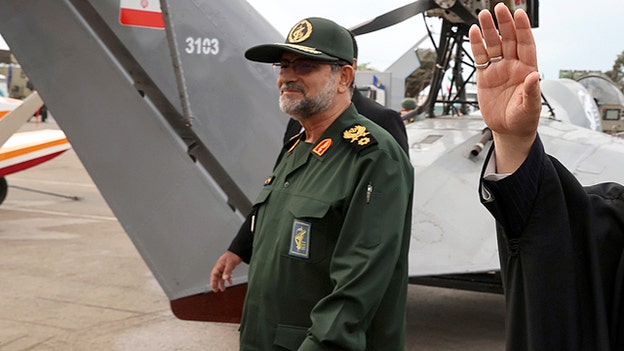
Alireza Tangsiri, who helmed Iran's Revolutionary Guard Navy, was targeted in an attack overnight, a senior Israeli official indicated to Fox News, noting that the strike was executed based on American and Israeli intelligence.
"The head of Iran’s Revolutionary Guard Navy, Alireza Tangsiri, who directly commanded the closure of the Strait of Hormuz — one of the world’s most critical energy chokepoints — was targeted in a strike overnight, along with his senior operational leadership, including intelligence and operations chiefs, at a covert naval command center. This targeted strike was based on U.S. and Israeli intelligence and continues to demonstrate how deeply it is capable of penetrating," the Israeli official noted.
Fox News' Trey Yingst contributed to this report
Live Coverage begins here