Trump vows 'ultimate consequences' for Iran violations for reneging on ending nuclear aspirations
President Donald Trump, delivering tough talk at the G7, warned Iran to fully comply with the memorandum of understanding (MOU) and permanently give up its nuclear weapons aspirations for lasting peace.
Coverage for this event has ended.
Iran signals regime vulnerabilty in symbolic message backing Mojtaba Khamenei, says expert
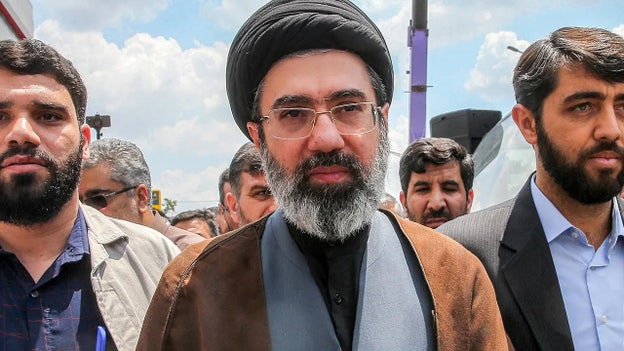
Iran’s foreign minister emphasized regime continuity on Tuesday in a heavily symbolic post shared on X.
The post shared Kazem Gharibabadi underscored Tehran's commitment to its founding principles under the new Supreme Leader, Mojtaba Khamenei.
Counterterrorism expert Dr. Mohammed Omar said the message suggested that, within the Islamic Republic, succession is never purely constitutional.
“Succession must be narrated. It must be sanctified. And when a regime feels vulnerable, it reaches for its deepest symbols,” the Director of the Antisemitism Research Initiative said.
“The message asks Iranians to understand political transition not as a contested transfer of power, but as the continuation of a sacred trust.
“It shows a regime trying to make obedience feel like mourning — and mourning feel like loyalty,” Mohammed added.
Oil prices plunge more than 5%, optimism grows over US-Iran deal
Oil prices dropped more than 5% Tuesday, extending losses from earlier in the week as optimism grew that a potential U.S.-Iran agreement could help ease tensions in the Middle East and keep oil flowing through the Strait of Hormuz
Reuters reported Brent crude futures fell $4.21, or 5.1%, to settle at $78.96 per barrel. U.S. West Texas Intermediate crude dropped $4.70, or 5.8%, to close at $76.05 per barrel.
The U.S. dollar also weakened in foreign exchange trading as investors welcomed signs of progress toward a possible peace deal involving Iran, the outlet said.
Trump in talks with Palestinian Authority to repair ties, advance Abraham Accords
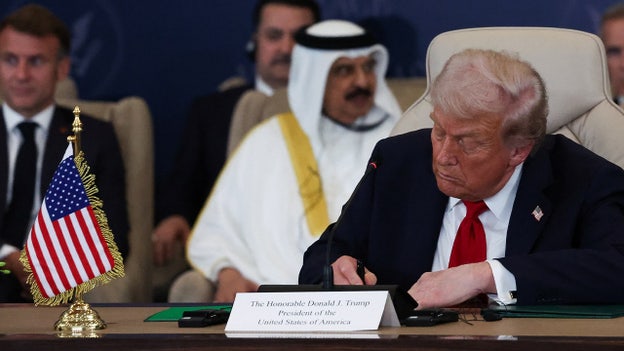
The United States and the Palestinian Authority (PA) are in talks to repair ties as Washington looks for Palestinian support for its regional initiatives and extends its Abraham Accords agenda, The Times of Israel reported Tuesday.
The Trump administration is also pushing to transfer billions of dollars in Palestinian tax revenues withheld by Israel to the U.S.-backed Board of Peace to support Gaza's reconstruction and eventual PA rule after reforms.
Saudi Arabia is also playing a role.
Negotiations have faced obstacles, including disagreements over Palestinian demands for limits on Israeli settlement expansion and U.S. requests that the PA suspend international legal actions against Israel.
FBI alleges Israel-linked motive in plot to attack UFC Freedom 250 White House event
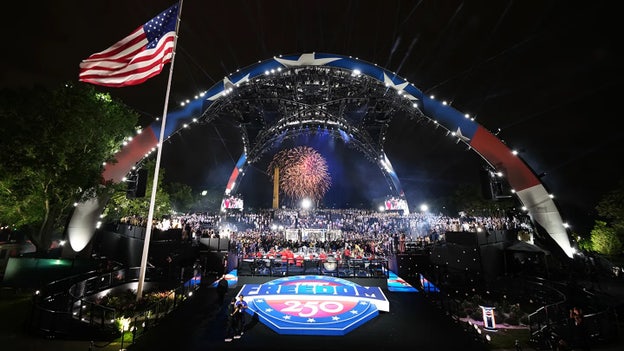
Israel appeared to be one motivating factor in an alleged plot to attack the UFC Freedom 250 event at the White House on Monday, with one suspect allegedly telling investigators the group wanted to target politicians who had received donations from the American Israel Public Affairs Committee, or AIPAC.
The FBI arrested five suspects and identified a broader network of 23 people allegedly involved in planning an attack using drones, sniper positions and a mass evacuation strategy.
Authorities also uncovered Signal chats detailing operational planning and travel arrangements.
The alleged plot was disrupted before the high-profile event, which drew thousands of attendees as part of President Donald Trump's birthday weekend.
Australia lowers travel advisories for Bahrain, Israel, Kuwait, Qatar, UAE amid diplomatic progress
Australia eased its travel advisory for Bahrain, Israel, Kuwait, Qatar and the United Arab Emirates after the United States and Iran announced a memorandum of understanding (MOU) scheduled to be signed Friday in Geneva.
Foreign Minister Penny Wong said the advisory level was lowered to "reconsider your need to travel" from the do not travel level and urged Australians to carry on postponing nonessential travel to the Gulf.
"While the security situation across the Middle East could deteriorate rapidly with little warning, the government has assessed current conditions in Bahrain, Israel, Kuwait, Qatar and the UAE as appropriate to move to this lower advisory level," Wong said.
Global shipping gears up for Strait of Hormuz reopening amid US-Iran deal
Ships were preparing for the reopening of the Strait of Hormuz on Tuesday, according to maritime intelligence firm Windward.
This came in the run-up to Friday’s memorandum of agreement signing in Geneva, after which President Donald Trump said the key global waterway would open.
“First signs are emerging that commercial shipping is preparing for a Strait of Hormuz reopening,” Windward said in a post shared on X.
“VLCCs signaling the UAE as their next destination are tracked sailing from as far away as the South China Sea and across the Indian Ocean,” Windward added.
“At least 23 VLCCs are currently heading for the UAE ports of Khor Fakkan or Fujairah based on their AIS messages, joining at least 30 already at anchorage there.
“Although more than 550 stranded ships west of Hormuz have yet to exit, including a reported 60 laden tankers, shipowners are readying for inbound transits to load oil once the memorandum of understanding to reopen the strait is signed on Friday,” the firm said.
“Watch for evolving behavior as regional transit patterns shift," Windward added.
The U.S. Navy also shared new guidance for vessels transiting the Strait on Tuesday, a senior US defense official told Fox News' National Security Correspondent Jennifer Griffin.
US-Iran deal highlights growing gap between American, Israeli interests: report
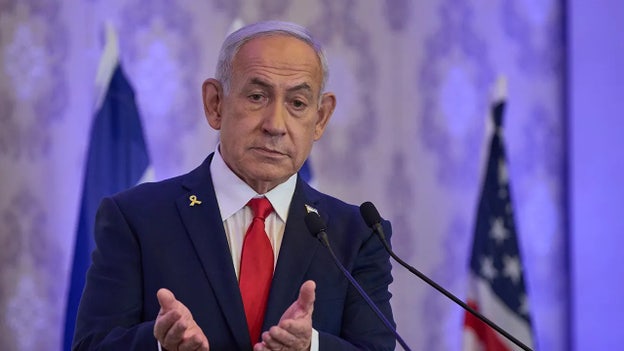
News that the United States and Iran had finalized a memorandum of understanding to end the conflict was met with dismay among Israelis on Monday and Tuesday, according to The Jerusalem Post.
Many, the outlet reported, argued that the deal leaves the Iranian regime intact and preserves what they see as an existential threat to Israel.
Several also said the agreement highlighted a growing gap between U.S. and Israeli interests.
“For us, it’s horrible. I don’t know what Trump is thinking,” said one dual U.S.-Israeli citizen.
“Maybe for the U.S. it’s a good deal, but not for Israel. If the regime is still there, Israel will still be in danger because the regime wants to eliminate Israel,” another told the outlet.
Vance questions Iran's intentions ahead of Geneva signing, vows to stay involved
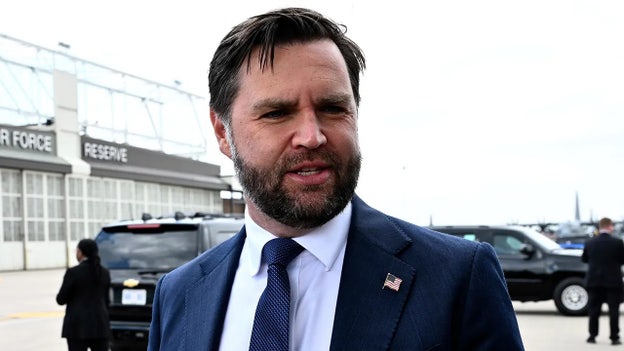
Vice President JD Vance on Tuesday explained his planned appearance at Friday's Iran deal signing ceremony in Geneva, arguing that his attendance will underscore the administration's commitment to securing concessions from Iran.
Speaking on “The Five” Vance also emphasized that any agreement would require significant compliance before Tehran receives any benefits.
"Look, they're going to have to do some serious compliance of very good things for the Americans in order for them to get any of the benefits of the bargain," Vance said of the Iranian regime.
Vance rejected the notion that attending the signing ceremony amounts to a reward for Tehran.
"So, I don't see it as a reward to take a photograph. I see it as we're going to get very serious about these negotiations, and what I'm trying to do is send a signal that the entire American government is actually oriented towards getting a good outcome for the American people," he said.
Vance also expressed skepticism about Iran's intentions.
"I kind of want to figure out how real are they, how fake are they," he said. "They're making a lot of promises. Are those promises actually going to be met with real action?"
"That's why I'm going to show up to the negotiation. That's why we showed up to Pakistan a couple of months ago, and we stay involved in this process," Vance added.
Vance says Qatar, Pakistan asked US to delay releasing text of the Iran deal
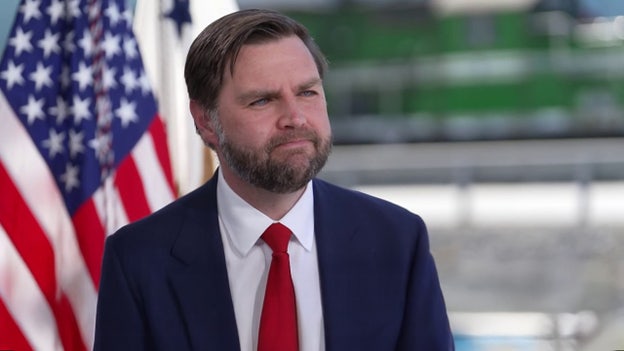
Vice President JD Vance said Tuesday that diplomatic requests from Qatar and Pakistan, who are mediating negotiations with Iran, are behind a delay in publicly releasing the agreement between Washington and Tehran.
"There's some diplomatic procedure at work here, where the Qataris and the Pakistanis have been mediating this entire negotiation with the Iranians, and they've asked us effectively to sequence the way that we roll this out," Vance said on "The Five."
"We'd be happy to release the agreement today or tomorrow. We may release it as late as Friday, but fundamentally, in the grand scheme of things, that doesn't matter, because whether it's tomorrow, whether it's Friday, people are going to see what's in this agreement very soon," he added.
Vance said Friday's formal signing ceremony is the primary reason for the delay.
"Friday, of course, is the formal signing ceremony, and they kick off these negotiations, and that's when they've asked us to delay it. We're trying to push that forward," he said.
Vance described the agreement as straightforward, centering on preventing Iran from obtaining a nuclear weapon while ensuring freedom of navigation through the Strait of Hormuz.
"If they fundamentally transform themselves as a country, so the United States wins either way," Vance said.
"As the president said, either they get nothing, we destroy their nuclear program and the Strait of Hormuz is open, or they fundamentally transform themselves, and that's a big win, too. It's really up to them."
Hesgeth not at odds with Trump over Iran deal, says Cornyn
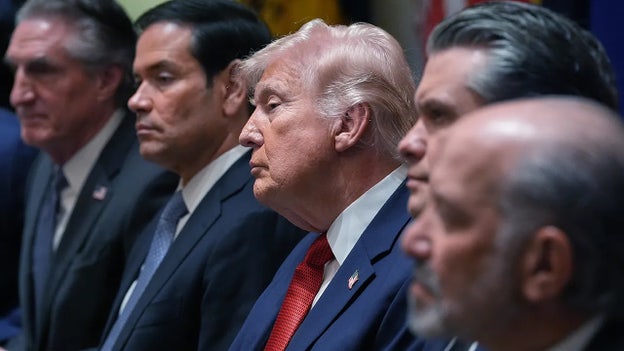
Secretary of War Pete Hegseth met with Senate Republicans on Capitol Hill Tuesday to rally support for Pentagon funding as lawmakers consider a reconciliation package and the administration’s defense priorities.
The meeting came amid ongoing talks over a potential Iran deal and reports of internal concerns about a recently announced Memorandum of Understanding (MOU).
Sen. John Cornyn, R-Texas, told Fox News the discussions centered on ensuring the Pentagon has the resources needed to sustain operations and replenish key weapons stockpiles.
"There's obviously been an extensive Operation Epic Fury, and they are running short of funding they need in order to acquire the weapons and missiles and things like that that they need to protect the nation," Cornyn said.
"So I certainly support what they're trying to do, but Democrats right now are threatening basically to shut down the government and not cooperating in any sort of defense funding at all," he continued.
"I told them it's going to be a pretty precarious effort, but I was committed to helping them because I think it's very important," he added.
Cornyn's comments come amid reports of internal debate over the Iran agreement.
Axios reported Monday that Secretary of State Marco Rubio, CIA Director John Ratcliffe and Hegseth expressed skepticism about a potential Iran deal and raised concerns during internal meetings.
Asked whether he got the impression from Hegseth that he was at odds with President Donald Trump over a potential agreement with Iran, Cornyn dismissed the suggestion.
"Not at all," Cornyn said.
Pressed on whether he would support an agreement with Iran, Cornyn said:"I would like to see something in writing."
Senate falls one vote short of advancing war powers resolution amid Tehran deal
The Senate on Tuesday failed to advance Sen. Raphael Warnock’s (D-Ga.) Iran war powers resolution and after Washington announced a framework agreement with Tehran aimed at ending the conflict.
The procedural vote fell one vote short of passage, effectively preventing the resolution from moving forward for floor consideration.
Four Republicans joined nearly all Democrats in supporting the measure: Sens. Bill Cassidy (R-La.), Susan Collins (R-Maine), Lisa Murkowski (R-Alaska), and Rand Paul (R-Ky.).
Sen. John Fetterman (D-Pa.) was the only Democrat to vote against the resolution.
Five senators did not vote: Sens. Michael Bennet (D-Colo.), Cory Booker (D-N.J.), Bernie Sanders (I-Vt.), Josh Hawley (R-Mo.), and Mitch McConnell (R-Ky.).
Supporters argued that Congress should reassert its constitutional authority over decisions involving military action. Opponents said the administration should retain flexibility in responding to developments in the region.
G7 leaders want to 'depend less on the strait' as Persian Gulf routes face pressure: report
G7 leaders discussed using new supply routes other than the Strait of Hormuz that could be opened to transport oil and gas out of the Persian Gulf, The Associated Press reported Tuesday.
French Foreign Ministry spokesman Pascal Confavreux told the outlet that the current dynamic needed to change.
“There were discussions to see how we can depend less on the strait,” he said. “This has to change for the future,” Confavreux said.
Before the Iran war, one-fifth of the world’s crude oil passed through the maritime chokepoint.
“Part of the discussions was, ‘OK, how can we imagine, finance and build infrastructure, sometimes on land, that will be able to go outside the route of the Strait of Hormuz?’” he said.
Germany ready to help preserve Middle East peace amid Iran-US deal, Merz says
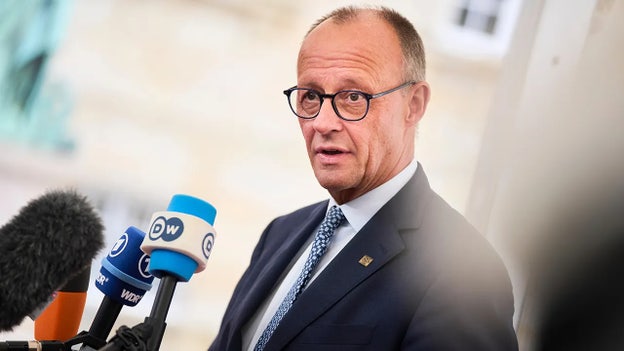
Germany is prepared to participate in efforts to preserve peace in the Middle East following a peace deal between Iran and the United States to end the war, Chancellor Friedrich Merz said Tuesday at the G7 summit.
"We have always said that we are ready to play our part. Indeed, we have already sent the first mine-clearing boats and ships to the region," he said at the French lakeside resort of Evian-les-Bains.
Merz also said that he was confident that the memorandum of understanding, or MOU, would work and that Tehran would accept the conditions because it had to.
He added that he had told President Donald Trump that the situation showed military strength could lead to a diplomatic solution and could serve as an example for Ukraine, Reuters reported.
US would allow Iran to resume oil sales immediately after deal signed Friday: reports
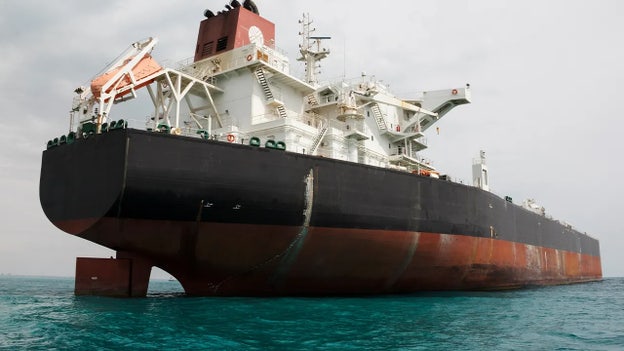
The United States would allow Tehran to resume oil sales immediately after an Iran-U.S. agreement is signed on Friday, according to reports.
However, Iran would only be permitted to sell oil if it complies with all terms of the agreement, including refraining from interfering with freedom of navigation through the Strait of Hormuz and not pursuing a nuclear weapon, Reuters reported, citing a senior U.S. official.
The Wall Street Journal, citing sources familiar with the memorandum of understanding (MOU) between Tehran and Washington, also reported that the agreement would waive certain banking and transportation sanctions to facilitate transactions.
According to the report, all measures would take effect immediately once the deal is signed in Switzerland on Friday.
Israeli drone strikes kill at least four in Lebanon, Iran issues military warning
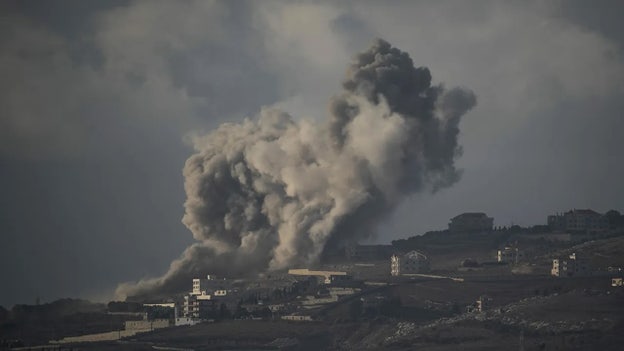
Israeli drone strikes killed at least four people in southern Lebanon on Tuesday, according to reports.
Reuters reported that Iran's Khatam al-Anbiya Central Headquarters, the country's top joint military command, said in a statement that Israel should expect a strong response from the Iranian armed forces if it does not stop its attacks in southern Lebanon.
The warning came amid calls from President Donald Trump for Israel to end its war in Lebanon, and following the announcement of the memorandum of understanding (MOU) aimed at ending the regional conflict.
The Israeli Defense Forces (IDF) also said it intercepted rockets launched by Hezbollah toward Israeli forces in southern Lebanon. The military added that it struck and destroyed the launcher used in the attack.
Hezbollah said Tuesday that it believes Iran will not sign a final nuclear agreement with Washington unless Israel withdraws from Lebanon, Reuters reported.
Citing a diplomat, the outlet said Israel's continued troop presence in Lebanon would be considered a violation of the U.S.-Iran MOU.
Iran warns US that any breach of agreement will be met with 'decisive, crushing response'
The head of Iran’s parliamentary national security committee warned Tuesday that any breach of the agreement with the United States would trigger a “decisive, crushing response.”
“Iranian resilience forced a strategic pivot: the U.S. came to the table on Iran’s terms,” Ebrahim Azizi wrote in a post on X.
“Now, Washington must prove its commitment by ending the war against Lebanon and upholding every clause of the memorandum of understanding,” he said.
“Any breach will be met with a decisive, crushing response. The era of unilateral imposition against Iranians is over,” Azizi added.
Senate to take procedural Iran War Powers vote despite US-Iran MOU
The Senate is expected to take a procedural vote at approximately 3 p.m. ET on Tuesday on a new Iran War Powers resolution.
Senate Democrats still plan to force the vote despite a memorandum of understanding (MOU) agreed to by the U.S. and Iran.
The vote is expected to be close again.
A previous procedural vote on a similar resolution succeeded 50-47 on May 19, though several Republicans were absent that day.
Fox News' Senior Capitol Hill Producer Kelly Phares contributed to this report.
Iranian tanker crosses US blockade line in Strait of Hormuz, sources say
An Iranian tanker crossed the U.S. blockade line in the Strait of Hormuz on Tuesday, according to sources familiar with the latest vessel-tracking data.
The tanker, Diona, was fully loaded with roughly 2 million barrels of crude, the sources said. Its last recorded load was April 10, and its last active AIS (Automatic Identification System) transponder ping was at 10:03 a.m. ET Tuesday.
CENTCOM is not commenting.
The move could mark a significant test of the U.S. blockade, which has been in place since April. Reports indicate other U.S.-sanctioned Iranian very large crude carriers (VLCCs) are also approaching the blockade line.
One source said it appears “something is happening,” pointing to fewer vessels docked at Iran’s easternmost port of Chabahar.
The Wall Street Journal reported that United Against Nuclear Iran, a nonprofit group, said an Iranian supertanker carrying crude oil had left Chabahar, crossed the U.S. blockade and was sailing out of the Gulf of Oman Tuesday with its location tracker active — the first such instance since the blockade began in April.
The vessel referenced in that report could be the Diona.
FOX Business' Lauren Simonetti contributed to this report.
‘This peace agreement could well be a surrender’: Sen. Blumenthal slams secrecy around Iran MOU
Sen. Richard Blumenthal, D-Conn., delivered a blistering rebuke of President Donald Trump's peace-making efforts with Iran.
“Apparently this memorandum is a page and a half, right? I've settled a lot of litigation, and even in the simplest dispute, a page and a half has never done the job," Blumenthal, a notorious Trump critic, told reporters in the Senate building Tuesday. "You can't sell your house with a contract a page and a half long.
"I think this peace agreement could well be a surrender in effect. And the president is very reluctant to make it public. He wants to keep it secret as long as possible so that he can frame perceptions and potentially deceive people about what's in it.”
Trump’s “M.O. is to overpromise and under deliver,” Blumenthal added, arguing the war imposed “catastrophic cost on American taxpayers and consumers” while raising major questions about what the Iran agreement actually contains.
Iran could gain access to “hundreds of billions of dollars in unfrozen assets,” he warned, which could be used to support Hezbollah, proxies or rebuild its nuclear program.
The secrecy around the Iran MOU “absolutely striking,” he concluded.
“There is no real verification or inspection for either this temporary agreement or longer term,” Blumenthal said, adding that lawmakers are merely “speculating” the deal “could be transformative for the region.”
Sen. John Kennedy: Iran deal should face Senate approval if final agreement emerges in 60-90 days
Iran must take “meaningful, real steps” to ending its nuclear weapons aspirations before any final agreement should come before the Senate for approval, according to Sen. John Kennedy, R-La., on Tuesday.
Kennedy told Fox News that lawmakers are not expected to see the document until Friday and that he expects it to include “general conceptual language.”
“I’m very hopeful that it will work,” Kennedy said. “We won’t know for 60, maybe 90 days whether we’re going to be able to confect a real agreement with Iran.”
Kennedy said he hopes the Strait of Hormuz is opened immediately but lasting peace is sketchy because “Iran’s run by religious zealots."
"They learned to lie before they learned to talk, and you can’t trust them,” Kennedy said in his patented way.
“No one’s confident that Iran is going to do anything,” Kennedy said. “And it’s unfair to hold anyone to that standard.
"You’re negotiating with an enemy,” Kennedy said. “Would I like to see us acquire the fissile material? Yeah, along with the centrifuges. Will it ultimately happen? Don’t know yet.”
Regardless, Kennedy conclude, “Iran has taken a curb stomp.”
“It’ll be 20 years before they can recover both their public sector and their private sector,” he said.
“We will know within a nanosecond if Iran restarts its nuclear weapons program,” he said, “and then we can go back in and bomb, as we did last year.”
Fox News’ Dan Scully contributed to this report.
Sen. Eric Schmitt: Trump getting Iran to give up nuclear aspirations 'a big achievement'
Sen. Eric Schmitt, R-Mo., said Tuesday he is “very hopeful” about the administration’s emerging memorandum of understanding (MOU) with Iran, arguing that President Trump’s objective has been clear: prevent Tehran from obtaining a nuclear weapon.
“Iran will affirmatively state — and obviously to be verified — that they won’t pursue a nuclear weapon,” Schmitt told Fox News on Tuesday in the Senate building. “That’s a big achievement.”
Schmitt has had conversations with senior White House officials about the MOU and believes the weakening of Iran’s military and nuclear ambitions has created an opening for diplomacy. But, at this point, there is nothing Congress needs to do with it.
“This is again an MOU right now,” he said, when asked whether Congress should vote on the Iran MOU, adding that it could eventually take a form requiring congressional action, but “there’s nothing requiring us to do it” at this stage.
Schmitt also addressed the president’s use of the Defense Production Act amid concerns about munitions supply chains, saying the U.S. needs a greater sense of urgency in rebuilding its industrial base.
“We need to move faster," he concluded. "We need to produce more things.”
Fox News’ Dan Scully contributed to this report.
Presidential memo warns fragile supply chains could jeopardize US munitions readiness
The White House has warned War Secretary Pete Hegseth about the need to ramp up U.S. weapons production.
A new presidential determination warns that constraints in the U.S. munitions industrial base may pose a “direct threat” to national defense preparedness — even as Hegseth has publicly pushed back on claims that the U.S. is facing a weapons shortage.
"In particular, systemic constraints in the munitions industrial base, including limited production capacity, fragile supply chains, long-lead dependencies, and related production bottlenecks, may impair the ability of the United States to produce, sustain, and expand the availability of munitions, missiles, and equipment required for the national defense."
The June 11 memorandum, scheduled for publication in the Federal Register, says systemic problems in the munitions industrial base — including limited production capacity, fragile supply chains, long-lead dependencies and production bottlenecks — may impair the country’s ability to “produce, sustain, and expand” the availability of munitions, missiles and equipment required for national defense.
The determination comes after Hegseth denied that the U.S. is facing a munitions stockpile crisis, calling that claim a “manufactured story” and saying U.S. stockpiles are “great” and “only getting stronger” during an appearance on CBS's “Face the Nation.”
Hegseth has also said there is “no shortage” of U.S. munitions tied to American operations against Iran, arguing that U.S. defensive and offensive stockpiles allow the military to sustain the campaign as long as needed.
But the presidential memorandum points to industrial-base vulnerabilities that could affect the nation’s ability to replenish and expand critical weapons supplies. It delegates authority to the Secretary of War under Section 708 of the Defense Production Act to provide for voluntary agreements and plans of action to help support the national defense.
The determination, listed as Presidential Determination No. 2026-15, was filed June 16 and is scheduled for publication June 17.
FOX Business Network White House Correspondent Edward Lawrence contributed to this report.
Fox News gets exclusive look inside historic drone boat Strait of Hormuz rescue of downed pilots
Fox News got an exclusive look at Saronic, the Texas-based defense startup behind the drone boat platform used in the autonomous rescue of two American pilots after their Apache helicopter went down near the Strait of Hormuz.
President Donald Trump hailed it as an American first, a major milestone for unmanned military technology.
“The U.S. military does not leave people behind,” Saronic CEO and former Navy SEAL Dino Mavrookas said. “We were able to rescue them with an autonomous platform without putting additional sailors or soldiers in harm’s way. That’s massive.”
The mission comes as the Pentagon looks to expand autonomous naval technology that can be produced at scale and used in high-risk missions without putting more U.S. troops in danger.
Fox News also got a first look at Saronic’s next-generation autonomous ship, the Mirage, which is designed to travel farther, carry heavier payloads and handle more complex missions.
Fox News' Brooke Taylor contributed to this report.
Sen. Graham: Trump has done more to ‘neutralize’ Iran than any president since 1979
Sen. Lindsey Graham, R-S.C., trusts President Donald Trump on forging a peace deal, but not Iran on following through.
The memorandum of understanding between the U.S. and Iran “seems very promising,” Graham told Fox News in the Senate building Tuesday.
“I think the president has done more to neutralize the threat Iran presents to the world than any president since 1979," Graham hailed.
"Can we do more? I hope so.”
Trump will not agree to a weak deal, according to Graham, who warned Iran’s record makes diplomacy difficult.
“Well, the president can be trusted; I don't know about the Iranians," Graham said. "Given 47 years of deceit, I would say no. But President Trump's done more to deal with Iran than anybody since I've been around. They're the weakest they've been militarily. Their economy is in shambles. That's a result of, you know, Epic Fury and Midnight Hammer.
"And the goal for me is to put Iran in a box so we can get regional peace, Saudi Arabia joins the Abraham Accords, and that will only happen with a weakened Iran.
"I'm hoping we can get a diplomatic solution to end the nuclear ambitions of Iran. Do they want to play that game or not?”
Fox News' Dan Scully contributed to this report.
Lame-duck GOP Sen. Joni Ernst: 'Critical' Senate gets look at Trump's Iran peace deal
Congress reviewed Obama’s JCPOA under a 2015 law, failing to block it, even if it was not approved as a treaty.
And some of President Donald Trump's Republican skeptics might get the chance to do what they could not do with Obama: Kill the nuclear deal with Iran.
“While the full details of this agreement have yet to be released, a deal of this magnitude deserves thorough review," Sen. Joni Ernst, R-Iowa, a combat veteran, who is not running for reelection this year.
"It is critical that the Senate has the opportunity to examine the details, ask tough questions, and ensure America's interests and those of our allies are protected."
But Ernst agrees with Trump on the most important detail of the memorandum of understanding (MOU).
"Our objective must remain clear: Iran cannot be allowed to obtain a nuclear weapon," her statement concluded. "Any agreement must verifiably and permanently prevent that outcome."
Trump on putting MOU to vote: ‘Who wouldn’t approve?’; ‘Dumocrats’ will oppose it
President Donald Trump said Tuesday he would be willing to send his Iran agreement to Congress for review, sarcastically asking “who wouldn’t approve it?”
"Dumocrats," Trump mocked, saying they vote against everything he does and will ostensibly be put on record to say Iran “should have a nuclear weapon.”
Speaking to reporters at the G7, Trump said he had not previously considered submitting the memorandum of understanding (MOU) to lawmakers, but quickly warmed to the idea.
“I never thought about it, but I will send it to Congress,” Trump said. “I like the idea.”
Trump cast the move as a political litmus test for the Senate.
“What I’d like to do is send it to Congress saying you shouldn’t approve it and I’ll get it approved,” Trump said. “Whatever I say, they want to do the opposite.”
He then suggested no lawmaker could reasonably reject an agreement aimed at preventing Iran from obtaining a nuclear weapon.
“I mean, who wouldn’t approve it?” Trump said. “Let’s let them have a nuclear weapon. The Democrats will say, 'oh, they should have a nuclear weapon; They’ll go crazy.”
Schumer blasts Trump’s Iran peace push: Secretive ‘misadventure,’ 'worse off by every measure'
Senate Minority Leader Chuck Schumer, D-N.Y., tore into President Donald Trump’s Iran peace effort Tuesday, demanding immediate briefings for Congress and the public while branding the administration’s handling of the conflict a secretive “misadventure” that has left America “worse off by every measure.”
Speaking on the Senate floor, Schumer said the administration has offered inconsistent accounts of its memorandum of understanding (MOU) with Iran and accused Trump of keeping lawmakers and the American people in the dark.
Schumer called on Trump to convene a classified Gang of Eight briefing, brief the full Congress on the MOU and publicly explain what the understanding with Iran involves.
“We all know what the heck is going on,” Schumer said. “We’re in the middle of a war. No one quite understands what Trump is up to, and now he’s keeping everybody in the dark.”
Schumer also argued that Trump’s war in Iran has been counterproductive, saying the conflict has strengthened Tehran’s position rather than weakening it.
“Trump’s Iranian misadventure has left America worse off than when he started it. Worse off by every measure,” Schumer said.
He claimed Iran’s regime is “more extreme,” that Tehran has more control over the Strait of Hormuz and that gas prices are dramatically higher than before the war began, warning it could take months for conditions to return to normal.
World’s middlemen: Swiss to host US-Iran MOU signing Friday at Bürgenstock
Switzerland has pitched itself as the world’s neutral room — the place warring powers go when they are not ready to trust each other, but are finally ready to talk.
Now, that role is back in the spotlight, with the U.S. and Iran set to put pen to paper above Lake Lucerne.
Swiss foreign ministry officials said Tuesday that a signing ceremony for a memorandum of understanding (MOU) between the United States and Iran will take place Friday at the Bürgenstock resort near Luzern.
The site, perched above Lake Lucerne in central Switzerland, was proposed by Pakistani and Qatari mediators, along with the U.S. and Iran.
The ministry said it has been in close contact with all four countries about the possible signing, which follows announcements over the weekend by U.S. and Iranian officials that they had reached an understanding.
The Associated Press contributed to this report.
Trump open to sending MOU to Congress for approval: 'Who wouldn’t approve it?'
President Trump said Tuesday he is open to sending his emerging Iran agreement to Congress for review, a move that could help lock in Republican support but also expose the still-secret deal to sharper scrutiny on Capitol Hill.
“I like the idea, send it to Congress please,” Trump said during a Tuesday meeting with United Arab Emirates President Sheikh Mohammed bin Zayed Al Nahyan on the sidelines of the G7 summit in the French Alps.
“I mean who wouldn’t approve it.”
The remark comes as lawmakers in both parties press the administration for details about what Trump has described as an agreement to end the war in Iran.
Senate Majority Leader John Thune, R-S.D., who has failed to pass some of Trump's key agenda items like the Save America Act, is raising opposition on Trump cutting an Iran deal while cutting out Congress.
Republicans are signaling they want more than verbal assurances.
Sen. James Lankford, R-Okla., argued that a lasting agreement should be approved by Congress, saying executive agreements last only as long as the president who signs them. Sen. John Kennedy, meanwhile, voiced skepticism about Iran’s trustworthiness.
Democrats are also demanding the text. Senate Minority Leader Chuck Schumer, D-N.Y., said the “devil is in the details” and criticized Trump for not yet revealing the substance of the memo of understanding (MOU).
The administration says more details are expected in the coming days, potentially around a formal signing ceremony in Switzerland.
This story included excerpts from Fox News' Alex Miller's reporting. The Associated Press also contributed to this report.
Trump wants to destroy Iran’s enriched uranium, not take it
President Donald Trump said the U.S. is not looking to keep Iran’s enriched uranium, but to destroy it.
“We’re not looking to take it,” Trump said during a bilateral meeting at the G7 in France. “We’re looking to destroy it. We have plenty of it.”
Trump said the uranium is being monitored and suggested there is no immediate rush to remove it.
“We have cameras from space on it,” Trump said. “We know everybody that goes there, which is like nobody.”
Trump said B-2 bombers struck the site and claimed “the entire mountain collapsed inside it,” making excavation difficult.
"It's a very tough excavation," Trump said. "Nobody else can do it but us and probably China. They have the equipment. We have the equipment.
"We're in no rush, but we get it, and when we get it, we'll destroy it."
Vance says Trump Iran plan could reshape Middle East for generations
Vice President JD Vance said President Donald Trump’s Iran peace plan could have “transformative impacts” on the Middle East for generations.
Vance said Gulf Arab countries opposed the Obama-era JCPOA because they believed it empowered Iran, but he said they view Trump’s plan differently.
“Do you know what they think about the President Trump peace plan? They love it because they think that it’s turning over a new leaf to a new Middle East,” Vance said in an interview Tuesday on "Fox & Friends."
“What we’ve done here is actually unite the Gulf together,” he added.
Vance: Trump offering Iran ‘hand of peace’ if regime changes behavior
Vice President JD Vance said President Donald Trump is offering Iran a path toward a better relationship with the United States, but only if Tehran changes its behavior.
“What the president is trying to do is actually extend the hand of peace,” Vance told Tuesday's “Fox & Friends.”
Vance said Iran’s leaders must “step up and change their behavior” if the Iranian people want “greater prosperity.”
“If they do, great,” Vance said. “If they don’t, the United States has already gotten a lot from what we need.”
Vance in Fox News exclusive sit-down: Iran deal gives Tehran 60 days to prove it has changed
Vice President JD Vance told Fox News Digital in an exclusive sit-down interview that Iran is entering a 60-day test period under President Donald Trump’s agreement to reopen the Strait of Hormuz, arguing Tehran must show through its actions that it has abandoned nuclear weapons development and support for terrorism.
“The thing I’ve learned from the President of the United States is whether friend or foe, you shouldn’t trust anybody, you should trust people’s actions,” Vance said.
Vance said Iran has “two pathways”: behave like a “normal country” and receive benefits such as sanctions relief and renewed international ties, or attempt to rebuild its nuclear program and continue backing terrorism, forfeiting any benefits under the deal.
He said the reopening of the Strait of Hormuz strengthens the U.S. hand by allowing oil and gas to flow again and helping bring energy prices down for Americans.
“It fundamentally allows us to see are they serious or not,” Vance said.
These quotes came in Ashley DiMella's Fox News Digital exclusive sit-down with the vice president.
Vance: 'Not a single cent of American money' goes to Iran under deal
Vice President JD Vance vowed “not a single cent of American money” will go to Iran under President Donald Trump’s proposed peace deal, pushing back on reported dollar figures and calling them “Iranian propaganda.”
“Not $300 billion, not $24 billion, not any of the money, the dollar figures that I’ve seen floating around,” Vance told Fox News' "Fox & Friends."
The deal centers on a “firm commitment backed up by verifiable action” that Iran will not develop or buy a nuclear weapon, Vance stressed.
“We’re not giving them a red cent of American money,” Vance said, contrasting the deal with the Obama-era JCPOA.
Vance said Gulf Arab countries could invest in Iran only if Tehran “perform[s] their end of the obligation,” adding that any benefits depend on Iran “behaving properly.”
Trump: My MOU is 'wall against nuclear weapon' for Iran; Obama 'paid a fortune, we pay nothing'
President Donald Trump said his Iran memorandum of understanding is “a wall against a nuclear weapon,” contrasting it with the Obama-era JCPOA being a "road map" for Iran's nuclear enrichment.
“Mine is a wall against a nuclear weapon,” Trump said. “He paid a fortune for it. We pay nothing.”
Trump said he plans to release the memorandum of understanding (MOU) and may hold a press conference to read the document aloud, saying he wants the press to cover it accurately.
“I will actually not only release it, I’ll probably have a press conference and read it to you word by word,” Trump said, rebuking the "fake news."
Trump vows ‘word by word’ reading of the Iran MOU to combat 'fake news'
President Donald Trump has rebuked "fake news" reports of a payoff for Iran to give up its nuclear weapons aspirations, but now he vows to read his lips: "Iran will never have a nuclear weapon."
Trump said Tuesday he wants to release the Iran memorandum of understanding (MOU) officially and may hold a press conference to read it aloud to ensure what he called accurate coverage.
“I will actually not only release it, I’ll probably have a press conference and read it to you word by word, so that the press covers it accurately,” Trump at the G7 during a bilateral meeting.
Trump called the MOU “a very important document” and contrasted it with the Obama-era JCPOA.
“Mine is a wall against a nuclear weapon,” Trump said. “He paid a fortune for it. We pay nothing.”
Trump says ships are moving again, expects Strait of Hormuz fully open by Friday
President Donald Trump said ships are beginning to move again and predicted the Strait of Hormuz oil shipping would be “fully opened by Friday.”
“The ships are starting to move now,” Trump said at a bilateral meeting Tuesday at the G7. “We’re going to have it fully opened by Friday. The ships are starting to move nicely.”
Trump also said oil is beginning to move and prices are “coming down rapidly,” while pointing to gains in the stock market.
“Most importantly, Iran will not have a nuclear weapon,” Trump said. “That was how I got involved in this. We can’t let that happen.”
CENTCOM shows USS Delbert D. Black replenishment in Arabian Sea
U.S. Central Command said the USS Delbert D. Black completed a vertical replenishment-at-sea with the USNS John Lewis while transiting the Arabian Sea on June 15.
The operation allows sailors to receive supplies, mail and other needed items without the ship having to pull into port, according to CENTCOM.
The update comes as U.S. naval assets continue operating in the region amid heightened Middle East tensions before a potential memorandum of understanding (MOU) signing ceremony Friday.
Trump signals Ukraine peace is next, meets with Zelenskyy at G7
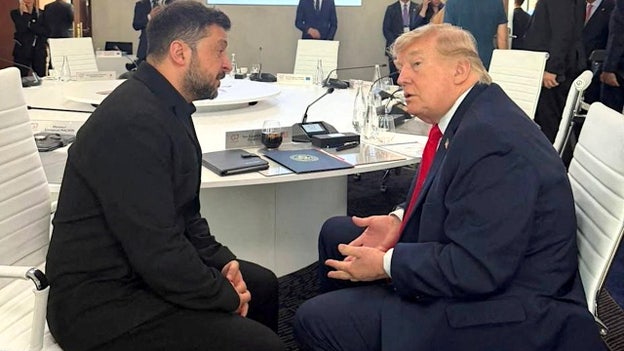
President Donald Trump said he had a “good meeting” with Ukrainian President Volodymyr Zelenskyy, urging Russia to move toward a deal to end the war.
"Ukraine is losing a lot of people," Trump lamented at the bilateral meeting with Qatar at the G7 on Tuesday morning in France.
"So, yeah, I'm going to do whatever I can."
Trump added, “Russia should make a deal.”
“Russia’s lost tremendous amounts of people, and so has Ukraine,” he continued.
“I don’t like to see 25,000 young people die every month,” Trump said. “The whole thing is ridiculous.”
Trump said he recently spoke with Russian President Vladimir Putin and, after making peace in the Middle East, the U.S. would now turn more focus toward the war in Ukraine.
Trump warns Iran of ‘ultimate consequences’ if regime obtains nuclear weapon
President Donald Trump warned Iran would face "ultimate consequences" if the regime obtains a nuclear weapon, saying during a G7 news conference that Tehran “will not” be allowed to develop, purchase or otherwise acquire one.
“And if they do, they suffer unbelievable consequences,” Trump said during a bilateral meeting with Qatar early Tuesday morning. “Not just a little bit — I won’t even tell you the consequences, but the consequences are the ultimate consequences.”
Trump said the issue was central to his memorandum of understanding on Iran, stressing that the agreement language had to go beyond barring Tehran from developing a nuclear weapon.
“They will not develop, purchase, buy or any other thing,” Trump said. “They’re not going to acquire a nuclear weapon. If they do, all hell will rain down on them.”
The president added that he hopes the U.S. can have “a very good relationship” with Iran, but said preventing the regime from obtaining a nuclear weapon remains the priority.
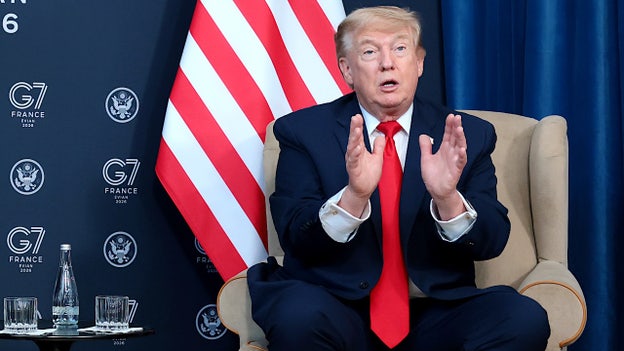
Iran slaughter of protesters 'took place during the first and second regimes' more, Trump says
President Donald Trump said the U.S. has discussed Iran’s killing of its own people, calling the killing of the regime protesters “a terrible thing.”
“We talked to them about it,” Trump said at a bilateral meeting with Qatar.
"The majority of that took place during the first and second regimes, much more so than them. It was much more severe, but it's a terrible thing."
Trump said the U.S. is dealing with Iranian officials he described as “very rational people,” adding that they were “strong” and “smart” during negotiations.
"The first group, they're all dead; the second group, they're dead," Trump said. "A part of the third group is gone. And we're dealing with people that I think are very rational people, and they were nice to deal with. They were strong people, smart people.
"I think actually they're smarter than the first and second group, but they're not radicalized and they're, you know, looking to help their country."
Trump said he was not focused on regime change, arguing that past efforts have failed.
“I never cared about regime change,” Trump said. “I’ve watched regime changes for years. They never work.”
Trump: Netanyahu must be ‘more responsible’; 'don't knock down' a building looking for someone
President Donald Trump said he is not frustrated with Israeli Prime Minister Benjamin Netanyahu, but criticized Israel’s handling of Lebanon and Hezbollah.
“I’ve had a great relationship with Bibi, but now Bibi has to be more responsible with respect to Lebanon,” Trump during a bilateral meeting with Qatar.
Trump said he was “not happy” with the way Israel has handled the situation, saying the conflict “goes on forever” and creates complications for broader regional diplomacy.
“When you ask me about Bibi, an unbelievable relationship,” Trump said, while adding that Israel “would have been blown up a long time ago had I not gotten involved.”
Israel's campaign to root out Hezbollah terrorists in Lebanon pales in comparison to the threat of a nuclear Iran.
"I consider that the minor war – Iran the big one – but we have that a little pinprick out there that constantly rears its head, and that's Hezbollah," Trump said.
"And I'll tell you what, Israel's fighting Hezbollah too long and too many people are being killed.
"And you don't have to knock down an apartment house every time you're looking for somebody, because there are a lot of people in those apartment houses, and they're not all Hezbollah that I can tell you."
Trump praises Qatar on 'front line' of Iran war, touts major investment in US
President Donald Trump praised Qatar for its handling of recent tensions in the region, saying the country was “really on the line” amid the closure of the Hormuz Strait and the Iran war.
“We’re very, very impressed with Qatar and the way they’ve handled things,” Trump said. “They were in the front line.”
Trump also said Qatar is expected to make major investments in the United States.
“Qatar is going to be investing much more than $1 trillion in the United States,” Trump said. “Qatar has been a great investor.”
Trump said the U.S. has “the hottest country in the world right now” and credited Qatar with helping strengthen investment ties.
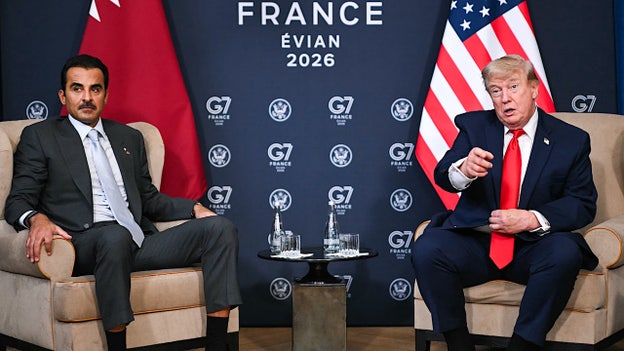
Trump: Iran ‘would have done tremendous damage’ under Obama nuclear deal
President Donald Trump said Iran would have posed a greater threat had the U.S. not withdrawn from the Obama-era nuclear deal, arguing the agreement put Tehran on a path toward obtaining a nuclear weapon.
“They can’t have a nuclear weapon. That’s a big thing,” Trump said at a bilateral meeting with Qatar. “If they had a nuclear weapon, they would have blown up Israel. They would have blown up the Middle East, and they probably would have taken a shot at us.”
Trump said canceling the Joint Comprehensive Plan of Action (JCPOA) prevented Iran from doing “tremendous damage.”
“You would have had them having a nuclear weapon five years ago,” Trump said. “That expired. That was a road to a nuclear weapon.”
Trump beats back 'fake news': US is ‘not investing any money’ in Iran deal
President Donald Trump said the U.S. is “not investing any money” in an Iran deal, despite what he has rebuked as "fake news" reports of a payoff in the yet-to-be released memorandum of understanding (MOU).
“We can talk about the Iran deal all day long, and we’re not investing any money,” Trump said at a bilateral G7 meeting with Qatar. “We have the right to if we want, but we’re not investing any money.”
Trump said he is not going to repeat former President Barack Obama’s mistakes in his handling of Iran's nuclear weapons aspirations.
"We didn't pay for it like Obama did: He paid billions of dollars," Trump added. "He paid $1.7 billion from an airplane, all green cash. He was crazy, I watched that, I couldn't believe it.
"But the one thing that's happening that's of note, frankly, the only thing that really matters to me is Iran will never have a nuclear weapon, and it says it loud and clear. They're not going to develop it. They're not going to buy it. They're not going to do anything with it."
Live Coverage begins here