




























Titulares destacados de Fox News del 25 de agosto
Aquí están los titulares principales Fox News . Echa un vistazo a lo más destacado en FoxNews.com.
El Departamento de Justicia demandó el martes a un tribunal de Ohio por una nueva norma que impide las detenciones federales por motivos de inmigración en el propio juzgado o en sus inmediaciones, acusando a las autoridades locales de interferir ilegalmente en la aplicación de la ley federal y de obligar a los agentes de ICE a realizar detenciones en entornos potencialmente más peligrosos.
El tema en cuestión es una norma del Juzgado Municipal del condado de Franklin que prohíbe las detenciones civiles en el juzgado, a menos que los agentes tengan una orden judicial. El Departamento de Justicia sostiene que la norma entra en conflicto con la ley federal de inmigración, que permite a los agentes de la Oficina de Control de Inmigración y Aduanas ( ICE ) realizar detenciones, en determinadas circunstancias, con órdenes administrativas o incluso sin ninguna orden.
«Este tipo de norma obstaculiza la aplicación de la ley federal y facilita que los extranjeros peligrosos eludan la ley federal, a pesar de que el Congreso ha ordenado que los agentes federales los detengan y los expulsen», ha dicho el fiscal general adjunto Brett A. Shumate, de la División Civil del Ministerio de Justicia. «En todo el país, y también en este juzgado en concreto, los agentes federales han llevado a cabo detenciones de forma habitual y segura. El Ministerio de Justicia está comprometido a proteger esa importante prerrogativa federal».
UN JUEZ SUSPENDE UNA LEY DE FILADELFIA DIRIGIDA CONTRA LOS AGENTES FEDERALES ENMASCARADOS

Se ve el logotipo o el sello del Departamento de Justicia de EE. UU., en el que aparece la sede central del Departamento —conocida como «Main Justice»—, detrás del atril en la sala de prensa de la sede del Departamento, antes de una rueda de prensa con el fiscal general en Washington, el 24 de enero de 2023. (REUTERS/Kevin Lamarque/Foto de archivo)
Esas detenciones pueden ser menos predecibles y más peligrosas porque pueden tener lugar en domicilios, lugares de trabajo u otros lugares públicos, según la denuncia.
Según el Departamento de Justicia (DOJ), dos agentes de la Policía de Columbus ( ICE ) han tenido que ser hospitalizados tras sufrir agresiones durante detenciones de personas buscadas en los últimos tres meses. La denuncia no identifica a los agentes ni da detalles sobre los incidentes.
ICE También ha tenido que llevar a cabo operaciones de vigilancia y sobre el terreno más prolongadas para localizar a personas que se encuentran lejos del juzgado. El Departamento de Justicia afirma que una detención en una cárcel o en un juzgado puede requerir dos agentes, mientras que una detención sobre el terreno suele requerir entre cuatro y seis.
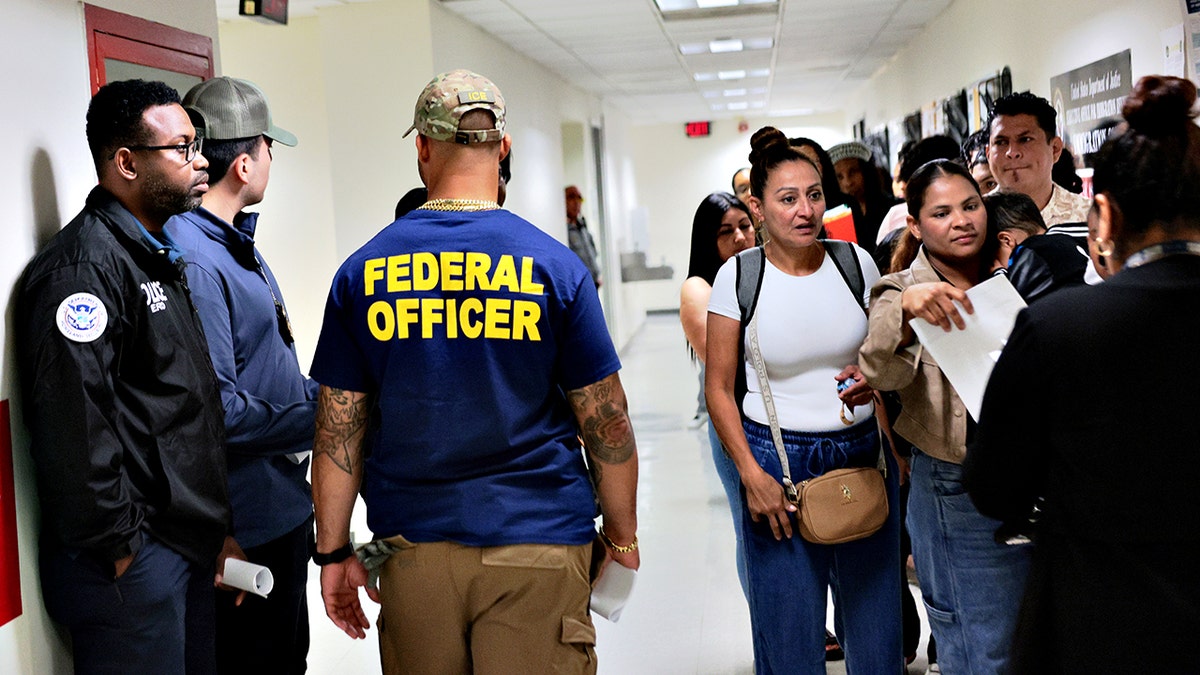
Agentes del Servicio de Inmigración y Control de Aduanas (ICE) patrullan los pasillos del tribunal de inmigración mientras la gente espera su vista en el Edificio Federal Jacob K. Javits el 24 de junio de 2026, en la ciudad de Nueva York. (Michael M. Santiago/Getty Images)
El departamento afirma que los juzgados ofrecen un entorno más seguro y controlado, ya que, por lo general, se registra a las personas que entran para detectar armas y otros objetos prohibidos. Según la denuncia, los agentes de la Oficina de Control de Alcohol, Tabaco, Armas de Fuego y Explosivos ( ICE ) también han colaborado con el servicio de seguridad de los juzgados y, por lo general, han esperado a que terminaran las vistas antes de proceder a las detenciones.
ICE Según el Departamento de Justicia, en los últimos años se llevaron a cabo al menos 12 detenciones en el Juzgado Municipal del condado de Franklin antes de que se aprobara la norma.
La norma 2.10 prohíbe las detenciones civiles de personas en el juzgado cuando acuden a un procedimiento u otro asunto judicial lícito, pero hace una excepción para las detenciones realizadas con una orden judicial emitida por un juez.
Según la denuncia, el tribunal empezó a debatir los cambios en enero, ante la presión para impedir que la « ICE » realizara detenciones civiles en esa zona. La norma propuesta se publicó en marzo para que el público pudiera presentar sus comentarios y, posteriormente, se aprobó.
La norma dice que «la administración de justicia… no puede ser obstaculizada por los demás poderes del Estado» y que no debe interpretarse de forma que infrinja la cláusula de supremacía de la Constitución ni la ley federal de inmigración.

El Departamento de Justicia (DOJ) afirma que el tribunal de Ohio no puede imponer el requisito de una orden judicial cuando la ley federal no lo exige. (Brendan Smialowski/AFP vía Getty Images, archivo)
El Departamento de Justicia sostiene que hace ambas cosas.
La ley federal de inmigración permite a los agentes de la Oficina de Control de Inmigración y Aduanas ( ICE ) llevar a cabo determinadas detenciones mediante órdenes administrativas emitidas por funcionarios federales de inmigración, en lugar de por jueces. Los agentes también pueden realizar detenciones sin orden judicial en algunas circunstancias, como cuando tienen motivos para creer que alguien se encuentra en el país de forma ilegal y es probable que se fugue antes de que se pueda obtener una orden judicial.
El Departamento de Justicia (DOJ) afirma que el tribunal de « Ohio » no puede imponer el requisito de una orden judicial cuando la ley federal no lo exige.
En la demanda se alega que la norma incumple la cláusula de supremacía de la Constitución, ya que regula indebidamente al Gobierno federal y entra en conflicto con la legislación federal en materia de inmigración.
El Departamento de Justicia (DOJ) le está pidiendo a un juez federal que declare ilegal la Norma 2.10 y que impida que el tribunal la aplique a los agentes federales.
HAZ CLIC AQUÍ PARA DESCARGAR LA APP DE FOX NEWS
En la demanda se cita como demandados, en su calidad de funcionarios, al Tribunal Municipal del condado de Franklin, al juez administrativo y presidente Jessica D’Varga y al director de seguridad del tribunal, Enoch White.
