














EE. UU. lanza una segunda noche de ataques aéreos contra Irán tras haber atacado 90 objetivos
Lauren Simonetti, FOX Business, informa de que EE. UU. ha lanzado una segunda oleada de ataques aéreos contra Irán, que han alcanzado 90 objetivos, incluidos sistemas de defensa aérea. Irán responde con represalias contra Kuwait, Baréin y Qatar, y amenaza con cerrar el estrecho de Ormuz.
Las declaraciones Donald presidente Donald al margen de la cumbre de la OTAN en Ankara, Turquía, podrían suponer uno de los cambios más trascendentales en el discurso estratégico de Estados Unidos hacia la República Islámica de Irán desde la revolución de 1979.
Al advertir de que cualquier nuevo ataque iraní provocaría una respuesta mucho más devastadora —y al describir al régimen como un «cáncer» que hay que extirpar—, Trump dejó entrever algo que va más allá de la retórica política habitual. En el lenguaje de la seguridad nacional, ese tipo de terminología suele reflejar un cambio fundamental en la forma de definir una amenaza.
Durante más de cuatro décadas, la política de EE. UU. hacia la República Islámica se ha centrado en la contención y la disuasión. La idea subyacente era que se podía influir en el comportamiento de Teherán, limitarlo o hacer que le saliera más caro. Las declaraciones de Trump sugieren una premisa diferente: la cuestión ya no es solo el comportamiento del régimen, sino el propio sistema. El objetivo ya no es gestionar la crisis, sino eliminar su origen, lo que vuelve a plantear la posibilidad de un cambio de régimen como resultado estratégico.
Este cambio tiene su origen en el propio historial de Irán. La hostilidad hacia Estados Unidos, el objetivo declarado de destruir Israel, la expansión de redes de grupos afines y la exportación sistemática de inestabilidad han definido su postura regional. Los enormes recursos nacionales que pertenecían al pueblo iraní se desviaron hacia misiles, milicias afines y la guerra ideológica, mientras que en el país se extendían el declive económico, la corrupción y la caída del nivel de vida. El resultado ha sido un ciclo en el que el conflicto regional y el deterioro interno se refuerzan mutuamente.
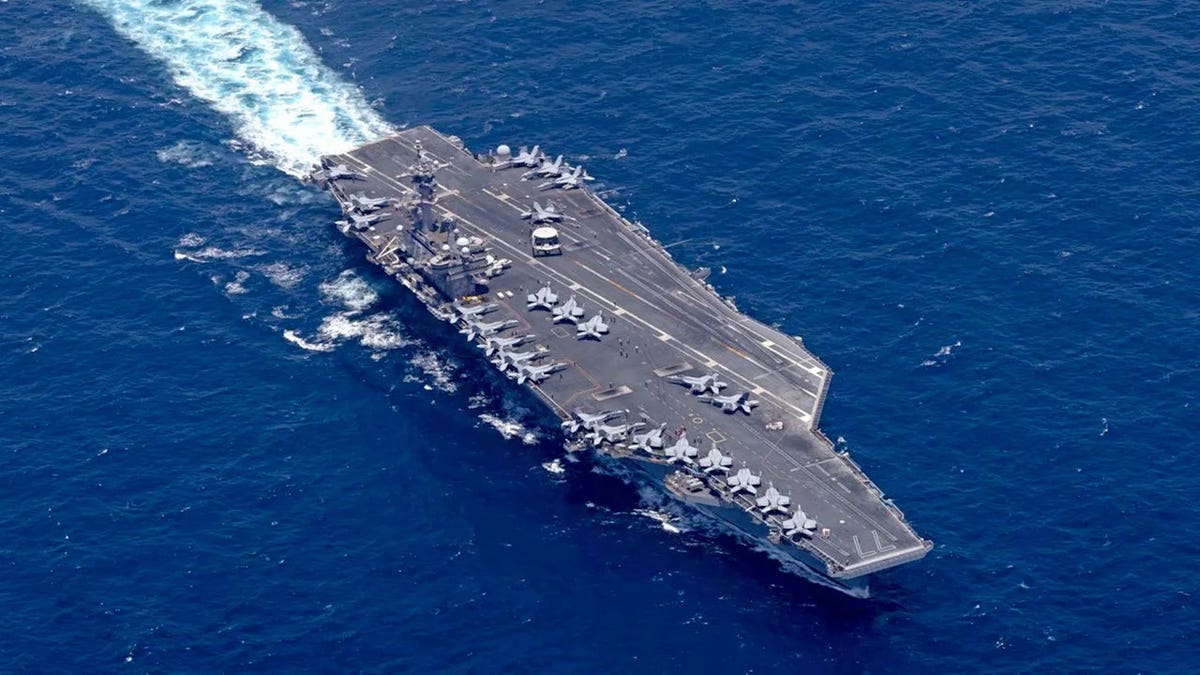
Si el presidente Donald está presionando para que haya un cambio de régimen en Irán, contará con recursos de la Armada de EE. UU. como el USS George . W. Bush. (CENTCOM)
Tras la muerte del ayatolá Alí Jamenei y en medio del cambio de postura de Washington, surge una pregunta clave: ¿está pasando Estados Unidos de la contención a lo que se podría describir como una doctrina de «cirugía estratégica»? Si es así, esto representaría algo más que un simple ajuste militar; significaría el surgimiento de una doctrina destinada a desmantelar una de las fuentes de inestabilidad más arraigadas del Oriente Medio moderno.
La doctrina de Jamenei: terrorismo islámico y conflicto perpetuo
ISRAEL LA FRONTERA CON JORDAN IRÁN BUSCA NUEVAS VÍAS PARA EL TERRORISMO
Para entender el peso de las declaraciones de Trump, hay que analizar la trayectoria estratégica de la República Islámica. Tras la guerraentre Irán e Irak, y sobre todo después de que Jamenei se afianzara en el poder en 1989, el régimen dejó de centrarse en la reconstrucción para dedicarse a un proyecto ideológico y geopolítico a largo plazo. Su objetivo era posicionarse como la fuerza central dentro de una red transnacional que abarcara la Media Luna Chiíta y más allá.
El Cuerpo de la Guardia Revolucionaria Islámica (IRGC) y su Fuerza Quds han desarrollado una amplia infraestructura en Líbano, Irak, Siria, Yemen y Gaza. A través de estas redes, Teherán ha ampliado su influencia, al tiempo que ha socavado la estabilidad regional y ha desafiado los intereses de EE. UU. Con el tiempo, la guerra por intermediarios dejó de ser solo una táctica para convertirse en un rasgo definitorio de la identidad estratégica del régimen.
El coste interno ha sido enorme. Se desviaron enormes recursos financieros hacia la expansión militar, las ambiciones nucleares y las operaciones en el extranjero, mientras que la economía iraní se debilitaba a causa de la inflación, la fuga de capitales y la corrupción sistémica. La búsqueda de la «profundidad estratégica» acabó provocando que las consecuencias del conflicto exportado volvieran a afectar al país.

Por eso, describir a la República Islámica como un «cáncer» no debería interpretarse como una referencia a un solo líder. Refleja un juicio sobre todo un sistema —uno que ha institucionalizado la inestabilidad—. Por lo tanto, cualquier «intervención quirúrgica» que tenga sentido tendría que abordar toda la estructura que sustenta esta doctrina, en lugar de limitarse solo a su figura más visible.
La mayor operación: más allá de la acción militar
Lo que distingue el lenguaje de Trump no es solo su intensidad, sino también sus implicaciones estratégicas. En el discurso sobre la seguridad nacional, definir una amenaza como un «cáncer» implica que no se puede gestionar indefinidamente. Hay que eliminarla de raíz. Si este enfoque se convierte en política, el objetivo pasa de la contención al desmantelamiento.
Este enfoque no implica necesariamente una guerra a gran escala ni una ocupación. En términos estratégicos, supondría una aplicación coordinada de herramientas políticas, de inteligencia, económicas, cibernéticas y militares, diseñadas para debilitar y, en última instancia, desmantelar la capacidad del régimen para generar inestabilidad. El objetivo no sería simplemente castigar, sino evitar que se recupere.
A lo largo de décadas, la República Islámica ha construido un sistema de resiliencia con múltiples niveles: el Cuerpo de la Guardia Revolucionaria Islámica (IRGC), la Fuerza Quds, redes de grupos afines, programas nucleares y de misiles, servicios de inteligencia, instituciones de propaganda y estructuras financieras. Atacar solo algunos de estos componentes ha demostrado una y otra vez que no es suficiente. Las acciones puntuales pueden retrasar las amenazas, pero no las han eliminado.
Si las declaraciones de Trump se convierten en doctrina, puede que Estados Unidos esté entrando en una nueva fase estratégica, centrada en desmantelar el propio sistema en lugar de gestionar su comportamiento. En ese contexto, el concepto de «la mayor intervención quirúrgica del siglo» pasa de ser una metáfora a convertirse en un principio operativo.
El coste a nivel nacional ha sido enorme. Se destinaron enormes recursos financieros a la expansión militar, las ambiciones nucleares y las operaciones en el extranjero, mientras que la economía de Irán se debilitaba debido a la inflación, la fuga de capitales y la corrupción sistémica.
Cirugía sin perspectiva política
La historia nos da una lección que hay que tener en cuenta: derrocar un régimen sin un plan viable para lo que vendrá después puede provocar inestabilidad, fragmentación y nuevas formas de extremismo. Irak tras la caída de Saddam Hussein y Libia tras la de Muammar Gadafi son ejemplos de cómo los vacíos de poder pueden generar un desorden prolongado.
La República Islámica no es solo una autoridad gobernante; es un sistema integrado de instituciones militares, ideológicas, económicas y de seguridad. El Cuerpo de la Guardia Revolucionaria Islámica (IRGC), el Basij, las redes financieras y los aliados regionales funcionan como un ecosistema interconectado. Una perturbación parcial probablemente permitiría que el sistema se reorganizara.
Por eso, cualquier estrategia que funcione tiene que combinar el desmantelamiento de las estructuras coercitivas y expansionistas del régimen con una transición política creíble basada en la soberanía nacional y el Estado de derecho. El objetivo no es la venganza, sino romper un ciclo que ha vinculado el estancamiento interno de Irán con la inestabilidad regional.
HAGA CLIC AQUÍ PARA MÁS OPINIONES DE FOX NEWS
Es igual de importante distinguir entre Irán y la República Islámica. Las principales víctimas de este sistema han sido el propio pueblo iraní, cuyos recursos y futuro se han sacrificado en aras de ambiciones ideológicas y conflictos externos.
HAZ CLIC AQUÍ PARA DESCARGAR LA APP DE FOX NEWS
Si las declaraciones de Trump realmente marcan el inicio de una nueva doctrina, su éxito no se medirá solo por los resultados inmediatos, sino por si consigue eliminar de forma permanente la capacidad del régimen para generar inestabilidad y, al mismo tiempo, permite que surja un Estado iraní estable y responsable. El pueblo iraní ha dejado claro en repetidas ocasiones que quiere una alternativa basada en la rendición de cuentas y la normalidad.
Si este momento marca el inicio de una transformación estratégica, puede que Oriente Medio se esté acercando a su cambio geopolítico más importante desde el fin de la Guerra Fría. En ese caso, «La mayor intervención quirúrgica del siglo» no se limitará a describir una política, sino que definirá toda una era.
