


























Drone expert explains warfare ‘paradigm shift’
Fox News contributor Brett Velicovich says he is frustrated about U.S. policymakers’ attention to drone security on ‘Hannity.’
Reports of multiple unauthorized drones over Barksdale Air Force Base and Fort McNair should alarm every American. Up until now, no threat has been identified. If this were happening overseas, we’d call it pre-operational surveillance. That’s how I was trained. At home, we’re still calling it "mystery." It’s only a matter of time until a credible threat presents itself.
What’s most alarming is that we cannot definitively answer who is flying these drones. All it’s going to take is one single drone to slip through our defenses and kill an American, to cause massive strategic damage to our country. I’ve been advocating for someone to do something about it for years and still feel like legacy bureaucrats and policymakers are just waiting for an American to die before doing something. That’s unacceptable. The American people deserve better.
Unauthorized drone incursions over military installations have been rising for years. All it will take is one drone slipping through our defenses to kill an American and cause massive strategic damage. Waiting for that moment to act is unacceptable.
Drones are not toys. Their ability to operate over sensitive locations is not an inconvenience — it’s a national security failure hiding in plain sight. These are not exotic systems. They are commercially available drones — cheap, accessible and increasingly capable of executing sophisticated missions without triggering legacy defenses.
IRAN'S 'BASEMENT' CHINESE DRONE NETWORKS SPARK FEARS OF SLEEPER CELL ATTACKS ON US SOIL
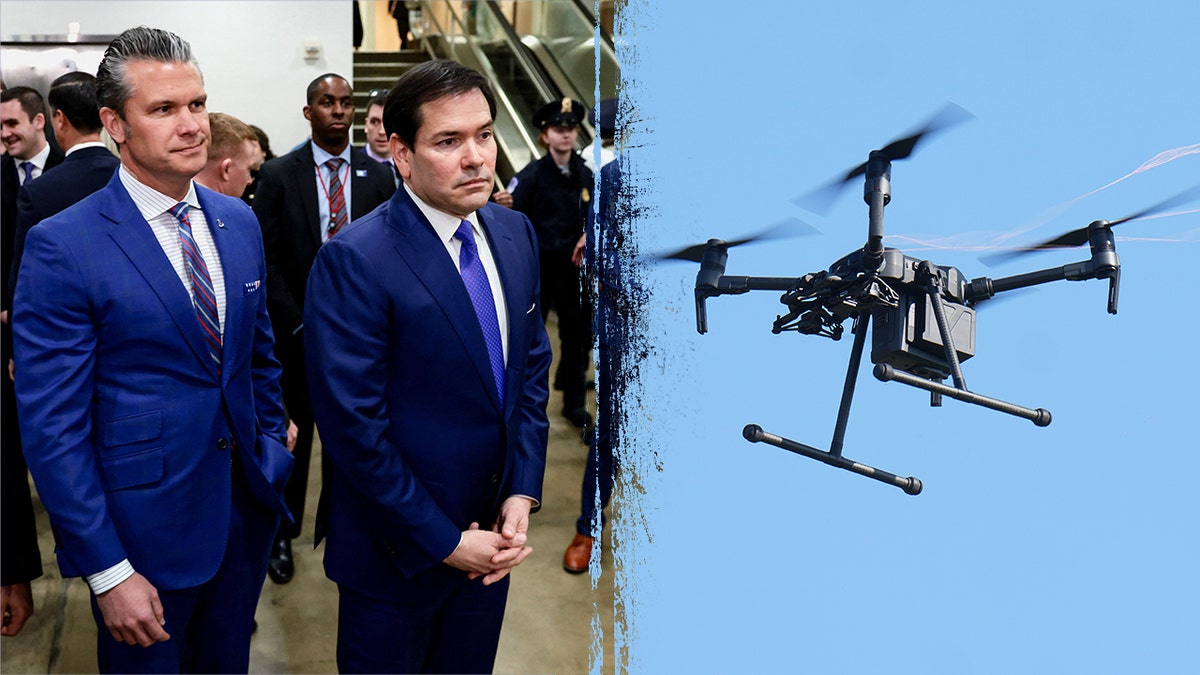
Unauthorized drones reportedly flew near the homes of Secretary of War Pete Hegseth and Secretary of State Marco Rubio. (Evelyn Hockstein/Reuters:Thomas Frey/Picture Alliance via Getty Images)
What concerns me most is the behavior of these drones. They are not hobbyist drones. Reports indicate they entered and exited base perimeters in ways designed to avoid detection, as if testing response protocols.
The threat has changed, our defense hasn't
For decades, we built national security around large, predictable threats. Today’s threats are asymmetric. A drone swarm that costs less than a pickup truck can shut down a strategic airbase. These systems are cheap, scalable and difficult to detect with traditional radar. Billion-dollar defense infrastructure is being outpaced by commercially available technology.
STATES DEMAND POWER TO STOP DRONES DELIVERING DRUGS, WEAPONS INTO PRISONS
All it would take is one successful drone attack on a military installation or civilian target to cause catastrophic damage — not just in lives lost, but in what it signals to adversaries about our vulnerabilities.

Current policy is out of touch
We have the technology to address this problem. What we lack is the policy framework to deploy it.
IRAN’S DRONE SWARMS CHALLENGE US AIR DEFENSES AS TROOPS IN MIDDLE EAST FACE RISING THREATS
Counter-drone authority is fragmented across agencies and state and local law enforcement are largely prohibited from acting. In some cases, neutralizing a threatening drone could expose an officer to severe federal penalties. Congress has attempted to expand authority without success and the FAA has yet to establish clear rules for drones over critical infrastructure.
How to fix the systemic issue
We need a whole-of-government approach: modernize legal frameworks, expand counter-drone authority with safeguards and rapidly deploy counter-drone systems to protect military and civilian infrastructure.
MYSTERY DRONES FLY NEAR DC-AREA MILITARY BASE AS IRAN TENSIONS ESCALATE
The Department of War already has advanced counter-drone capabilities. With the right legal framework, they should be part of the solution.
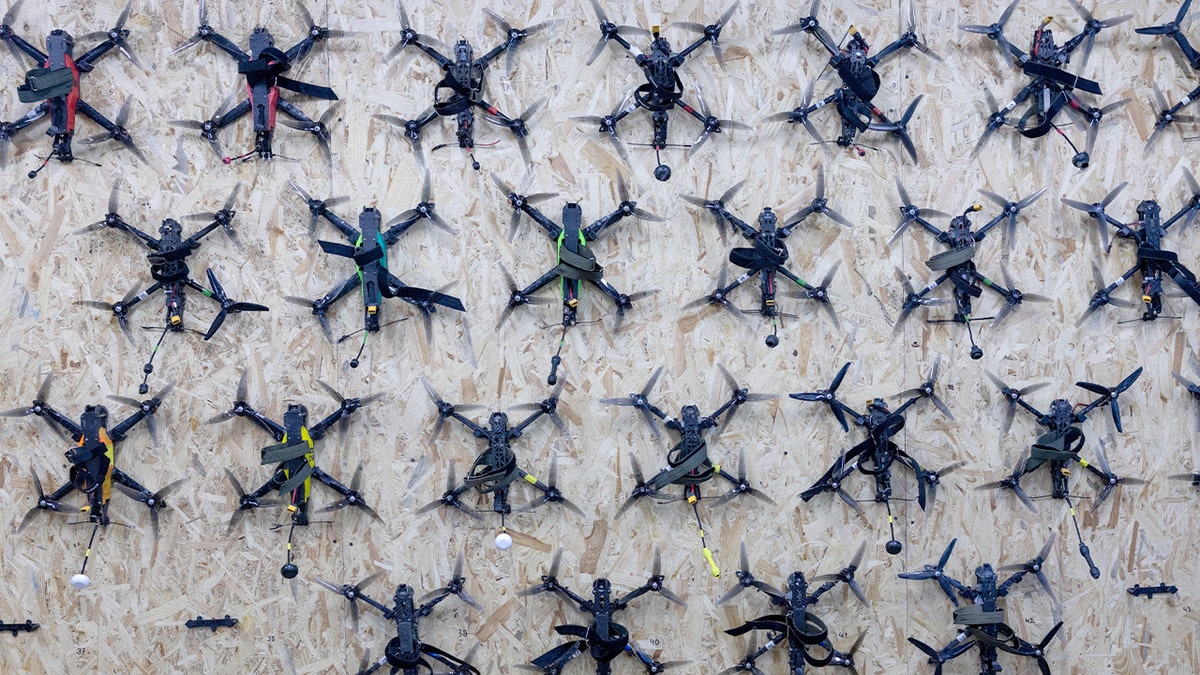
FPV training drones are seen on a wall at the Killhouse Academy drone training center on March 4, 2026, in Kyiv, Ukraine. (Chris McGrath/Getty Images)
The real issue isn’t "mystery drones" — it’s that they are operating over sensitive bases without consequence. We’ve spent decades building high-cost systems for rare threats, while today’s threats are cheap, scalable and persistent.
This is not a technology problem — it’s a bureaucracy problem. Despite being at war, our procurement system moves at the speed of bureaucracy and too slowly for a threat that evolves rapidly.
US MILITARY SHOT DOWN PARTY BALLOON NEAR EL PASO AFTER SUSPECTING DRONE, OFFICIAL SAYS
At Powerus, we see this problem clearly because we are building for it. Our low-cost drone interceptors that cost only a few thousand dollars can be deployed around bases and neutralize hostile drones without creating risk to civilians. The reality is simple: if the threat is mass-produced, the defense must be mass-deployable. You don’t stop a drone swarm with a single, expensive system — you stop it with layered defenses and networks of fast, autonomous interceptors that can respond instantly and at scale.
That technology exists today. The challenge is getting it deployed faster than the traditional procurement system allows.
We need a whole-of-government approach: modernize legal frameworks, expand counter-drone authority with safeguards and rapidly deploy counter-drone systems to protect military and civilian infrastructure.
CLICK HERE FOR MORE FOX NEWS OPINION
We are already in a drone and counter-drone arms race with adversaries like China and Iran, and we cannot afford to fall behind.
Our strength has always been staying ahead of our adversaries. That means accelerating counter-drone capabilities, updating rules of engagement for domestic bases and treating drone incursions with the seriousness they deserve. Our most critical assets are too important to leave exposed.
CLICK HERE TO DOWNLOAD THE FOX NEWS APP
"Watch and wait" is no longer viable. The incidents at Barksdale and Fort McNair are not isolated — they are part of a pattern that demands a response.
This is not theoretical — it’s inevitable if we continue down this path. We are not waiting for proof of a threat; we are waiting for a casualty. And when that moment comes, calling these incursions a "mystery" will no longer be an option — it will be an indictment of our failure to act when we had the chance. The warning signs are already here, flying over our most sensitive installations in plain sight. The question is not if a drone will be used to kill an American on U.S. soil — it’s whether we will finally take this threat seriously before it happens, or only in response to tragedy.
