





















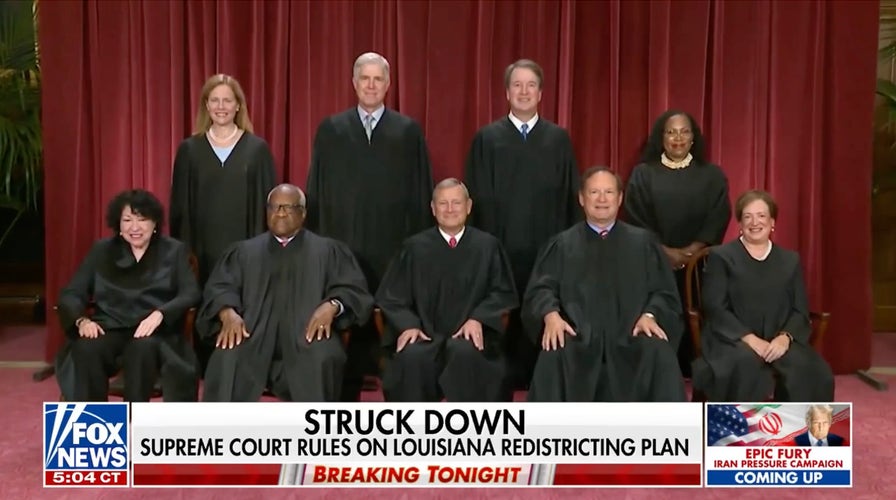
Los demócratas critican la sentencia del Tribunal Supremo que revoca una disposición clave de la Ley de Derechos Electorales
Shannon Bream, corresponsal Fox News de asuntos jurídicos de Fox News , informa enSpecial Report sobre la sentencia del Tribunal Supremo que limita el uso del criterio racial en la redistribución de circunscripciones del Congreso.
La opinión liberal habitual sobre la sentencia del Tribunal Supremo en el caso «Luisiana contra Callais», que limita el uso de la raza en la delimitación de los distritos electorales para el Congreso, es que supone un revés para la influencia política de las minorías. Como dice la página New York Times : «La realidad es que, con la excusa de separar la raza de la política, el Tribunal Supremo ha dado más poder a los votantes blancos a costa de las minorías raciales».
Es cierto que, al no crear tantos distritos electorales con mayoría negra —a menudo uniendo partes de las comunidades que están geográficamente alejadas—, puede que haya menos escaños cuya victoria por parte de los afroamericanos esté casi garantizada. Como escribí en esta web cuando el tribunal escuchó los argumentos del caso el otoño pasado: «Solo si se esfuerzan por encontrar barrios con mayoría negra para agruparlos en un solo distrito podrá Luisiana alcanzar el objetivo que se han marcado los progresistas: dos distritos con posibilidades de elegir a un segundo congresista negro, en un estado cuya población es un tercio negra».
Pero el hecho de que ya no esté permitido no significa que los votantes negros vayan a tener necesariamente menos influencia. Incluso podrían tener más.
La clave para entender por qué está en el poder, ya demostrado, del votante indeciso. En el mapa actual de Luisiana de 2020 (que ahora se está ajustando), un distrito (el 2.º) tiene una población negra de casi el 50 %, lo que hace probable que un candidato negro tenga ventaja (si la raza es el factor más importante para los votantes negros). Pero el tercer distrito, que está cerca, tiene una población negra del 21 %, una población mestiza del 3 % y una población hispana del 6 %.
Un candidato al Congreso con iniciativa podría —incluso en unas elecciones en las que no haya ningún candidato negro— intentar ganarse el voto de las minorías como vía hacia la victoria. Piensa, por ejemplo, en un demócrata de centro que pudiera sumar a los votantes indecisos de las minorías con un bloque de votantes blancos de centro para derrotar a un republicano. Los distritos rediseñados, aunque no tengan mayoría negra, podrían muy bien tener porcentajes de población negra incluso mayores que los actuales escaños representados por blancos.
Un candidato al Congreso con iniciativa podría —incluso en unas elecciones en las que no haya ningún candidato negro— intentar ganarse el voto de las minorías como vía para la victoria.
También podría ser posible —y positivo— que un candidato negro se dirigiera a un grupo de votantes blancos, basándose en su filosofía política, para conseguir un escaño. Al fin y al cabo, hay cinco senadores negros en el Senado de EE. UU., a pesar de que no hay ningún estado con mayoría negra. Uno de ellos Tim Scott, Carolina— representa a un estado que fue miembro fundador de la Confederación.
Los votantes negros que desempeñan un papel decisivo también podrían disfrutar de unas elecciones más reñidas. Pero este no es el caso en un número significativo de escaños que ocupan actualmente los miembros del Caucus Negro del Congreso. La manipulación racial de los distritos electorales suele haber convertido sus escaños en seguros para una probable reelección; en 2024, cuatro de los 57 miembros no tuvieron ningún rival, lo que supone un porcentaje notable del total de 25 congresistas de este grupo. Los escaños seguros pueden ser una vía para ganar antigüedad e influencia, como le ha pasado al líder de la minoría, Hakeem Jeffries, de Nueva York. Pero también pueden llevar a la reelección de diputados molestos de segunda fila, como los representantes Jasmine y Al Green, de Texas.
La competencia nominal tampoco contrarresta el poder que da llevar mucho tiempo en el cargo; Maxine Waters, California, se llevó el 75 % de los votos en noviembre de 2024 frente a un rival republicano en un distrito abrumadoramente demócrata. Las delimitaciones de los distritos, diseñadas para garantizar la presencia de representantes afroamericanos —el tema central de la sentencia del tribunal—, sí que importan.
El juez Brett , durante las vistas orales de 2025 en el caso sobre la distribución de distritos electorales de Luisiana, planteó la cuestión de si debería haber un «plazo límite» para tener en cuenta la raza a la hora de trazar los mapas electorales del Congreso. Esto supone, de forma implícita, que, más de 50 años después de la aprobación de la Ley de Derechos Electorales, deberíamos esperar —y no dar por sentado— que la raza no sea siempre el factor decisivo a la hora de que tanto los ciudadanos blancos como los afroamericanos voten.
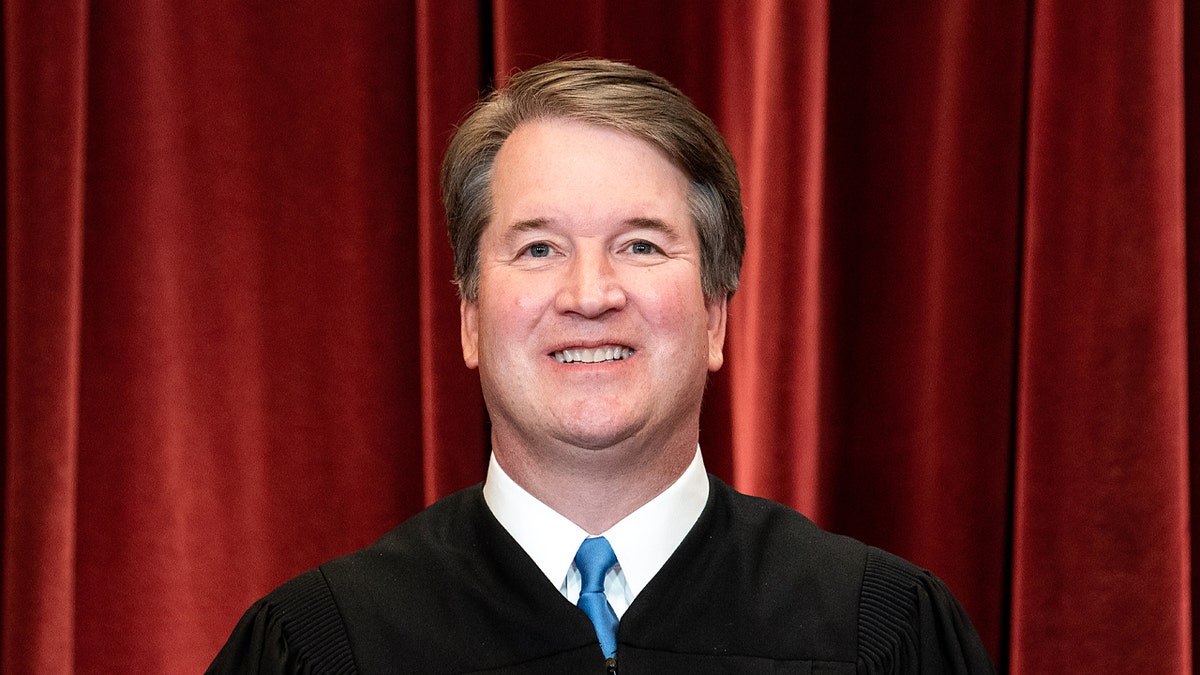
El juez del Tribunal Supremo Brett . (ErinGetty Images)
HAZ CLIC AQUÍ PARA DESCARGAR LA APP DE FOX NEWS
Al fin y al cabo, la alternativa a los distritos basados en la raza son aquellos que son «geográficamente compactos», en los que lo que importa son las preocupaciones comunes de los vecinos sobre sus comunidades. Entre ellas podrían estar los problemas relacionados con la raza, pero también la calidad de los colegios, las carreteras y los parques: cuestiones que unen en lugar de dividir.
El hecho de que el tribunal no haya dado tanta importancia a la raza a la hora de trazar los distritos electorales debería interpretarse como un mensaje de respeto por parte del tribunal respecto a que la raza está dejando de ser, poco a poco, el tema más importante en la vida estadounidense, y como una muestra de respeto hacia las preocupaciones que tienen los votantes negros más allá del color de su piel.
